You’ve felt it — that ache for times you’ve never lived. Now you want to create it. Here’s how to capture anemoia in your own photography, channeling that bittersweet longing into images that move others.
Understanding the Anemoia Aesthetic
Before you can capture anemoia, study it. The best anemoia photography isn’t just old-looking pictures — it’s images that create emotional distance while maintaining warmth. You’re not documenting reality; you’re evoking feeling.
Study the work of photographers like Sally Mann, Nan Goldin, and Saul Leiter. Notice how they use light, grain, and subject matter to create that timeless quality.
Camera Choices
Film photography — The most authentic path. Different films create different moods:
- Kodak Portra for warm, portrait-ready nostalgia
- Ilford HP5 for moody black and white
- Kodak Ektar for saturated vintage color
- Lomography films for unpredictable, lo-fi results
Digital with processing — If shooting digital, learn to emulate film:
- Add grain deliberatelyReduce contrast slightlyWarm or cool colors intentionally
- Consider vintage lens prescriptions
Light Is Everything
Anemoia photography lives and dies by light:
Golden hour — That warm, low sun creates instant nostalgia. Shoot during the hour after sunrise or before sunset.
Overcast days — Soft, diffused light feels gentler, more remembered. Many vintage photographs were shot on cloudy days.
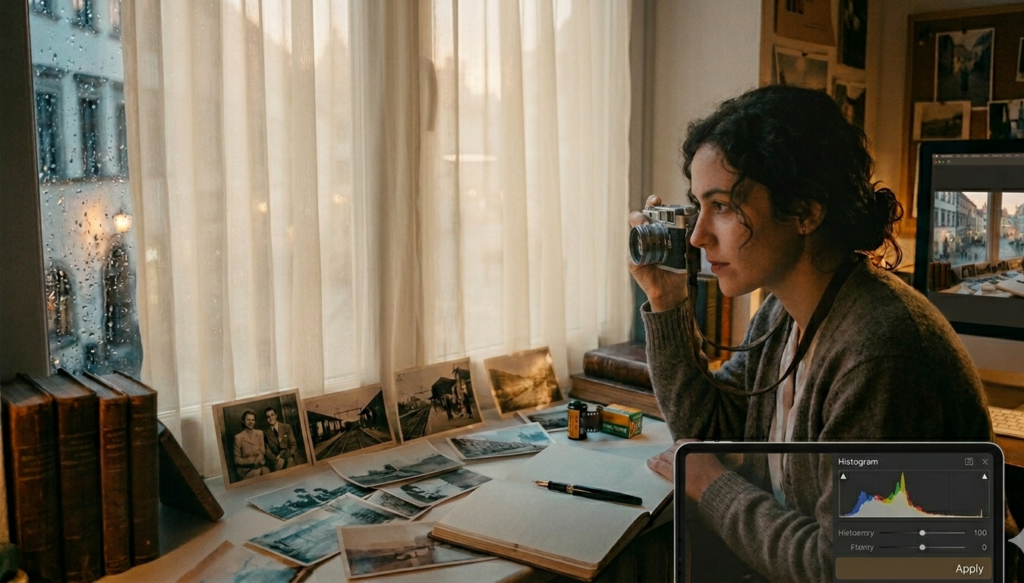
Window light — Diffused through curtains, window light creates that classic nostalgic look.
Mixed lighting — Combining different color temperatures (indoor and outdoor, for example) creates unease that reads as memory.
Subject Matter
What you photograph matters as much as how:
Quiet moments — Solitude, stillness, the pause between activities
Old things — Vintage objects, aged architecture, anything with patina
Nature reclaiming — Overgrown gardens, rust, decay, the intersection of nature and human construction
Empty spaces — Rooms without people, streets without traffic
Everyday beauty — The mundane elevated by attention. A cup, a chair, a window.
Composition Tips
Use negative space — Don’t crowd the frame. Breathing room creates contemplation.
Off-center subjects — The rule of thirds, but softer. Let space surround your subject.
Layers and depth — Include foreground elements to create depth. Shooting through objects adds dimension.
Reflections — Windows, mirrors, puddles — reflections add complexity and dreaminess.
Processing for Nostalgia
When editing:
Reduce contrast — High contrast feels modern. Slight flattening creates vintage feel.
Add subtle grain — Film grain, but not heavy. Just enough to add texture.
Warm or cool selectively — Neither fully warm nor cool. Find the balance.
Consider black and white — Sometimes color distracts. Black and white forces emotion.
Embrace “errors” — Light leaks, light trails, accidental double exposures. These “imperfections” create authenticity.
Building Your Practice
Creating anemoia consistently requires developing your eye:
Keep a journal — Note what triggers YOUR anemoia. Return to those places, those subjects.
Return to locations — Visit the same places in different light, different seasons.
Study vintage photography — Understand what made old images look the way they do.
Be patient — The best nostalgic images often come when you stop trying so hard.
The camera doesn’t capture time — it creates a wedge between now and then. Use that wedge intentionally.
What’s your approach to nostalgic photography? Share your tips and images in the comments below.
Leave a Reply