There’s something magnetic about places time has forgotten. Abandoned factories, overgrown mansions, empty amusement parks, decaying grand hotels — these locations carry a particular kind of magic. For those who experience anemoia, abandoned places offer something profound: a physical space where past and present collide.
The Allure of Decay
When we walk through abandoned places, we’re walking through layers of time. The peeling paint, the shattered windows, the furniture left mid-use — these details tell stories without words. We imagine who last lived here, what celebrations happened in these rooms, what dreams were built within these walls.
This isn’t macabre fascination — it’s something deeper. There’s peace in these spaces. The pressure of modern life falls away. In the silence of abandonment, we can almost hear the echoes of the past.
What Makes a Place Anemoia-Inducing
Not every abandoned space triggers the feeling. The most powerful anemoia locations share certain qualities:
The suddenly stopped — Places where life simply ended. A half-eaten meal, clothes still in a closet, a calendar stuck on a specific date.
The grand scale — Mansions, theaters, hotels — spaces built for abundance now empty remind us of transience.
Nature’s reclamation — Vines covering walls, trees growing through floors, moss softening harsh edges. The beauty of decay.
Detritus of daily life — Personal items left behind make us imagine the people who once inhabited these spaces.
Famous Abandoned Locations
Chernobyl Exclusion Zone — Perhaps the most powerful example. A town frozen in 1986, where anemoia meets eerie preservation.
Birmingham’s Victorian insane asylum — Stunning architecture in slow collapse, featured in countless photography projects.
The abandoned hotels of Pattaya — Entire resorts left incomplete, nature taking back concrete and steel.
Hashima Island (Japan) — The “Battle Island” of Mitsubishi coal mining, abandoned since 1974. A concrete city frozen in time.
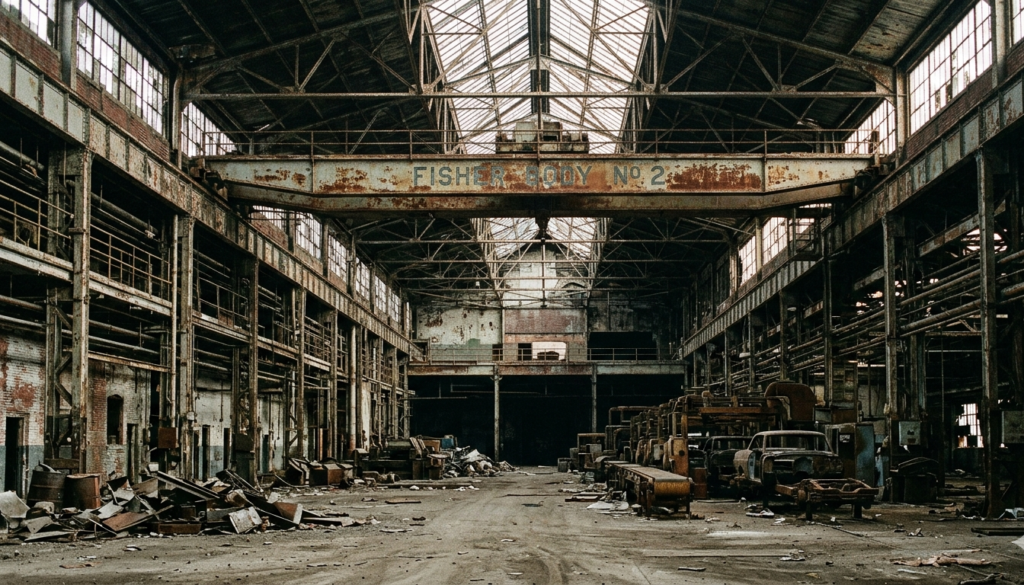
Detroit’s abandoned factories — American industrial collapse, breathtaking in scale.
Urban Exploration Ethics
If you’re drawn to explore these spaces:
Never trespass — Many abandoned places have security, legal restrictions, or dangerous conditions.
Take only photographs — Leave everything as you found it.
Respect the space — These were someone’s homes, workplaces, dreams.
Research first — Know the legal status and potential hazards.
Capturing Abandoned Beauty
For photography:
Golden hour light — Same as any photography, but especially powerful in abandoned spaces where light streams through broken windows.
Focus on details — A single shoe, a cracked mirror, a child’s toy left behind.
Embrace the silence — Let the images speak through what they don’t show.
Consider the human element — Scale references (a chair, a door handle) make spaces feel more relatable.
There’s a strange comfort in places that time forgot. They remind us that everything is temporary — including now.
Have you visited any abandoned places that moved you? Share your experiences in the comments below.
Leave a Reply