There’s something uniquely powerful about curating visuals that capture a feeling rather than a moment. Anemoia moodboards let you gather the colours, textures, and aesthetics that evoke longing for times you’ve never known. Here’s how to create one that truly resonates.
What is an Anemoia Moodboard?
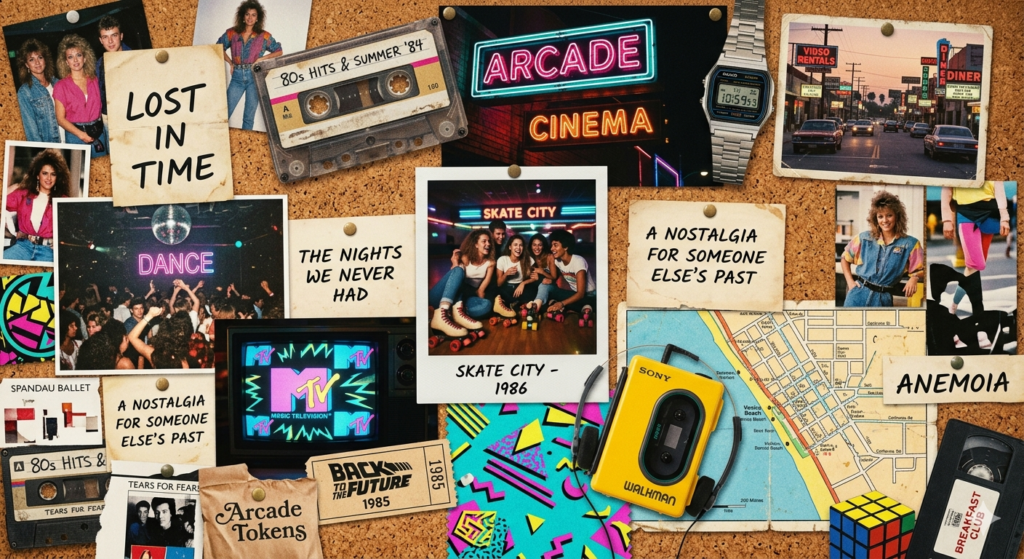
A moodboard is a visual collage — but an anemoia moodboard goes beyond pretty pictures. It’s an attempt to capture a feeling of wistful nostalgia for an era untouchable. The best moodboards don’t just look beautiful; they make viewers feel something undefined, a ache for somewhere they’ve never been.
Think of it as visual storytelling. You’re not documenting reality — you’re conjuring a dream of the past.
Choosing Your Era
Before collecting images, decide which past era calls to you most. This isn’t about accuracy; it’s about emotion. Some popular directions:
- Mid-century America — warm afternoons, diners, classic cars
- European vintage — rainy windows, cobblestones, old bookshops
- 80s nostalgia — cassette tapes, neon lights, synth aesthetics
- Silent film era — grainy black and white, silver screen elegance
- Cottagecore dreams — Simple living, nature, pastoral scenes
Your era doesn’t need to be one specific decade. Many anemoia moodboards blend elements from multiple times, creating something uniquely personal.
Collecting Visual Elements
Light and atmosphere
- Golden hour warmth
- Soft, diffused daylight through windows
- The glow of lamplight in evening rooms
Textures
- Worn paper or books
- Vintage fabric, lace, and crocheted details
- Weathered wood, old metal, patina
Colour palettes
- Muted, desaturated tones
- Sepia and warm browns
- Dusty pinks, sage greens, muted teals
- Cream and off-white instead of pure whites
Everyday objects
- Vintage cameras
- Old typewriters
- Vinyl records
- Classic telephone receivers
- Butterly windows and curtain
Nature and landscape
- Overgrown gardens
- Empty beaches at dusk
- Dense forests
- Old farmhouses
Arranging Your Moodboard
When assembling your moodboard, consider:
Create flow — arrange images so the eye moves naturally across the board. Place focal points slightly off-centre.
Embrace negative space — don’t crowd every inch. Breathing room amplifies the impact of individual images.
Layer textures — overlay subtle grain or paper textures to create cohesion and vintage feel.
Balance warm and cool — mix warm nostalgic tones with cooler melancholy shades for depth.
Practical Tips
Use Pinterest — it’s the perfect platform for gathering and arranging visual inspiration
Shoot your own photos — old film cameras (even disposables) create authentic grain
Mix sources — vintage illustrations, modern photography, scanned old postcards
Add textural elements — consider including handwritten notes or aged paper scans
Sharing Your Creation
The anemoia community is one of the most welcoming online. Share your moodboards on:
- Pinterest (most aligned with the aesthetic)
- Tumblr
- Dedicated subreddits
A well-crafted moodboard doesn’t just decorate — it whispers of times we long to touch.
What’s your preferred era for anemoia aesthetic? Share your moodboard journey in the comments.
Leave a Reply