There’s a particular feeling when watching 1980s science fiction films — that strange mix of nostalgia, futurism, and bittersweet longing. These movies imagined a future that never arrived, creating a unique form of anemoia: longing for a tomorrow that existed only on screen.
The Retro-Futurist Aesthetic
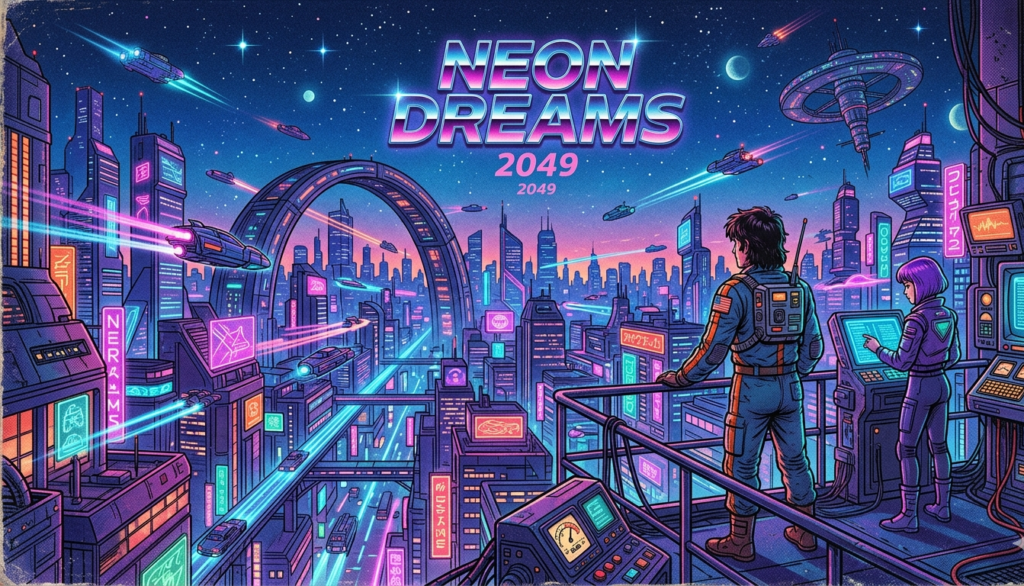
Retro-futurism captures a specific moment in human imagination — when designers and filmmakers envisioned tomorrow with optimistic certainty. The sleek curves of 1950s visionaries, the neon-drenched 1980s predictions, the chrome-and-glass utopias — all of these create a visual vocabulary of a future we’re both connected to and completely separated from.
What’s powerful about these films isn’t just their aesthetics — it’s their emotional core. Many retro-futurist films carry profound melancholy beneath their optimistic surfaces. They imagined a world that, from our present vantage point, feels impossibly innocent.
Essential Films for Anemoia
Blade Runner (1982) — Perhaps the ultimate anemoia sci-fi film. Its Los Angeles of 2019 feels both familiar and impossibly distant. The film captures late 20th century optimism about technology alongside profound loneliness.
The Last Starfighter (1984) — Pure 1980s nostalgia. Arcade games, small-town America, the dream of something more. Its retro-futurism now feels like time travel to a gentler era.
Tron (1982) — Computer interfaces we now laugh at, but there’s profound beauty in its earnest depiction of digital worlds.
Aliens (1986) — Industrial sci-fi with heart. The mother-daughter dynamic, the camaraderie, the corporate greed — all wrapped in 1980s aesthetic.
E.T. (1982) — Less sci-fi, more anemoia. The bicycle flying across the moon captures childhood wonder we all long to recapture.
The Truman Show (1998) — Not 80s, but crucial. A man living in an artificial world, surrounded by fake sunsets. The metaphor for modern life is profound.
Brazil (1985) — Retro-futurism meets dystopia. A bureaucratic nightmare that now feels uncomfortably prescient.
Silent Running (1972) — Earlier, but essential. Environmental sci-fi with extraordinary melancholy. The last forests in space.
Why These Films Work
Several elements make 80s sci-fi particularly anemoia-inducing:
Practical effects — The physical models, the hand-drawn animation, the mechanical creature effects. There’s warmth in the imperfections.
Limited special effects — When budget constraints forced creativity, the results often had more soul.
Earnestness — These films often believed wholeheartedly in their futures. That sincerity creates distance we now find moving.
Technological optimism — Despite the occasional dystopia, there’s often underlying faith in progress. We watch from a more jaded present.
The Synthwave Connection
Modern synthwave music deliberately evokes these films’ aesthetics. Artists like Gunship, Timecop1983, and FM-84 create soundtracks for movies that never existed — further feeding the anemoia cycle.
Finding These Films
Most are available through:
- Criterion Channel
- Shudder
- Apple TV
- Vintage Blu-ray collections
Retro-futurism gives us the futures we never had — and somehow, that makes them feel like home.
What retro-futurist films make you feel this strange longing? Share your recommendations below.
Leave a Reply