

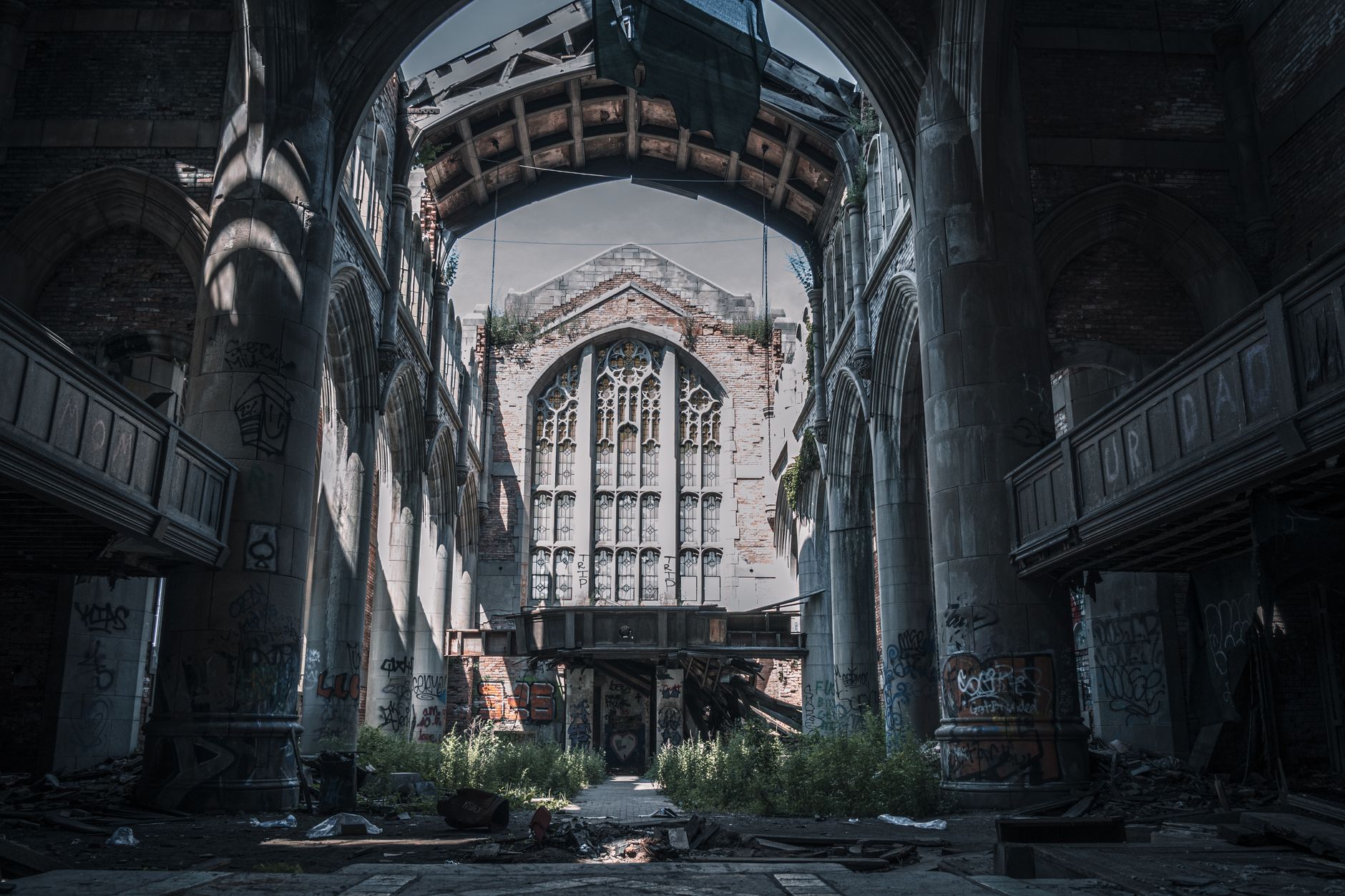
The fascination with abandoned spaces—often referred to as urban exploration—stems from a human desire to witness the intersection of nature and human ambition. When structures are left to the elements, they undergo a transformation that strips away the utility of the building, leaving behind a raw, aesthetic form of decay. These sites serve as silent markers of shifting economies, natural disasters, or simply the inevitable passage of time.
Table of Contents
The Architectural Beauty of Forgotten Structures
Architecture in a state of ruin often reveals construction techniques that are hidden in functional buildings. Without the distraction of modern maintenance, the structural bones of a site become the focal point. This aesthetic, frequently termed “ruin porn” in photography circles, highlights the contrast between the rigid lines of human-made geometry and the fluid, chaotic patterns of encroaching vegetation.
Pripyat, Ukraine: The Frozen Moment
Following the 1986 disaster, the city of Pripyat was evacuated, leaving behind a complete urban ecosystem. The beauty of this location lies in its preservation of a specific era. Schools, hospitals, and apartment blocks remain filled with the artifacts of daily life, creating a static museum of the Soviet period. Over decades, the surrounding forest has moved into the streets, illustrating how quickly nature reclaims urban environments when human intervention ceases.
The Maunsell Sea Forts, United Kingdom
Located in the Thames and Mersey estuaries, these steel towers were constructed during the Second World War to provide anti-aircraft defense. Today, they stand as rusted, skeletal sentinels rising from the waves. Their isolation has protected them from vandalism, allowing them to weather into striking, sculptural forms that appear almost extraterrestrial against the horizon.
Comparing Global Abandoned Sites by Category
Different types of abandoned locations offer unique visual and historical experiences. The following table categorizes these sites based on their primary characteristics and current state of preservation.
| Location Category | Primary Characteristic | Environmental Impact | Aesthetic Appeal |
|---|---|---|---|
| Industrial Hubs | Massive metal structures | High oxidation/rust | Brutalist/Skeletal |
| Residential Towns | Preserved personal items | Overgrown foliage | Nostalgic/Static |
| Maritime Sites | Saltwater erosion | Marine-life integration | Geometric/Isolated |
| Religious Ruins | Stone masonry/Art | Weathered textures | Historical/Grand |
Nature’s Reclamation: The Green Takeover
One of the most captivating aspects of abandoned architecture is the speed and efficacy with which biological life reclaims space. In tropical climates, this process is accelerated by high humidity and aggressive flora.
- Ta Prohm, Cambodia: While ancient, this site demonstrates the ultimate victory of nature over stone. Massive silk-cotton tree roots have woven themselves into the temple walls, essentially holding the structure together while simultaneously dismantling it.
- Kolmanskop, Namibia: In the heart of the Namib Desert, this former diamond-mining town is slowly being swallowed by sand dunes. The beauty here is found in the interplay of light and sand, as dunes drift through windows and pile up in once-grand living rooms, creating a surreal, shifting interior landscape.
Industrial Relics and the Aesthetic of Rust
Large-scale industrial sites offer a different perspective on abandonment. Unlike residential areas, these sites were designed for efficiency and strength. When the machinery stops, the sheer scale of the equipment provides a sense of awe.
The Vorkuta region in Russia contains numerous abandoned coal-mining settlements. These “ghost cities” feature heavy-duty infrastructure that has remained largely intact despite the harsh Arctic climate. The contrast between the stark, industrial forms and the vast, white landscape creates a visual clarity that is rarely found in occupied urban settings.
Safety and Preservation Standards
Exploring abandoned sites requires an understanding of structural integrity and environmental hazards. Many of these locations are not maintained and present significant risks, including unstable flooring, hazardous materials like asbestos, and structural collapse.
Expert analysis of such sites emphasizes that the beauty of a ruin is best appreciated through observation rather than interference. Preservationists argue that the most important action for these sites is documentation. High-quality photography and mapping allow these structures to exist in the public consciousness even after the physical buildings have succumbed to gravity or demolition.
Frequently Asked Questions
Why do some abandoned places remain standing for decades?
The longevity of an abandoned structure usually depends on the quality of the original construction materials and the local climate. Stone and reinforced concrete structures, such as those found in arid environments, naturally resist decay longer than wood or light metal structures in humid, coastal areas.
What is the legal status of visiting abandoned sites?
Most abandoned sites are private property or restricted government zones. Entry without authorization is generally considered trespassing. It is essential to research the specific legal status of a location before attempting to visit, as laws vary significantly between jurisdictions.
How does vegetation impact the decay of a building?
Vegetation acts as a catalyst for decay. Roots penetrate foundations, causing cracking, while moisture retained by moss and vines accelerates the degradation of masonry and the oxidation of metal components.
Are all abandoned sites considered beautiful?
Beauty is subjective, but the aesthetic appeal of abandoned sites is usually tied to the concept of the “sublime”—a mixture of awe and slight discomfort caused by the scale of the decay and the silence of the environment.
Reflecting on the Transient Nature of Human Achievement
The study of abandoned places provides a perspective on the temporary nature of human infrastructure. Every city, bridge, or home is subject to the same cycles of development and eventual return to the natural state. By observing these sites, one gains an appreciation for the importance of maintenance and the ingenuity required to build structures that endure.
The beauty found in these locations is not merely about the decay itself, but about the transition. It is a reminder that the environment is in a constant state of flux. As the world continues to develop, the list of abandoned places will inevitably grow, creating new sites of interest for those who find value in the quiet, empty spaces left behind by the march of progress. Protecting these sites as historical records remains a vital task for historians and architects alike, ensuring that the lessons learned from these forgotten spaces are not lost entirely to the elements.
Frequently Asked Questions (FAQ)
Q: Why are historical places often abandoned?
A: Historical locations are typically abandoned due to economic shifts, resource depletion, changes in trade routes, natural disasters, or geopolitical conflicts that render maintaining the site unsustainable.
Q: What is the importance of preserving abandoned historical sites?
A: Preserving these sites provides crucial physical evidence of architectural techniques, cultural practices, and historical socio-economic conditions that help us understand how past societies evolved.
Q: Is it safe to visit abandoned historical ruins?
A: Safety varies. Many historic ruins are managed by heritage organizations and are safe for visitors, while unmanaged sites pose risks like structural decay, hazardous terrain, or legal trespassing restrictions.

