

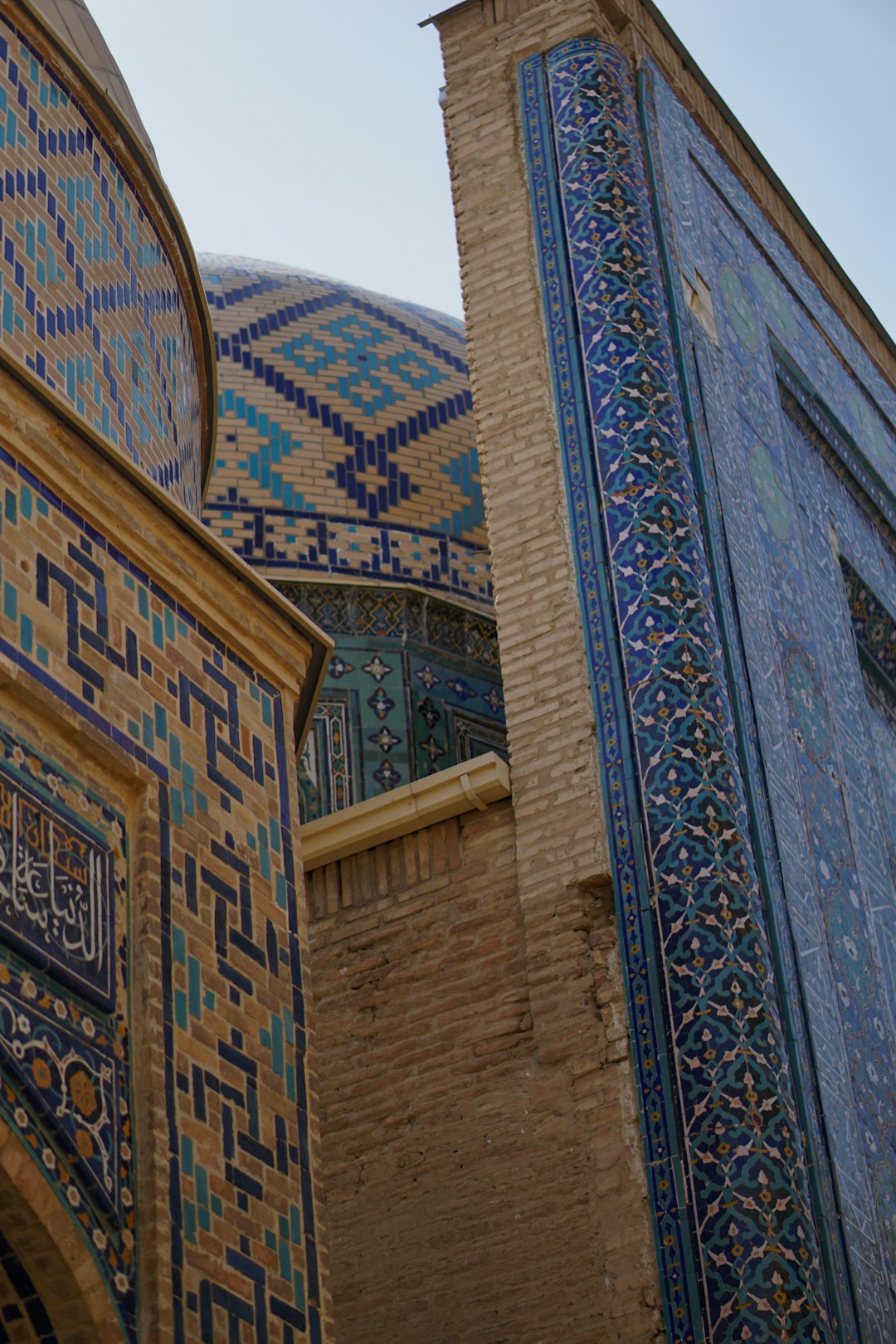
For more than a millennium, the Silk Road served as the intellectual, financial, and cultural backbone of the ancient world. Stretching across five thousand miles of perilous topography, it tied the jade markets of Chang’an to the imperial courts of Byzantium and Rome. Yet the true beating heart of this transcontinental artery did not reside at either terminus; it thrived in the high steppes, fertile oases, and forbidding deserts of Central Asia. Here, amidst the arid expanses of modern Uzbekistan, Turkmenistan, Tajikistan, and Kazakhstan, cosmopolitan urban centers arose that rivaled Baghdad and Rome in wealth and scholarly achievement. Cities like Samarkand, Bukhara, Khiva, and Merv were dynamic epicenters where religions collided, mathematical paradigms were revolutionized, and travelers traded raw silk, lapis lazuli, spices, and astronomical manuscripts. Re-examining the rise, architectural mastery, and eventual slumber of these storied oases illuminates how Central Asia once stood at the absolute zenith of human civilization.
Table of Contents
- 1. The Sogdian Merchants: Masters of Desert Commerce
- 2. Samarkand: The Cerulean Crown of the Timurid Empire
- 3. Bukhara: Living Fortress of Islamic Scholarship
- 4. Merv: The Ghost Metropolis of the Karakum
- 5. Khiva: The Fortified Time Capsule of the Kyzylkum
- 6. Comparative Analysis: Great Silk Road Metropolises
- 7. Scientific Renaissance and Intellectual Legacy
- 8. Frequently Asked Questions
- 9. The Renaissance of Central Asian Heritage
1. The Sogdian Merchants: Masters of Desert Commerce
Long before imperial armies consolidated trade borders, the desert routes were forged by the Sogdians-an Iranian civilization centered around the Zeravshan River valley. Fluent in multiple languages and possessing sophisticated credit networks, the Sogdians operated trade outposts from Dunhuang to Constantinople. They transported luxury items across the Taklamakan and Karakum deserts using specialized camel caravans, securing treaty rights and establishing water waypoints.
Beyond material commerce, the Sogdians were the supreme cultural translators of antiquity. They facilitated the western transfer of Chinese papermaking and sericulture, while bringing Persian viticulture, Hellenistic glasswork, and Nestorian Christian, Manichaean, and Buddhist theological texts deep into the imperial courts of China. Their legacy laid the municipal foundations for Central Asia’s great urban flowering.
2. Samarkand: The Cerulean Crown of the Timurid Empire
Strategically positioned between the Zeravshan River and snowcapped mountain ranges, Samarkand ranks among the oldest continuously occupied urban sites on earth, tracing its origins to the 8th century BC. While sacked by Alexander the Great and flattened by Genghis Khan, Samarkand achieved immortal splendor in the late 14th century when the Turco-Mongol conqueror Timur (Tamerlane) made it the sovereign capital of his vast empire.
Timur summoned the finest artisans, stonecarvers, tilemakers, and engineers from Damascus, Isfahan, Delhi, and Shiraz to transform Samarkand into the visual jewel of Islam. The resulting architecture-epitomized by the Registan square, the monumental Bibi-Khanym Mosque, and the Shah-i-Zinda necropolis-introduced double-domed engineering, ribbed turquoise cupolas, and intricate majolica glazed tilework. Cobalt, lapis, and turquoise glazes were engineered to withstand harsh desert freeze-thaw cycles, reflecting sunlight with dazzling brilliance across the plains.
3. Bukhara: Living Fortress of Islamic Scholarship
While Samarkand celebrated imperial grandeur, neighboring Bukhara cultivated spiritual, judicial, and intellectual majesty. Known throughout the Middle Ages as Bukhara-i-Sharif (Noble Bukhara), the city was a sanctuary of Islamic theology, jurisprudence, and medicine. At its peak, Bukhara housed over 150 madrasas and thousands of students from across North Africa, Arabia, and South Asia.
The city’s urban fabric remains extraordinary because its historical core was never destroyed by modern highway developments. The Kalyan Minaret-a 157-foot baked-brick engineering masterpiece constructed in 1127 under Karakhanid ruler Arslan Khan-survived the Mongol invasions because Genghis Khan was so awed by its geometric masonry patterns that he ordered it spared. Below it, the covered trading domes (Toqi Zargaron, Toqi Sarrofon) still demonstrate how multi-vaulted brick bazars provided natural geothermal cooling for merchants during blistering desert summers.
4. Merv: The Ghost Metropolis of the Karakum
If Samarkand and Bukhara survived into modernity, Merv stands as a haunting testament to how swiftly human glory can dissolve into dust. Situated in the Mary oasis of southeastern Turkmenistan, Merv was celebrated in ancient Persian mythology as Mouru and grew under the Seljuk Turks into one of the largest and most prosperous metropolises on earth during the 12th century, boasting over 500,000 residents.
Merv was famed across Eurasia for its twelve major libraries, extensive canal irrigation grids, and astronomical observatories. Its tragic downfall occurred in 1221, when Tolui Khan, son of Genghis Khan, breached the walls after a siege and executed the city’s population. Today, Merv is a colossal archaeological park spanning over 2,500 acres of undisturbed earthen ramparts, monumental citadels (Erk Kala, Gyaur Kala), and the majestic Mausoleum of Sultan Sanjar rising from silent desert sands.
5. Khiva: The Fortified Time Capsule of the Kyzylkum
Located on the lower reaches of the Amu Darya river bordering the Kyzylkum Desert, Khiva represents the best-preserved intact medieval city in the Islamic world. Its inner walled city, known as the Ichan Kala, is enclosed by over two miles of undulating sun-dried mud-brick ramparts punctuated by crenelated watchtowers.
Within these gates lies a dense maze of over 50 historic monuments: carved wooden mosques like the Juma Mosque-supported by 218 intricately hand-carved elm pillars dating back to the 10th century-splendid palaces, and the Kalta Minor Minaret, wrapped entirely in vivid turquoise tilework. Khiva was also notorious as the capital of the Khiva Khanate and the site of Central Asia’s largest slave bazaar before being pacified and conserved in the late 19th century.
6. Comparative Analysis: Great Silk Road Metropolises
The principal cities of Central Asia served complementary functions across trade, theology, and imperial administration.
| City & Modern Country | Golden Age | Primary Specialization | Architectural Landmark | Key Trade Commodity |
|---|---|---|---|---|
| Samarkand (Uzbekistan) | 14th – 15th Century | Imperial capital, astronomy, metallurgy | Registan Square & Gur-e-Amir | Samarkand rag paper, fine glass, silks |
| Bukhara (Uzbekistan) | 9th – 16th Century | Theology, Islamic law, book production | Kalyan Minaret & Ark of Bukhara | Astrakhan fur, woven carpets, spices |
| Merv (Turkmenistan) | 11th – 12th Century | Seljuk administration, libraries, irrigation | Mausoleum of Sultan Sanjar | Crucible Damascus steel, woven cotton |
| Khiva (Uzbekistan) | 16th – 18th Century | Oasis defense, river commerce, desert caravans | Ichan Kala & Juma Mosque | Desert silks, agricultural produce, wool |
7. Scientific Renaissance and Intellectual Legacy
The greatest treasure bequeathed by these desert cities was not gold or raw fabric, but philosophical and scientific enlightenment. Central Asia served as the incubator for the Islamic Golden Age. In Bukhara, polymath Ibn Sina (Avicenna) authored The Canon of Medicine, which served as the primary medical textbook across European and Middle Eastern universities for six centuries.
From Khwarazm (near Khiva) emerged Muhammad ibn Musa al-Khwarizmi, whose foundational treatise on calculation gave the world the word algebra and introduced Hindu-Arabic numerals and decimals to the West. In Samarkand, Sultan Ulugh Beg constructed an open-air stone sextant observatory with an 80-meter radius, cataloging 1,018 stars with mathematical accuracy that went unequaled in Europe until the arrival of Tycho Brahe. These accomplishments remind us that the Silk Road was fundamentally an engine of intellectual transmission.
8. Frequently Asked Questions
Why did the Silk Road overland cities eventually decline?
The decline was driven by European maritime breakthroughs during the Age of Discovery in the 15th and 16th centuries. Portuguese, Dutch, and English navigators established ocean sea routes that moved bulk freight faster, cheaper, and safer than overland caravans traversing bandit-prone mountain passes.
What is a caravanserai and how did it function?
A caravanserai was a fortified roadside fortress spaced roughly 20 to 25 miles apart (one day’s camel march). It provided secure overnight lodging, stables, fresh water wells, blacksmithing services, and communal guard protection for trade merchants and their animal caravans.
Why is Samarkand paper famous throughout history?
Captured Chinese papermakers introduced paper manufacturing to Samarkand in 751 AD after the Battle of Talas. Samarkand artisans refined the process using pure mulberry bark and river-powered stone polishers, creating smooth, durable rag paper that resists insect decay and acid deterioration for centuries.
Can tourists safely visit Uzbekistan and the Silk Road cities?
Yes. Uzbekistan is widely recognized as one of the safest travel destinations in Asia. High-speed rail networks (the Afrosiyob bullet train) comfortably connect Tashkent, Samarkand, and Bukhara in a few hours, supported by visa-free access for citizens of over 85 nations.
What was the role of Sogdian rock inscriptions?
Sogdian merchants carved rock inscriptions and letters along mountain passes in northern Pakistan and the Pamirs, recording travel routes, commercial agreements, tolls paid, and ancestral blessings that historians rely on today to reconstruct Silk Road trade logistics.
What are the main architectural preservation threats facing these ancient cities?
Major conservation challenges include groundwater salinization, desert windblown sand abrasion, earthquakes, and the rapid deterioration of unfired mud bricks when exposed to extreme seasonal precipitation changes.
What was the population of Central Asian cities compared to Europe in 1000 AD?
During the 11th and 12th centuries, cities like Merv and Samarkand had populations between 200,000 and 500,000 people, whereas contemporary European capitals like London and Paris were modest settlements numbering under 30,000 residents.
9. The Renaissance of Central Asian Heritage
Standing in the shadow of Bukhara’s Kalyan Minaret or looking up at the glowing azure cupolas of Samarkand’s Registan, one does not merely observe old stone and tile; one confronts a crossroads where humanity exchanged its most precious ideas. By preserving these desert citadels and supporting rigorous archaeological stewardship, the global community ensures that the visionary legacy of the Silk Road remains an enduring testament to our shared global heritage.

