

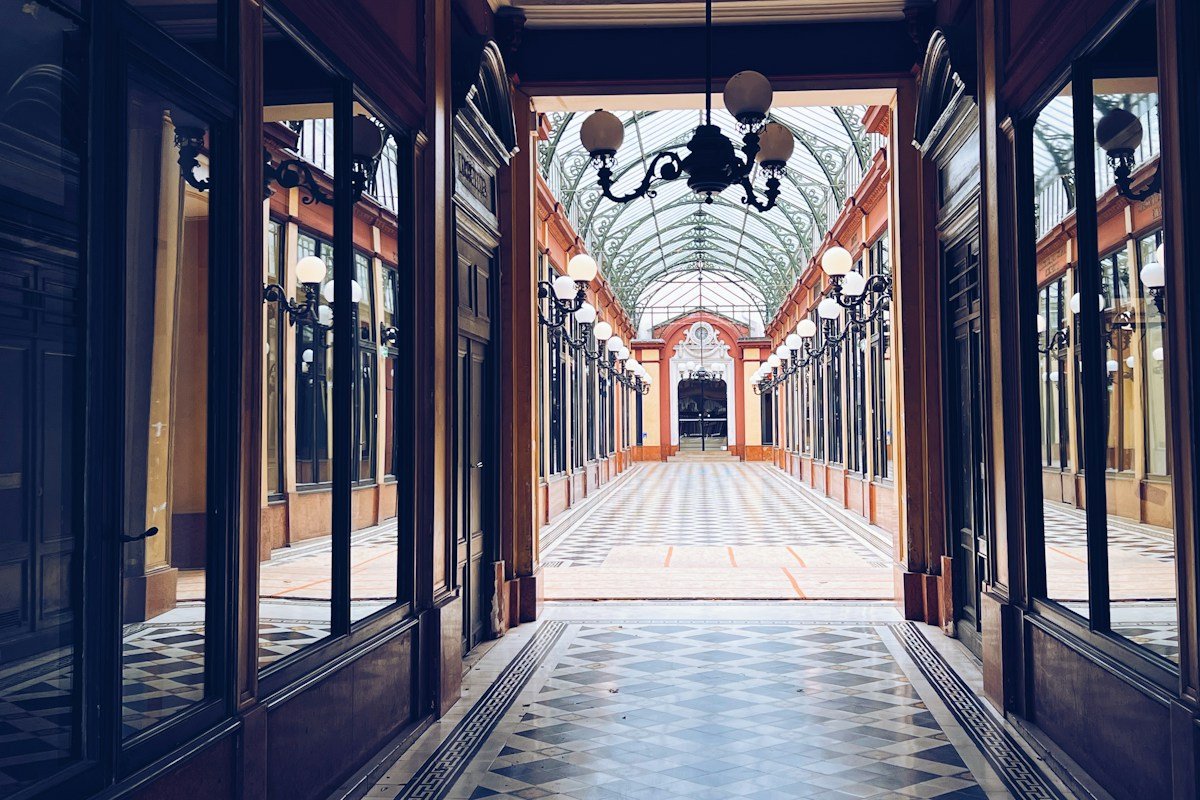
In the rapid transformation of nineteenth-century European metropolises, an unprecedented architectural innovation emerged that redefined the psychological relationship between the individual and the city: the covered arcade. Pioneered in Paris as the passages couverts and rapidly adopted across London, Milan, Vienna, and Saint Petersburg, these glass-roofed pedestrian thoroughfares cut through the dense masonry of municipal city blocks, creating an enchanted interior realm sheltered from rain, mud, and horse-drawn carriage traffic. To step into an antique arcade today, beneath its filigreed cast-iron ribs and dusty vaulted skylights, is to experience an acute wave of anemoia: a profound, bittersweet longing for an era of unhurried urban contemplation that has been systematically erased by twentieth-century automotive planning and twenty-first-century digital commerce.
The covered arcade was the physical laboratory where modern urban consciousness was first forged. As philosopher Walter Benjamin famously observed in his unfinished magnum opus, The Arcades Project, these glass passages were the architectural home of the flâneur: the solitary observer who wandered the city with detached, poetic fascination, immersing himself in the crowd while remaining spiritually immune to commercial haste. Scholarly urban history collections preserved at the British Library document the social life of Victorian arcades, revealing how these liminal spaces fused the luxury of private drawing rooms with the democratic spectacle of public street life. Illuminated by the warm glow of early gaslight lamps, the arcades were dream worlds where commodities were elevated into objects of contemplation rather than mere transactional goods.
Architecturally, the arcades represented a historic technological breakthrough: the marriage of industrial cast-iron engineering with classical masonry and sheet glass. The cast-iron arches permitted sweeping vertical heights and soaring transparent canopies that flooded narrow pedestrian corridors with soft, filtered natural daylight. In environmental psychology, this hybrid spatiality: neither completely indoors nor completely outdoors, triggers unique neurocognitive states. The sensory nervous system is shielded from harsh meteorological extremes and traffic noise, yet remains connected to the diurnal cycle of natural sunlight and weather. This spatial containment produces a soothing, womb-like sense of security that naturally invites introspective reverie and philosophical reflection.
To understand why forgotten arcades continue to captivate the modern imagination, one must examine their spatial geometry, economic sociology, acoustic ecology, and poetic significance. This comprehensive historical investigation explores the architecture of the nineteenth-century arcade, the philosophy of the flâneur, the transition from artisanal bazaars to modern consumer malls, and the enduring psychogeography of urban solitude, demonstrating why these shadowed glass corridors remain among the most poetic spatial monuments ever created by human civilization.
The Architectural Genesis: Industrial Ironwork, Sheet Glass, and Urban Densification
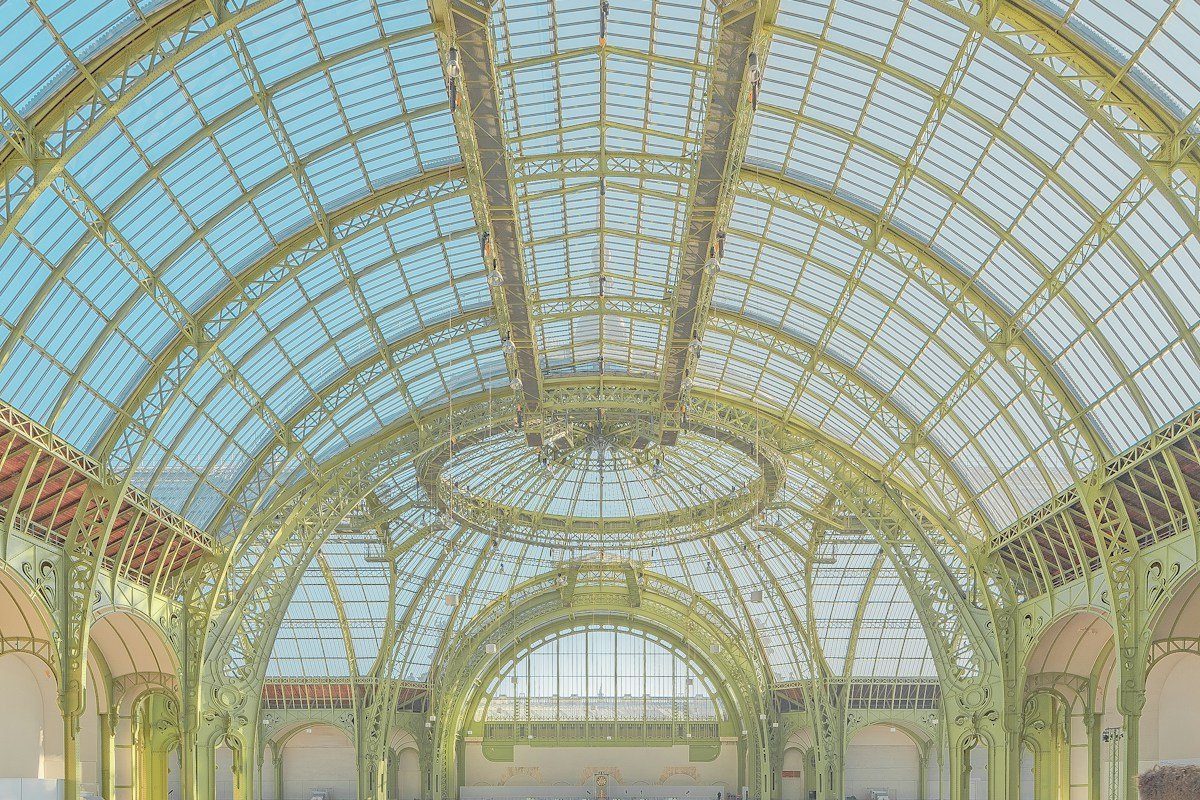
The birth of the covered arcade at the dawn of the nineteenth century was the direct technological consequence of two major industrial innovations: the mass production of structural cast iron and the development of large-scale cylinder sheet glass manufacturing. Prior to the early 1800s, building canopies over wide urban spans using stone or timber was structurally prohibitive, resulting in dark, heavy, and fire-vulnerable enclosures. Cast iron transformed civil engineering by providing unprecedented tensile strength within slender, lightweight structural members that could be cast into intricate classical or Gothic ornament.
In Paris, the Passage des Panoramas (opened in 1800) and the Galerie Vivienne (1823) demonstrated the spectacular potential of this new construction methodology. Master architects like François-Jean Delannoy designed elegant cast-iron trusses and open-web girders that supported vaulted glass ceilings soaring three or four stories above the street. Daylight streamed down into narrow corridors that had previously been dark, rat-infested alleys, illuminating polished marble pavements, carved mahogany shopfronts, and gilded neoclassical moldings. For the first time in human history, urban pedestrians could stroll through city streets while gazing upward at open clouds through a transparent glass sky.
This architectural typology was also driven by intense urban densification and real estate speculation following the French Revolution. In expanding European capitals, ancient medieval street patterns were choking under explosive population growth, lacking sidewalks, underground sewers, or paving. Wealthy property syndicates realized that by purchasing contiguous interior courtyards between existing street blocks and piercing them with covered pedestrian corridors, they could create valuable new commercial frontage away from the filthy, dangerous carriage roads. The arcade became a private, highly profitable urban sanctuary where the bourgeoisie could shop and socialize in pristine comfort.
The structural elegance of these nineteenth-century iron-and-glass canopies exerted a profound influence upon later monumental architecture, directly inspiring Paxton’s Crystal Palace of 1851 and the grand train station vaults of the Victorian railway boom. In the covered arcade, industrial technology was not yet viewed as a brutalizing, dehumanizing force; it was celebrated as a magical, poetic medium capable of bringing light, order, and airy grace into the crowded heart of the historic metropolis.
The engineering of these glass canopies also required sophisticated rainwater diversion and condensation guttering systems integrated directly into the hollow iron columns. Rainwater flowed invisibly down the interior of the decorative structural pillars into municipal storm drains beneath the floor, maintaining an immaculate, dry interior environment even during severe autumn downpours. The sound of rain drumming against thousands of small glass panes overhead created a comforting acoustic rhythm that accentuated the sense of secure, civilized enclosure.
The Sociology of the Flâneur: Detached Observation and Poetic Wandering
The covered arcade was the natural, indispensable habitat of one of modern literature’s most iconic archetypes: the flâneur. First articulated by French poet Charles Baudelaire in his 1863 essay The Painter of Modern Life and later immortalized by Walter Benjamin, the flâneur was a passionate spectator, an amateur philosopher, and a poetic wanderer who spent his days strolling aimlessly through the urban crowd, absorbing the ephemeral spectacles of the modern city with acute, detached sensitivity.
In the frantic, industrializing city of the nineteenth century, where the factory whistle and corporate office enforced strict, rigid timetables, the flâneur’s refusal to hurry was a radical philosophical protest. Famously, in the 1840s, it was fashionable for Parisian dandies to walk through the passages couverts with pet turtles on leashes, allowing the slow, deliberate crawl of the reptile to dictate their walking speed. To hurry was vulgar, bourgeois, and mechanical; to stroll with exquisite slowness was a demonstration of intellectual sovereignty, aesthetic discernment, and spiritual nobility.
The covered arcade provided the ideal physical stage for this detached observation. Unlike the open boulevards where carriage traffic threatened physical injury, the pedestrian-only arcade allowed the flâneur to drift in complete safety, losing himself in the swirling currents of the human crowd. In Baudelaire’s evocative formulation, the crowd was the flâneur’s domain, just as water is the domain of the fish. He became an anonymous mirror of the city, a conscious eye that recorded the fleeting expressions of strangers, the play of shadows across shop displays, and the tragic transience of human vanity.
For modern individuals trapped in the relentless velocity of the digital information economy, the philosophy of the flâneur represents an immensely alluring anemoic ideal. We look back upon the quiet wanderers of the nineteenth-century arcades with bittersweet envy, longing for a time when a human being could simply walk through the world without digital tracking, without commercial urgency, and with the sacred leisure to observe, wonder, and dream.
The flâneur’s mental discipline demanded an extraordinary openness to accidental sensory discoveries. Without a predetermined destination or commercial goal, the walker surrendered to the subtle gravitational pull of the architectural labyrinth, turning down corridors based on the warmth of gaslight, the fragrance of roasted coffee beans from an arcade cafe, or the visual intrigue of an antique book display. This state of open attentiveness fostered deep creative intuition, allowing writers, painters, and philosophers to synthesize novel ideas through serendipitous urban encounters.
The Acoustic Ecology of the Glass Gallery: Reverberation and Muffled Footsteps
The acoustic atmosphere of a nineteenth-century covered passage differed fundamentally from both the open city street and the closed domestic room. Open European streetscapes of the Victorian era were deafeningly loud, dominated by the relentless clatter of iron-shod horse hooves and iron wagon wheels striking rough granite cobblestones, the shouts of street vendors, and the roar of industrial machinery. To step from this chaotic din into the sheltered enclosure of an arcade was to experience an instantaneous, shocking acoustic baptism.
The heavy masonry walls and stone entrance portals functioned as massive acoustic baffles, slashing external urban noise by dozens of decibels. Inside the corridor, the continuous overhead glass canopy and high plaster ceilings created a reverberation time averaging between one point five and two point five seconds. This acoustic space transformed ordinary pedestrian sounds into gentle, musical reverberations: the quiet scuff of leather shoe soles across smooth terrazzo tiles, the soft murmur of polite conversation, the rhythmic ticking of a jeweller’s regulator clock, and the melodic clink of silver spoons against porcelain tea cups.
This reverberant acoustic envelope had a profound psychological impact upon human behavior. Visitors instinctively lowered their speaking voices to an intimate whisper, mirroring the respectful quiet typically observed in ancient libraries or sacred cathedral naves. The arcade enforced a collective acoustic decorum, a mutual agreement among strangers to preserve an atmosphere of peace and dignity. The harsh, aggressive tones of commercial street warfare were suspended in favor of a civilized, contemplative murmuring.
When contemporary sound ecologists analyze historic arcades, they discover that these spaces provide an acoustic shelter that significantly reduces cortisol production and autonomic nervous system arousal. The brain ceases its defensive vigilance against loud, unpredictable traffic noise, allowing higher-order introspective neural circuits to take command. In the gentle acoustic embrace of the glass gallery, modern solitary seekers find an auditory sanctuary where the human voice and human thoughts can finally breathe.
The acoustic reflections of footsteps upon marble tiles create a continuous spatial feedback loop, allowing the walker to perceive the dimensions of the vaulted corridor with their eyes closed. This sensory immersion anchors bodily presence in the physical environment, counteracting the disembodied floating sensation that often accompanies prolonged digital screen use. The sound of one’s own footsteps becomes an acoustic mantra, pacing the thoughts and restoring internal harmony.
Gaslight Illumination, Chiaroscuro Shadows, and Nocturnal Phantasmagoria
The covered arcades were the pioneers of modern commercial artificial lighting, introducing public gaslight illumination decades before it became common on residential street corners. The Passage des Panoramas installed early gas fixtures in 1817, turning evening strolls through the passages into an intoxicating visual spectacle that astonished contemporary visitors from around the world.
Unlike modern electric LED illumination, which provides uniform, flat, and harsh white light, early coal-gas lighting was warm, dynamic, and physically alive. Gas jets burned with an open, luminous amber-yellow flame that gently flickered with every subtle draft of air moving down the corridor. As night fell, hundreds of glowing gas flames were reflected and multiplied across the expanse of polished plate-glass shop windows, gilded mirror panels, and crystal chandeliers, creating a dazzling, multi-layered visual phantasmagoria that seemed to dissolve solid architecture into pure optical enchantment.
Crucially, this gaslit world preserved the mystery of chiaroscuro shadows. The illumination was concentrated along the shopfronts and display cases, while the high cast-iron vaulting and upper residential balconies remained shrouded in soft, velvety obscurity. Figures approaching down the corridor emerged slowly out of the shadows, their silhouettes defined by the flickering amber light before their facial features became clear. This lighting quality invited imaginative projection, turning ordinary evening shoppers into mysterious characters in an unwritten Victorian novel.
Cultural studies directed through the University of Cambridge Department of Architecture analyze how early gas-illuminated commercial arcades reshaped human nocturnal psychology, extending public social life deep into the night while retaining an ethereal, dreamlike intimacy. In our contemporary world of blinding, non-stop electronic glare, the memory of gaslit arcades evokes an intense nostalgic longing for a nocturnal world that respected the beauty of darkness, where illumination was treated as a precious, living art rather than a cheap, sterile utility.
Material Permanence: Terrazzo, Wrought Iron, Stained Glass, and Polished Brass
A primary source of the deep anemoic resonance of nineteenth-century arcades is their extraordinary material permanence and architectural craftsmanship. In stark contrast to contemporary commercial shopping malls constructed from drywall, vinyl flooring, drop-tile ceilings, and synthetic laminates designed for a fifteen-year commercial lifespan, the Victorian and Belle Epoque arcades were built using enduring, noble materials intended to outlive generations.
The pavements of historic arcades were executed in intricate terrazzo and mosaic tesserae, laid by hand by master Italian mosaicists who embedded thousands of individual chips of colored Verona marble, porphyry, and limestone into hydraulic lime mortars. Over two centuries of continuous pedestrian traffic, these marble floors have worn into gentle, undulating hollows that cradle the foot with smooth, polished tactile grace. Every dip and groove in the marble floor records the weight and journey of millions of long-departed human beings.
The structural ironwork of the ceiling arches was adorned with exquisite hand-hammered wrought-iron scrollwork, depicting acanthus leaves, classical rosettes, mythological beasts, and floral garlands. Brass shopfront mouldings, hand-carved mahogany pilasters, etched leaded glass transoms, and bevelled plate-glass display windows were assembled with precision joinery that honored the sacred value of human craft labor. These physical materials possessed density, physical weight, and natural chemical resilience, aging gracefully into rich, dark patinas that modern synthetic substitutes can never replicate.
When a modern visitor touches the cool, heavy brass door handle of a vintage arcade shop or runs their hand across carved mahogany millwork, the brain’s somatosensory cortex registers an unmistakable feeling of physical authenticity. The materials communicate stability, permanence, and historical dignity, offering a powerful antidote to the disposable, lightweight plastic world that surrounds us in modern daily life.
The Micro-Economy of Nostalgia: Antiquarian Booksellers, Printshops, and Curios
As the grand retail trade migrated in the twentieth century toward modern department stores, suburban shopping malls, and digital platforms, the surviving nineteenth-century covered arcades underwent a fascinating economic evolution. Deprived of high-volume mass-market retail, these sheltered historic passages became the natural sanctuaries for specialized micro-economies: antiquarian booksellers, antique print dealers, philatelic shops, vintage watch repairers, bespoke tailors, and cabinets of historical curiosities.
In passages like Paris’s Passage Jouffroy, London’s Cecil Court (the famous Booksellers’ Row), and Milan’s Galleria de Cristoforis, the storefronts became living historical archives. The display windows were no longer filled with mass-manufactured consumer electronics, but with leather-bound eighteenth-century tomes, hand-colored botanical lithographs, vintage mechanical music boxes, antique fountain pens, and glass cases of historical specimens. Each shop became an open door into a forgotten branch of human curiosity and craft.
The proprietors of these arcade shops were not aggressive corporate sales agents, but scholarly archivists, connoisseurs, and eccentrics who possessed encyclopedic knowledge of their respective domains. A visit to an arcade bookshop was not a rapid commercial transaction, but a patient intellectual conversation. Customers could spend hours browsing uncataloged stacks of yellowed paper, breathing in the rich aroma of aged rag paper and animal leather, discovering forgotten historical voices that spoke across the centuries.
This micro-economy transforms the covered arcade into an active preservation engine for human cultural memory. The arcade does not merely preserve historical architecture; it preserves an entire way of relating to physical objects. In these quiet corridors, material artifacts are valued not for their monetary price or commercial utility, but for their historical soul, their craftsmanship, and the stories they carry from the vanished past.
The interior architecture of these specialized boutiques mirrored the labyrinthine quality of the arcade itself. Floor-to-ceiling wooden bookshelves reached via rolling brass ladders, velvet-lined drawers filled with ancient Roman coins and Victorian postage stamps, and glass vitrines displaying brass astronomical instruments invited tactile exploration. In these spaces, time slowed down to a contemplative human pace, allowing the collector to engage in a sacred dialogue with the material remnants of forgotten centuries.
Liminality and Threshold Psychology: The Urban Oasis and Protective Womb
In spatial phenomenology and psychological anthropology, the concept of liminality describes a threshold state: a boundary zone that exists betwixt and between established categories of space and identity. The covered arcade represents the supreme architectural manifestation of liminal space within the urban landscape.
To enter an arcade is to cross a distinct psychological threshold. The entrance is typically a discreet, monumental stone archway cut into the facade of an ordinary street block, often easily overlooked by the uninitiated passerby. Stepping through this portal, the individual leaves behind the competitive, aggressive tempo of the public street, yet does not enter the private, restrictive confines of a private residence. The arcade is a shared interior world, an urban oasis where the individual is simultaneously sheltered and free.
Psychologically, this liminality activates deep archetypal needs for sanctuary and retreat. In ancient architectural traditions, the covered cloister, the temple colonnade, and the enclosed courtyard provided physical shelter where consciousness could rest without withdrawing completely from the world. The nineteenth-century arcade modernized this ancient archetype, creating a protective civic womb within the heart of the roaring industrial city. Within its sheltering glass canopy, the individual feels safe from surveillance, weather, and social judgment, enjoying a rare state of peaceful, unmonitored anonymity.
This threshold psychology explains why anemoic individuals feel an immediate, profound sense of emotional homecoming upon entering an ancient arcade. The space validates their desire for withdrawal without requiring complete isolation. It offers a gentle, dignified sanctuary where the soul can rest between the demands of the outer world and the silence of the interior self.
Walter Benjamin and The Arcades Project: Dialectical Images and Awakening
No discussion of nineteenth-century covered passages is complete without engaging the profound philosophical vision of German cultural theorist Walter Benjamin. Between 1927 and his tragic death in 1940 while fleeing the Gestapo, Benjamin devoted his life to constructing The Arcades Project (Das Passagen-Werk), a monumental, encyclopedic collection of historical fragments, literary quotations, and philosophical reflections designed to decode the secret historical mythology of the nineteenth century through the architecture of the Parisian arcades.
For Benjamin, the covered arcade was the primal dream world of capitalism, an architectural fantasy where the rising bourgeoisie projected its utopian desires for luxury, abundance, and technological progress. In the glowing display windows of the passages, commodities were transfigured into sacred icons, promising human happiness through material consumption. Yet Benjamin recognized that this capitalist dream was doomed to rapid historical decay. As technology advanced, the fashionable arcades of the 1820s were quickly abandoned, becoming obsolete, ghostlike ruins in the heart of the twentieth-century city.
It was precisely in their obsolescence that Benjamin discovered their revolutionary philosophical power. He coined the concept of the dialectical image: a historical constellation where the forgotten, outmoded past suddenly flashes into the present, shattering the illusions of endless capitalist progress and provoking a collective revolutionary awakening. Gazing upon the crumbling plaster, peeling gold leaf, and antiquated gas fixtures of a neglected arcade, the observer confronts the true transience of all commercial empires. The arcade becomes a historical memento mori, proving that our modern shopping malls and digital consumer empires will soon become equally forgotten, quaint ruins.
Benjamin’s profound meditation elevates anemoia from a sentimental nostalgia into an acute, critical historical consciousness. Longing for the nineteenth-century arcade is not a desire to return to the past, but an active, imaginative effort to rescue the forgotten utopian hopes and human ideals that were crushed beneath the wheels of commercial progress, retrieving them as seeds for a more compassionate and humane future.
The Death of the Arcade: Automotive Planning, Department Stores, and Shopping Malls
The historical decline and physical destruction of Europe’s covered arcades during the late nineteenth and twentieth centuries offer a tragic case study in how modern industrial planning can systematically eradicate humane urban spaces in the name of corporate efficiency and automotive transport.
The first major blow came in the 1850s and 1860s with Baron Haussmann’s radical modernization of Paris. Under Emperor Napoleon III, Haussmann drove massive, straight military boulevards through the historic medieval core of Paris, obliterating thousands of ancient buildings and destroying dozens of early covered passages. Haussmann’s grand open boulevards were designed for military cavalry charges, artillery transport, and massive department stores, prioritizing high-velocity traffic over intimate pedestrian wandering. The delicate, winding world of the passages was dismissed as an obsolete medieval relic.
Concurrently, the invention of the department store: pioneered by Aristide Boucicaut’s Le Bon Marché in Paris, revolutionized commercial retail through massive economies of scale, fixed low prices, and multi-story open atriums. The small, independent boutique shops of the arcades could not compete with the sheer volume and aggressive advertising of the department stores. Furthermore, the mid-twentieth-century explosion of the private automobile completed the devastation. Urban planners prioritized roads, parking garages, and high-speed highways, turning city centers into hostile, car-choked deserts where pedestrians were marginalized and pedestrian arcades were demolished for parking lots.
The ultimate insult occurred with the rise of the American suburban shopping mall in the 1960s and 1970s. Designed by architect Victor Gruen as an artificial simulation of European pedestrian town centers, the corporate mall stripped the arcade of all architectural dignity, historical depth, and civic soul. Enclosed in blank concrete boxes without windows, surrounded by vast oceans of asphalt parking, and filled with identical corporate franchise stores, the modern mall became an architectural parody of the covered passage: a sterile consumer trap devoid of beauty, history, or genuine human community.
The Psychogeography of Survival: Secret Passages in Contemporary Capitals
Despite centuries of urban destruction, commercial obsolescence, and real estate redevelopment, a precious handful of historic covered arcades has miraculously survived in the heart of modern world capitals, operating as secret temporal portals for those who possess the eyes to discover them.
In Paris, roughly twenty of the original one hundred and fifty passages couverts remain open to the public today. A journey beginning at the Passage du Grand-Cerf with its breathtaking twelve-meter-high wrought-iron canopy, winding through the intimate bookshops of the Passage Jouffroy, and concluding at the elegant neoclassical rotunda of the Galerie Vivienne allows the modern wanderer to travel across an entire century of architectural history without once stepping into the modern street. In London, the Burlington Arcade off Piccadilly preserves its uniformed beadles in traditional top hats and frock coats, maintaining an unbroken code of nineteenth-century decorum where whistling, singing, and hurrying are still politely prohibited by law.
In Milan, the monumental Galleria Vittorio Emanuele II stands as the grandest covered passage on earth, its soaring glass dome and triumphal arch portals elevating the arcade into a civic cathedral of Italian national identity. In Melbourne, Australia, the magnificent Block Arcade and Royal Arcade preserve exquisite Victorian mosaic floors and wrought-iron skylights in the southern hemisphere, proving the global reach of this beloved architectural typology.
For the contemporary psychogeographer, exploring these surviving arcades is an act of spiritual rebellion against the flattening uniformity of globalization. In these sheltered corridors, one steps off the relentless conveyor belt of contemporary digital existence, entering an alternative temporal frequency where stone, iron, glass, and human memory have forged an enduring truce with the passing of time.
Walking through these preserved passages during twilight hours induces a profound sense of temporal dislocation. As the ambient street light fades and the historic gas or filament lanterns illuminate the glass roofs, the modern city outside recedes into non-existence. The reflections in the vintage shop windows superimpose the modern stroller’s silhouette onto the ghostly furniture of a nineteenth-century parlor, creating a waking dream of historical continuity where past and present exist in harmonious, simultaneous suspension.
The Architectural Future: Resurrecting Pedestrian Arcades in Modern Cities
As modern cities confront the acute crises of climate change, pedestrian isolation, and the collapse of brick-and-mortar retail in the digital age, a visionary group of contemporary urban planners, architects, and sociologists is looking backward to the nineteenth-century arcade for solutions to twenty-first-century urban problems.
Progressive urbanists recognize that automobile-centric city planning has failed human psychology. Modern populations suffer from chronic loneliness, lack of walkable public spaces, and sensory alienation. Forward-thinking architectural firms in Tokyo, Copenhagen, London, and Montreal are designing modern covered pedestrian networks that reinterpret the historic passage for the contemporary era. Utilizing sustainable mass-timber arches, high-performance photovoltaic glass canopies, and passive natural ventilation, these modern arcades create protected, climate-resilient pedestrian corridors that connect transit hubs, residential towers, and independent artisanal markets.
These new pedestrian arcades reject the sterile consumerism of the twentieth-century shopping mall in favor of the mixed-use, democratic vitality of the original passages. They incorporate public reading rooms, indoor community gardens, local craft workshops, and open social seating, transforming the covered street into a vibrant civic commons. Protected from extreme heatwaves, winter blizzards, and urban pollution, citizens can walk, socialize, and contemplate in comfort, rediscovering the sacred joy of pedestrian flânerie.
This ongoing architectural renaissance demonstrates that the covered arcade was never an obsolete historical curiosity, but a timeless, prophetic blueprint for humane urban living. By uniting enduring craftsmanship, natural light, and pedestrian sanctuary, the nineteenth-century arcade continues to guide our imagination toward a more beautiful, contemplative, and civilized urban future.
Comparative Diagnostic Matrix of Urban Spatial Typologies and Psychological Impact
A rigorous urban, architectural, and psychological analysis requires systematic comparison across different municipal spatial environments. The physical geometry, lighting sources, acoustic parameters, and commercial motivations of an urban space directly dictate human emotional well-being, social behavior, and cognitive functioning.
The comparative diagnostic matrix below illustrates the definitive architectural parameters, sensory ecologies, psychological outcomes, and social dynamics that distinguish the historic nineteenth-century covered arcade from the open automotive street and the modern suburban corporate shopping mall. This matrix synthesizes environmental psychology, architectural history, and urban sociology.
| Spatial Dimension | Nineteenth-Century Covered Arcade | Modern Corporate Shopping Mall |
| Structural & Material Quality | Filigreed cast-iron trusses, transparent glass skylights, hand-laid marble terrazzo floors, carved mahogany. | Steel I-beams clad in drywall, drop acoustic tile ceilings, synthetic vinyl/carpet flooring, plastic laminates. |
| Illumination & Daylight | Natural diurnal sunlight through glass canopies; warm flickering gaslight/filament lighting; rich chiaroscuro. | Windowless concrete boxes; continuous high-intensity fluorescent/LED glare; zero connection to outdoor daylight. |
| Acoustic Environment | Reverberant acoustic sanctuary; muffled traffic noise; soft conversational murmurs and discrete footsteps. | Broadband ventilation hums, piped commercial pop music, acoustic deadening, commercial cacophony. |
| Economic & Retail Ecology | Independent artisanal shops, antiquarian books, bespoke tailoring, philatelic dealers, historical curiosities. | Standardized multinational chain stores, mass-manufactured fast fashion, corporate franchise food courts. |
| Psychological Affordance | Fosters flânerie, introspective contemplation, parasympathetic calming, anemoic nostalgia, and social dignity. | Induced Gruen transfer (disorientation to maximize impulse purchases), cognitive overstimulation, fatigue. |
As demonstrated across these architectural and psychological dimensions, the nineteenth-century arcade stands as an extraordinary achievement of human-centered spatial design. By prioritizing pedestrian dignity, natural light, material permanence, and acoustic sanctuary, the historic covered passage created an enduring civic haven that continues to inspire modern urbanists seeking to humanize contemporary cities.
Frequently Asked Questions Regarding Historic Covered Arcades
What was the original historical purpose of the nineteenth-century covered arcade?
Covered arcades were developed in early nineteenth-century European cities like Paris and London to provide safe, clean, pedestrian-only shortcuts through crowded municipal blocks. Protected by glass roofs from rain, mud, and horse-drawn carriage traffic, they allowed the rising bourgeoisie to stroll, shop, and socialize in comfort.
Who was the flâneur, and why were the arcades essential to his philosophy?
The flâneur was a passionate, solitary urban wanderer and philosopher immortalized by Charles Baudelaire and Walter Benjamin. The safe, pedestrian environment of the arcades allowed the flâneur to stroll with exquisite slowness, observing the spectacle of the urban crowd with poetic detachment and resisting industrial haste.
How did cast-iron engineering make the glass-roofed arcade possible?
Before the Industrial Revolution, spanning wide corridors with stone or wood resulted in dark, heavy structures. Structural cast iron possessed high tensile strength in slender members, allowing architects to construct light, soaring arches that supported massive sheet-glass skylights, flooding corridors with natural daylight.
Why do historic arcades feel so acoustically peaceful compared to modern streets?
Heavy masonry entry portals block outside street noise, while continuous overhead glass and high plaster walls produce gentle reverberations that soften footsteps and conversations. This natural acoustic envelope encourages visitors to lower their voices, creating a dignified, library-like quiet.
What role did gaslight illumination play in creating the arcade’s visual atmosphere?
Early coal-gas jets emitted a warm, living amber flame that flickered gently in drafts. Reflected across plate-glass shopfronts and gilded mirrors, gaslight created an enchanting, multi-layered visual phantasmagoria while preserving soft, mysterious chiaroscuro shadows.
Why did so many historic arcades transition into homes for antiquarian books and curios?
As mass-market commercial retail migrated to modern department stores and shopping centers, the quiet, sheltered arcades became the natural refuge for low-volume, high-value specialty trades like antique bookshops, vintage print dealers, and horological restorers who required low overhead and contemplative clients.
What was Walter Benjamin’s philosophical obsession with the Parisian arcades?
In The Arcades Project, philosopher Walter Benjamin viewed the arcades as the primal dream worlds of early capitalism. He argued that their twentieth-century decay functioned as a dialectical image that shattered the myth of continuous industrial progress, offering a revolutionary critique of consumer society.
How did automotive planning contribute to the destruction of Europe’s arcades?
Twentieth-century urban planners prioritized automotive transport, demolishing dense historic pedestrian networks to widen roads, construct parking facilities, and facilitate automobile circulation, which destroyed many delicate covered passages across Europe.
How are contemporary architects resurrecting the concept of the arcade today?
Modern urban architects in cities like Copenhagen, Tokyo, and London are designing mass-timber, climate-resilient covered pedestrian thoroughfares. These modern arcades offer walkable civic sanctuaries protected from extreme weather, reviving the historic beauty of pedestrian flânerie.
Conclusion: Enduring Light Beneath the Iron Canopy
The journey through the nineteenth-century covered arcade reveals that architecture is at its most sublime when it honors the subtle, contemplative needs of the human spirit. In a contemporary world dominated by vehicular noise, digital distraction, and disposable commercial construction, the quiet glass passages of the nineteenth century stand as magnificent monuments to a more civilized, unhurried way of life. Beneath their soaring iron ribs and softly illuminated skylights, we discover a realm where the individual is neither overwhelmed by the city nor alienated from its life, but welcomed into a dignified, beautiful sanctuary of light and peace.
As we walk through these surviving corridors today, listening to the gentle echo of our own footsteps on ancient marble tiles, we are connected to a profound lineage of dreamers, flâneurs, and solitary seekers who found solace beneath the glass canopies of the past. The echoes of the forgotten arcades remind us that true urban greatness is measured not by the speed of our transport or the scale of our skyscrapers, but by the beauty of the spaces we create for the human soul to walk, to wonder, and to dwell in enduring peace.
