

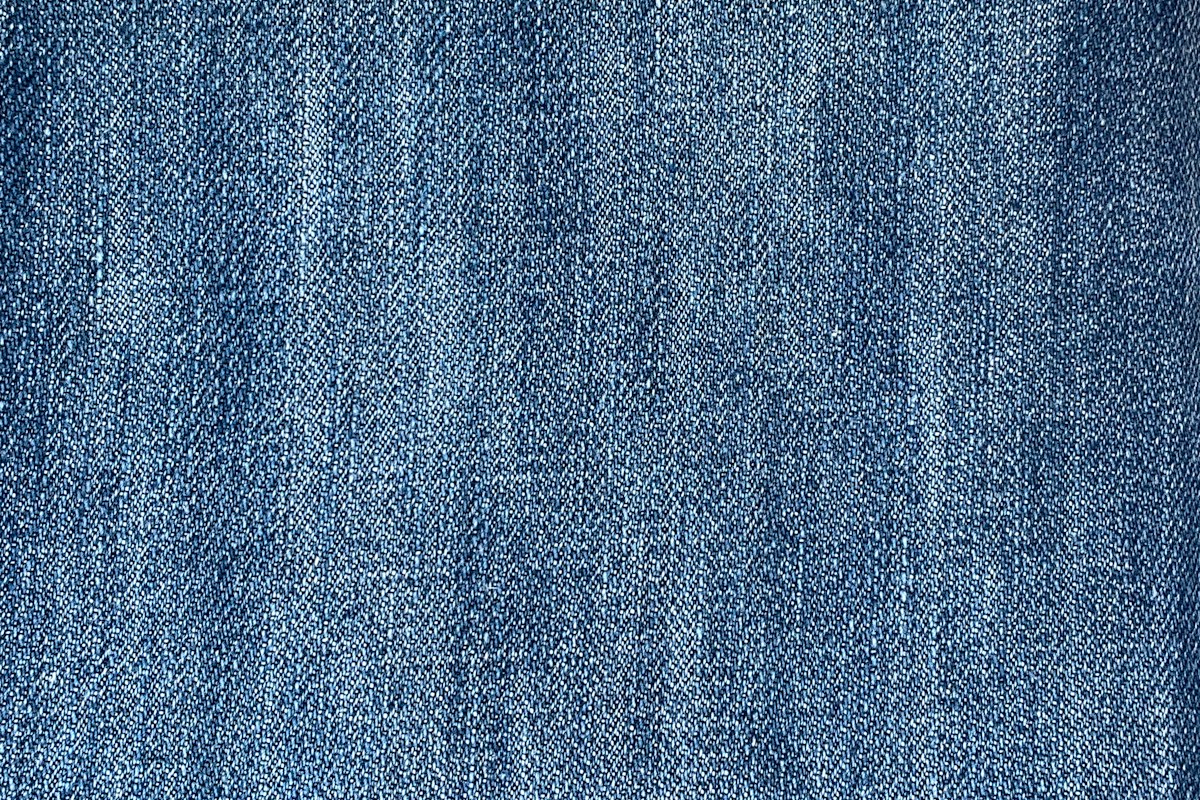
Turn up the cuff of a pair of heavyweight raw denim jeans woven in the legendary mills of Kojima, Okayama Prefecture, and look closely at the outer outseam. There, running along the clean white fabric edge, is a narrow colored thread-most famously a vibrant red or pink line-flanked by tightly bound, woven borders that refuse to fray. Run your thumb across the stiff, unwashed indigo surface, and your fingertips encounter an unmistakable tactile landscape: a gritty, irregular, three-dimensional texture known among textile purists as “slub” and “nep.” It does not feel like the slick, chemically softened stretch denim found in modern fast-fashion department stores; it feels like raw, architectural cotton armor.
That distinctive structural hallmark is selvedge denim (self-edge denim), woven on historic, clattering narrow-shuttle looms such as vintage Toyoda Automatic Looms and American Draper X3 models. Before high-speed modern projectile and air-jet looms revolutionized commercial textile factories in the 1970s by prioritizing industrial efficiency over character, denim was an artisanal marvel of mechanical tension, organic ring-spun cotton fibers, rope-dyeing chemistry, and natural indigo oxidation. When American manufacturers abandoned these historic machines to chase mass-market margins, passionate Japanese textile artisans rescued the discarded looms, deciphered their mechanical idiosyncrasies, and elevated humble gold-miner workwear into one of the most revered craft traditions in modern global menswear.
In this authoritative engineering, metallurgical, and cultural treatise, we explore the complete science and heritage of vintage selvedge denim. We deconstruct the physics of shuttle looms versus modern air-jet projectiles, trace the complex organic chemistry of indigo rope-dyeing and fermentation vats, examine the metallurgical engineering of Toyoda Model G looms, explain the art of raw denim fades and honeycomb creasing, and reveal why authentic Japanese selvedge remains the undisputed pinnacle of sartorial durability and tactile permanence.
1. Etymology and Anatomy: The Mechanics of the “Self-Edge”
To understand the structural superiority of selvedge denim, one must first dissect the fundamental textile definition of the self-edge (selvedge). The term derives from the archaic English phrase “self-edge”: a woven fabric border that seals itself naturally during the weaving cycle, completely eliminating the raw, unraveling fringe characteristic of modern open-weave fabrics.
In conventional high-speed textile manufacturing, a modern projectile or rapier loom fires discontinuous, individual crosswise yarns (weft threads) across the lengthwise warp yarns at speeds exceeding one thousand picks per minute. When the yarn reaches the opposing edge, a mechanical razor blade chops it off. This leaves two raw, exposed edges with loose, fraying threads on both sides of the fabric roll. To prevent the finished garment from unraveling during washing and wear, garment factories must seal these chopped edges using a rapid, heavy overlock sewing stitch (known colloquially as “merrowing” or serging).
In radical contrast, a traditional narrow-shuttle loom weaves an unbroken, continuous crosswise thread. As the wooden shuttle carries the weft yarn back and forth across the warp shed, it loops smoothly around the outermost warp yarns before reversing direction. This continuous looping motion creates a dense, reinforced, perfectly sealed edge that is structurally impossible to fray or unravel. When jeans are assembled, the tailor utilizes this clean edge directly along the straight outseam of the pant leg, providing maximum structural stability and creating the iconic visible selvedge “ticker line” that denim connoisseurs proudly display on turned-up cuffs.
2. The Industrial Evolution: From Nîmes and Levi Strauss to the Gold Rush
The historical lineage of denim represents an extraordinary transatlantic journey bridging seventeenth-century French textile guilds, nineteenth-century Bavarian merchants, and California gold miners.
The word “denim” is a linguistic corruption of serge de Nîmes, a sturdy twill fabric made from silk and wool woven in the French textile center of Nîmes. Concurrently, maritime sailors in the Italian port city of Genoa wore durable trousers made from cotton-linen fustian dyed with indigo; French merchants referred to these Genoese sailors and their fabric as Gênes, which evolved into the modern English word “jeans.”
The true birth of modern denim workwear occurred in San Francisco during the California Gold Rush. In 1853, Bavarian immigrant Levi Strauss established a dry-goods wholesale business catering to prospectors and miners who required rugged gear. In 1872, Nevada tailor Jacob Davis approached Strauss with an ingenious mechanical patent: reinforcing the stress points of miners’ cotton-duck and heavy denim work pants with hammered copper rivets at the pocket corners and the base of the fly. On May 20, 1873, the U.S. Patent Office granted Patent No. 139,121 to Strauss and Davis for “Improvement in Fastening Pocket-Openings,” birthing the legendary Levi’s 501 waist-overall and inaugurating the modern era of riveted denim workwear.
3. The American Epicenter: Cone Mills White Oak Plant and the Draper X3
For nearly a century, the beating heart of global denim production was located not in Japan or Europe, but in Greensboro, North Carolina: the legendary White Oak Plant of Cone Mills, established by brothers Moses and Ceasar Cone in 1905.
In 1915, Cone Mills signed the historic “Golden Agreement” with Levi Strauss & Co., securing the exclusive contract to manufacture all XX heavyweight denim for Levi’s 501 jeans. To meet this colossal demand, White Oak filled its cavernous brick weaving rooms with hundreds of American-made Draper Model X3 and E-Model narrow-shuttle looms. The factory was an engineering cathedral: heavy timber floors absorbed the immense physical vibration of hundreds of cast-iron shuttles clattering back and forth twenty-four hours a day under humidified studio air.
The denim produced on Cone’s Draper looms possessed a legendary weight, hand-feel, and indigo depth. It was woven on narrow 28-inch to 30-inch fabric rolls, requiring roughly three yards of fabric to assemble a single pair of jeans. Cone Mills introduced colored identification lines woven into the selvedge edge to help cutters identify client-specific fabric weights: Levi’s received a custom red ticker thread, Lee received blue or green, and Wrangler received yellow. The White Oak plant operated continuously until its heartbreaking closure in December 2017, marking the end of domestic industrial selvedge production in the United States.
4. The Great Efficiency Shift: Air-Jet Looms and Mass-Market Degradation
By the late 1960s and early 1970s, global consumer culture underwent a tectonic commercial transformation. Jeans, once the exclusive uniform of cowboys, factory machinists, and countercultural rebels, evolved into a multi-billion-dollar global fashion commodity consumed by hundreds of millions of suburban buyers.
Faced with unprecedented demand, commercial textile mills confronted a severe mechanical bottleneck: the narrow-shuttle loom was too slow, too narrow, and too expensive to operate. A vintage Draper or Toyoda shuttle loom operates at roughly 130 to 180 picks per minute, producing barely a few dozen meters of 30-inch-wide fabric per day. Operating the machines required skilled mechanical tuners who listened to the clatter of the loom to diagnose broken shuttles or thread breaks by ear.
The global textile industry abandoned shuttle looms in favor of revolutionary modern sulzer projectile, rapier, and air-jet looms. An air-jet loom shoots the weft thread across the warp using high-pressure pneumatic blasts of compressed air at speeds exceeding 1,200 picks per minute across massive 60-inch-wide rolls: yielding over five times the fabric output at a fraction of the labor cost. However, this industrial victory came at an enormous aesthetic and tactile cost. Modern open-end projectile denim was flat, slick, uniform, and devoid of soul. The golden age of character-rich, textured selvedge denim appeared extinct in the West.
5. The Japanese Salvation: Kojima, Kurabo, and the Osaka Five
Just as American mills were decommissioning their shuttle looms and sending them to scrap heaps, an obsessive group of Japanese textile artisans in Okayama Prefecture recognized that something priceless was being erased from the world. Thus began the legendary Japanese Selvedge Renaissance.
Following World War II, American GI culture, Hollywood cinema (Marlon Brando in The Wild One, James Dean in Rebel Without a Cause), and rock-and-roll ignited an intense fascination with vintage American workwear among Japanese youth (the Ametora movement). Vintage Levi’s from the 1940s and 50s commanded astronomical prices in Tokyo vintage shops. In the late 1960s, master weavers at the historic Kurabo Mills in Kojima, Kurashiki, partnered with Big John, a local uniform manufacturer, to reverse-engineer authentic vintage American denim.
In 1972, Kurabo unveiled KD-8, the first Japanese-woven selvedge denim. This breakthrough ignited a golden era led by the iconic “Osaka Five” heritage brands: Studio D’Artisan (founded 1979), Denime (1988), Evisu (1991), Fullcount (1992), and Warehouse (1995). These passionate founders tracked down forgotten vintage shuttle looms across rural Japan, studied the microscopic grain and thread counts of pre-war vintage jeans, and committed themselves to recreating authentic heritage denim with a level of metallurgical and textile perfection that surpassed even original American manufacturing.
6. Toyoda Model G Looms: Sakichi Toyoda’s Masterpiece of Kinetic Tension
At the center of Japan’s selvedge supremacy sits one of the greatest mechanical engineering masterpieces in industrial history: the Toyoda Model G Automatic Shuttle Loom, invented in 1924 by Sakichi Toyoda, the legendary mechanical genius whose textile company later birthed the Toyota Motor Corporation.
The Toyoda Model G was the world’s first automatic loom capable of changing shuttles non-stop without slowing down or interrupting the weaving cycle. More importantly for contemporary denim purists, the Model G was a mechanical titan of cast iron, heavy wooden heddles, and leather friction straps. Unlike modern digital air-jet looms that maintain computer-regulated, ultra-consistent thread tension, the Toyoda shuttle loom operates under low, organic, mechanical tension.
Because the loom is driven by heavy rotating camshafts and gears, the tension on the warp threads fluctuates slightly with every cycle of the machine. The heavy wooden shuttle, tipped with polished steel and carrying a wooden bobbin of weft yarn, flies physically through the open shed with visceral kinetic force. As the shuttle decelerates and reverses, the yarn relaxes, introducing microscopic air pockets and tension variances into the weave. This mechanical “chatter” is not an engineering flaw; it is the physical handwriting of the machine, imbuing the resulting denim with unmatched textural warmth, breathability, and physical soul.
7. The Anatomy of Cotton: Long-Staple Zimbabwe vs. U.S. Cotton Fields
The character of fine selvedge denim begins long before yarns are loaded onto a loom; it is determined by the botanical genetics and harvesting methods of the raw cotton staple.
Conventional commercial jeans utilize short-staple upland cotton, machine-harvested and treated with harsh chemical defoliants, resulting in broken fibers that require heavy synthetic resin coatings to prevent breakage during weaving. In stark contrast, premier Japanese mills (such as Shinya Mills and Nihon Menpu) prioritize high-grade long-staple and extra-long-staple (ELS) cottons, most famously hand-picked Zimbabwean cotton.
Zimbabwean cotton is harvested entirely by hand, ensuring that the delicate cotton bolls are picked without damaging the fibers or contaminating the harvest with broken leaves and stems. Because the staple length exceeds 35 millimeters, the fibers can be spun into yarns that are exceptionally supple, durable, and naturally lustrous. When woven on low-tension shuttle looms, long-staple cotton produces denim that is incredibly stiff and armored when raw, yet breaks down with wear to become as soft and comfortable as cashmere, conforming intimately to the physical anatomy of the wearer’s body.
8. Ring-Spun vs. Open-End Spinning: The Creation of “Slub” and “Nep”
To understand the rough, three-dimensional grain of vintage selvedge denim, one must examine the engineering physics of yarn spinning: Ring-Spun yarns versus Open-End (Rotor) yarns.
In modern mass-market manufacturing, mills utilize Open-End (OE) rotor spinning, invented in the 1960s. Open-end spinning blasts raw cotton fibers into a high-speed spinning centrifuge, twisting them into yarn at blinding speed. The resulting yarn is perfectly uniform, cylindrical, and smooth, but structurally weak and brittle: the fibers are aligned randomly, giving the fabric a flat, paper-like surface that fades with dull, uniform grayish tones.
Vintage selvedge denim relies exclusively on Ring-Spun cotton yarns. Ring spinning draws out a roving of cotton fibers, twisting them continuously around a central axis using a traveling steel ring and traveler traveler. This process aligns the long cotton fibers in a parallel spiral, locking immense tensile strength into the yarn. Furthermore, vintage spinning frames introduce natural, controlled irregularities in yarn thickness: thick sections are known as “slub”, while tiny protruding cotton knots and fuzzy tufts are known as “nep.” When woven together in a right-hand twill, these slubby ring-spun yarns produce an organic, cross-hatched, three-dimensional tactile topography that no modern computer loom can simulate.
9. The Chemistry of Indigo: Natural Plant Extraction vs. Synthetic Fermentation
The mesmerizing color of blue jeans is governed by an ancient organic dye with a unique chemical personality: indigo (indigotin, $\text{C}_{16}\text{H}_{10}\text{N}_2\text{O}_2$).
For thousands of years, natural indigo was extracted through the harvesting and anaerobic microbial fermentation of leaves from plants such as Indigofera tinctoria in India and Persicaria tinctoria (sukumo) in Tokushima, Japan. In 1897, German chemist Adolf von Baeyer, working with BASF, synthesized pure synthetic indigo from coal tar derivatives, which quickly replaced botanical agriculture due to its consistency and low cost.
What makes indigo chemically unique among textile dyes is that it is completely insoluble in water. To dye cotton, solid indigo pigment must first be chemically “reduced” inside an alkaline vat using sodium hydrosulfite (or natural bacteria) into a water-soluble, pale yellow-green compound known as leuco-indigo (indigo white). Cotton yarns are submerged in this yellowish bath, absorbing the leuco-indigo molecules. When the wet yarns are pulled out of the vat and exposed to ambient air, atmospheric oxygen instantly oxidizes the molecules back into insoluble blue indigotin, permanently locking the dye inside the cotton fiber. Repeating this dip-and-oxidation cycle multiple times deepens the shade from pale sky blue to inky midnight obsidian.
10. Rope-Dyeing Technology: The Secret of the White Cotton Core
If you take a pair of raw selvedge jeans, cut a single blue warp thread with a razor blade, and look at the cross-section under a microscope, you will discover the foundational secret of raw denim fading: the white cotton core.
In modern synthetic dyeing processes, fabric is submerged in high-pressure dye vats that penetrate completely through the yarn, coloring the entire fiber solid blue. If a pair of jeans dyed this way is scraped or abraded, it simply reveals more blue beneath the surface. Real heritage denim, however, is manufactured using the continuous rope-dyeing technique, invented in the United States in the early twentieth century.
In rope-dyeing, hundreds of parallel cotton warp yarns are bundled together into thick, continuous ropes resembling ship rigging, measuring several thousand yards in length. These ropes are pulled continuously through a towering bank of alternating indigo dip-vats and tall vertical oxidation air-towers (the “skying” process). Because the yarn travels rapidly through the vat under high tension, the indigo molecules do not have sufficient time to penetrate deep into the center of the yarn. The indigo dye oxidizes and locks exclusively onto the outermost perimeter of the cotton fibers, leaving the dense central core of the yarn pristine, un-dyed pure white. It is this microscopic white core that makes high-contrast raw denim fades physically possible.
11. Twill Weave Physics: Right-Hand Twill, Left-Hand Twill, and Broken Twill
Denim is fundamentally a warp-faced twill textile: a weave structure where the colored warp threads float over two or three crosswise weft threads, creating a distinctive diagonal ridge pattern running across the face of the fabric.
The orientation of this diagonal ridge radically influences the hand-feel, drape, and fading characteristics of the finished garment:
- Right-Hand Twill (RHT / “Z-Twill”): The diagonal twill lines run upward and to the right (from bottom-left to top-right). This is the traditional weave popularized by Levi’s. Because the twist of standard ring-spun yarn aligns with the twill direction, RHT yields a crisp, firm hand and sharp, high-contrast fades.
- Left-Hand Twill (LHT / “S-Twill”): The twill lines run upward and to the left (bottom-right to top-left), famously championed by Lee. Because the twill runs counter to the natural twist of the yarn, the fibers bloom outward, producing an exceptionally soft, buttery surface texture and smooth, vertical streaky fades (tate-ochi).
- Broken Twill: Invented by Wrangler in 1964 to combat the natural tendency of twill jeans to twist around the wearer’s leg (leg twist). Broken twill alternates right-hand and left-hand diagonal weaves in a zigzag herringbone pattern, neutralizing mechanical torque and keeping the pant leg completely straight.
Understanding these weave mechanics allows collectors to appreciate the distinct structural personality of different heritage denim houses.
12. Raw (Unsanforized / “Shrink-to-Fit”) vs. Sanforized Denim
When purchasing authentic vintage-style selvedge denim, enthusiasts must navigate the critical engineering divide between Sanforized and Unsanforized (raw loomstate / shrink-to-fit) fabric.
In 1930, American inventor Sanford Lockwood Cluett patented the Sanforization process: a mechanical pre-shrinking treatment. Freshly woven denim is steamed, passed over heated cylinders, and mechanically compacted between a thick rubber belt and a heated shoe, physically compressing the warp yarns before the fabric is cut. Sanforized denim experiences minimal dimensional shrinkage (typically under 1 to 3 percent) when washed, allowing garment manufacturers to cut consistent, predictable sizes.
However, purists and artisanal Japanese brands (like Samurai Jeans and Oni Denim) champion Unsanforized (loomstate) denim. Loomstate denim is pulled straight off the shuttle loom, rolled, and stitched into jeans without chemical baths, mechanical compression, or heat treatments. When a wearer submerges loomstate jeans in a warm bathtub for their first soak, the fibers contract violently, shrinking the garment by 8 to 10 percent in length and width (up to two full waist sizes and three inches of inseam). As the wet cotton dries around the wearer’s physical legs, it molds permanently to their unique bodily contours, creating a bespoke, customized structural fit that no pre-sanforized garment can ever match.
13. Heavyweight Denim Engineering: From 12oz Everyday Weaves to 25oz Monsters
In the standard commercial apparel industry, denim weight typically ranges between a lightweight 9 ounces and 12 ounces per square yard. In the realm of artisanal Japanese selvedge, fabric weight is treated as a monumental engineering challenge: the world of heavyweight and super-heavyweight denim.
Brands like Iron Heart (famed for their 21oz and 25oz armor-weight jeans) and Naked & Famous have pushed vintage shuttle looms to their absolute metallurgical limits. Weaving a 21oz or 25oz denim requires yarn so thick and heavy that standard shuttle looms shudder violently under the strain. Mill technicians must recalibrate cast-iron gears, reinforce drive belts, and slow the loom down to a crawl to prevent the heavy shuttles from shattering.
Heavyweight denim acts as an impenetrable windproof shield, originally engineered by Iron Heart for Japanese motorcycle riders facing high-speed highway drafts. When new, a 25oz pair of jeans is so rigid that it can literally stand upright on the floor unaided without a human body inside. Breaking in such garments requires months of physical fortitude, but rewards the wearer with monumental, razor-sharp creases and a level of indestructible durability that outlasts decades of extreme punishment.
14. The Physics of Fades: Whiskers, Honeycombs, and Train Tracks
The supreme obsession of the global raw denim community is the cultivation of individualized fades: the gradual, physical revelation of the white cotton core through months of daily wear and friction.
Because raw denim is stiff with starch and packed with un-penetrated indigo dye, repetitive physical movements lock sharp, permanent geometric creases into the fabric:
- Whiskers (Hige): Horizontal, radial stress creases radiating across the lap and upper thighs, formed by sitting and walking.
- Honeycombs (Hachinosu): Diamond-shaped geometric accordion creases formed behind the knees from repeated bending and squatting.
- Train Tracks (Kizamu): Bold, parallel fade lines running down the outer outseam, created by the physical ridge of the selvedge fabric edge rubbing against the outer denim face during wash and friction.
- Roping: The distinctive, undulating spiral fade pattern along the bottom leg hem, created exclusively by the tension of an authentic vintage Union Special 43200G chainstitch machine.
Unlike factory-distressed jeans that are sandblasted or acid-washed with artificial patterns, authentic raw denim fades act as a living physical diary: every scrape, every phone outline in a pocket, and every daily step is permanently etched into the indigo architecture of the pant.
15. The Union Special 43200G Chainstitch: The Hemming Holy Grail
In the esoteric subculture of vintage denim restoration, no piece of machinery inspires more fanatical reverence than a specific antique sewing machine manufactured in Chicago during the 1950s: the Union Special 43200G Bulldog chainstitch hemming machine.
A modern tailor hems trousers using a standard lockstitch sewing machine, which utilizes two threads to form a flat, symmetrical, static stitch. A lockstitch hem lies completely flat and produces a dull, uniform fade along the hem. The Union Special 43200G, by contrast, was engineered with a unique, deliberate mechanical quirk: its feeding dog and folder mechanism apply asymmetrical pulling tension to the hem during sewing.
This differential tension forces the hem fabric to twist slightly on the bias as the needle forms an interlocking chainstitch loop. When the hem is washed in hot water, this differential tension causes the fabric to shrink unevenly, puckering into a tight, undulating, spiral rope texture. Over months of wear and friction against boots and sneakers, this puckered rope texture fades into the legendary “roping effect”-a rhythmic alternating pattern of light indigo peaks and dark indigo valleys that vintage denim purists demand as the non-negotiable hallmark of authentic hem craftsmanship.
16. Environmental Chemistry: Water Consumption, Sulfur Dyeing, and Green Innovations
While heritage denim celebrates traditional craft, the modern textile world has been forced to confront the severe ecological footprint of industrial denim production: traditional denim manufacturing is historically water-intensive, consuming thousands of liters of fresh water to grow, dye, and wash a single pair of jeans.
Artisanal Japanese mills have taken the lead in developing closed-loop eco-chemical systems. Because raw selvedge denim is sold unwashed to consumers, it eliminates the devastating millions of gallons of water, toxic chemical bleaches, and potassium permanganate washes used by mass-market factories to artificially distress commercial fast fashion.
Furthermore, cutting-edge mills like Kurabo and Kaihara have introduced ozone fading and supercritical carbon dioxide dyeing systems, which use pressurized gas to oxidize and apply indigo pigment with zero wastewater discharge. By combining centuries-old shuttle loom mechanics with state-of-the-art closed-loop filtration, the Japanese heritage industry proves that preservation of classical craft can exist in harmonious alignment with rigorous environmental stewardship.
17. Fast Fashion vs. Heritage Denim: The True Cost of Micro-Trends
To truly appreciate the value of a handcrafted pair of Japanese selvedge jeans costing three hundred dollars, one must compare it against the hidden ecological and economic horrors of twenty-dollar fast-fashion stretch denim.
Fast-fashion jeans are manufactured from cheap, short-staple cotton heavily blended with synthetic elastane, polyester, and petroleum-based plastics. These jeans are designed for planned obsolescence: after twenty washes, the thin synthetic elastic fibers snap, causing the fabric to bag out at the knees, lose its shape, and blow out at the crotch. Millions of tons of these plastic-blended jeans end up in overflowing landfills in the Atacama Desert or the beaches of West Africa, where they shed toxic microplastics that persist in the biosphere for centuries.
A pair of 100 percent cotton heavyweight selvedge jeans, by contrast, is built on the philosophy of generational permanence (Mottainai). It is designed to be worn continuously for five to ten years, repaired when worn through traditional Japanese sashiko stitching or darning, and passed down. When its useful life finally ends decades later, pure organic cotton naturally biodegrades into soil, leaving zero synthetic pollutants behind. Heritage selvedge is not a luxury indulgence; it is a profound ethical rejection of disposable consumerism.
18. Collector’s Care Guide: The Art of Soaking, Washing, and Storing Raw Denim
For newcomers to raw selvedge denim, proper garment care is a subject of endless myths, internet arguments, and conflicting advice. Maintaining the structural integrity of your denim requires simple adherence to textile physics.
If your jeans are unsanforized (loomstate), begin with an initial forty-five-minute soak in lukewarm water inside a bathtub, hung by the belt loops, to initiate shrinkage and set the starch. If your jeans are sanforized, you can wear them immediately. Wear your jeans continuously for three to six months to establish sharp, deep crease lines around the lap and knees before their first wash.
When washing, ignore the foolish internet myth of “never washing your jeans.” Sweat, body oils, and microscopic dust particles accumulate between cotton fibers; if left unwashed, these acidic oils degrade the cotton yarns, causing premature crotch blowouts. When washing, turn the jeans inside out, submerge them in cold water with a gentle, bleach-free liquid detergent (such as Woolite Black or specialized denim wash), agitate gently by hand, and rinse thoroughly. Never use a high-speed spin cycle, which causes ugly vertical marble streaks, and never, under any circumstances, place raw denim in an electric tumble dryer. Hang dry your jeans upside down in the shade, allowing ambient air to preserve the crisp indigo contrast and structural dignity of the cloth.
Textile and Engineering Comparison Across Denim Paradigms
To gain total clarity on why Japanese selvedge denim commands unrivaled respect across the global menswear community, one must analyze its structural, mechanical, and material specifications directly against modern commercial stretch denim and classic American mid-century workwear.
The divergence between these paradigms is not merely aesthetic; it represents completely opposite manufacturing philosophies: high-speed industrial mass-production prioritized for profit margins versus low-speed kinetic craftsmanship prioritized for longevity, tactile character, and individualized aging. The following comparative matrix outlines the loom mechanics, cotton grades, dyeing methods, and structural durability across the four primary eras of denim production.
| Denim Manufacturing Paradigm | Loom Mechanism & Width | Yarn Spinning & Fiber Grade | Dyeing Technology | Structural Longevity |
|---|---|---|---|---|
| Historic American Workwear (1920-1965) | Draper X3 Shuttle Looms; Narrow 29-30 inch | 100% American Upland cotton; Ring-Spun | Continuous indigo rope-dyeing; White cotton core | High (10-15+ years); Rugged workwear standards |
| Modern Fast-Fashion Denim | Sulzer Air-Jet Looms; Wide 60-inch; Chopped edges | Short-staple OE cotton blended with 2-5% elastane/poly | High-pressure vat immersion or sulfur dyeing | Very Low (6-18 months); Elastic failure, crotch blowouts |
| Artisanal Japanese Selvedge (Kojima) | Toyoda Model G Vintage Looms; Low-tension 30-inch | Hand-picked Zimbabwe/Suvin cotton; Ring-spun slub | Pure indigo rope-dyeing (up to 16-24 dips); White core | Exceptional (15-20+ years); Repairable with sashiko darning |
| Super-Heavyweight Selvedge (21-25oz) | Reinforced vintage shuttle looms run at ultra-low speeds | Ultra-dense thick multi-ply ring-spun cotton yarns | Deep rope-dyeing or mixed natural indigo vats | Indestructible; Bulletproof armor against abrasion and wind |
Frequently Asked Questions About Selvedge Denim and Shuttle Looms
What is the primary difference between selvedge denim and non-selvedge denim?
Selvedge denim is woven on traditional narrow-shuttle looms, where a wooden shuttle carries a continuous weft thread back and forth across the fabric, creating a tightly woven, reinforced “self-edge” that will not fray. Non-selvedge denim is produced on modern wide air-jet looms, where individual threads are chopped at the edges, requiring overlock stitching to prevent unraveling.
Why are vintage Toyoda shuttle looms so prized in Japanese denim weaving?
The Toyoda Model G automatic shuttle loom, invented in 1924 by Sakichi Toyoda, weaves fabric under low, natural mechanical tension. The physical movement of the wooden shuttle and cast-iron gears introduces microscopic variations and slub into the yarn. This produces an irregular, three-dimensional, textured fabric with breathability and character that high-speed modern digital looms cannot duplicate.
What does “raw denim” mean and how does it differ from washed jeans?
Raw denim (dry denim) is fabric that has not undergone any artificial distressing, chemical washing, or factory fading after leaving the loom. It is sold in its original, stiff, unwashed state. The wearer breaks in the jeans themselves through daily physical movement, creating personalized, natural fades that reflect their unique lifestyle.
Why do raw denim jeans fade with high-contrast patterns?
High-contrast fades are made possible by continuous rope-dyeing. During rope-dyeing, cotton yarns pass quickly through indigo vats, causing the dye to oxidize only on the outer surface while leaving the central core of the yarn pure white. As physical friction rubs away the outer indigo layers at crease points (knees, lap), the bright white cotton core is revealed.
What is the difference between sanforized and unsanforized (shrink-to-fit) denim?
Sanforized denim undergoes a patented mechanical pre-shrinking process involving steam and heated rollers, resulting in minimal shrinkage (under 2%) when washed. Unsanforized (loomstate) denim receives zero pre-shrinking treatments; upon its first soak, it shrinks between 8% and 10%, molding tightly to the wearer’s anatomy.
Why is the Union Special 43200G sewing machine so famous for hemming?
The antique Union Special 43200G Bulldog machine forms an interlocking chainstitch while exerting uneven mechanical tension across the hem fold. When the hem is soaked, this differential tension causes the fabric to twist into a puckered spiral shape, which wears into the celebrated “roping effect” prized by vintage denim collectors.
Why is Zimbabwean cotton considered the gold standard for selvedge denim?
Zimbabwean cotton is hand-picked without industrial machinery or harsh defoliants, preserving its long-staple fiber length. When spun, it produces exceptionally durable, lustrous, and strong ring-spun yarns that feel rigid when raw, but soften into a supple, comfortable, breathable fabric with prolonged wear.
How should authentic raw selvedge jeans be washed?
To preserve sharp fades, wear the jeans for 3 to 6 months before the first wash to establish creases. When washing, turn the jeans inside out, submerge them in cold water with gentle liquid detergent, gently agitate by hand, and hang them to air dry in the shade. Never use high-speed spin cycles and never place them in an electric dryer.
Conclusion: The Timeless Soul of Mechanical Weaving
In a global apparel marketplace dominated by ephemeral digital trends, synthetic petroleum fibers, and disposable garments designed to disintegrate after a season, Japanese selvedge denim stands as a majestic sanctuary of kinetic authenticity. It is a triumphant reminder that the highest form of luxury is not found in slick, machine-perfect uniformity, but in the honest, tangible idiosyncrasies of mechanical craft.
When you pull on a pair of raw selvedge jeans woven on a clattering Toyoda shuttle loom in Kojima, you are not merely wearing trousers; you are wearing living industrial archaeology. You are wearing the kinetic rhythm of cast-iron gears, the deep organic chemistry of indigo oxidation, and the quiet devotion of master Japanese weavers who refused to let human craftsmanship be extinguished by the altar of speed. As the stiff cotton softens and conforms to your body, gradually revealing its brilliant white core through years of daily adventure, the denim becomes an intimate, indestructible mirror of your own life.
Scholarly Citations and Authoritative Textile Archives
- Toyota Commemorative Museum of Industry and Technology: Sakichi Toyoda and the Invention of the Model G Automatic Loom (tcmit.org)
- Smithsonian Institution National Museum of American History: The American Textile Industry and Cone Mills Historical Collection (si.edu)
- Textile Society of America: Textile Society of America: Indigo Chemistry and Ancient Fermentation Vats (textilesocietyofamerica.org)
- Library of Congress Patent Office Archives: U.S. Patent 139,121: Levi Strauss and Jacob Davis Riveted Workwear (loc.gov)
- Kurashiki City Historical Archives: Kojima Denim District: History of the Japanese Textile Capital (city.kurashiki.okayama.jp)
- Internal Archive: Anemoia Vintage Culture, Heritage Textiles, and Workwear Vault

