

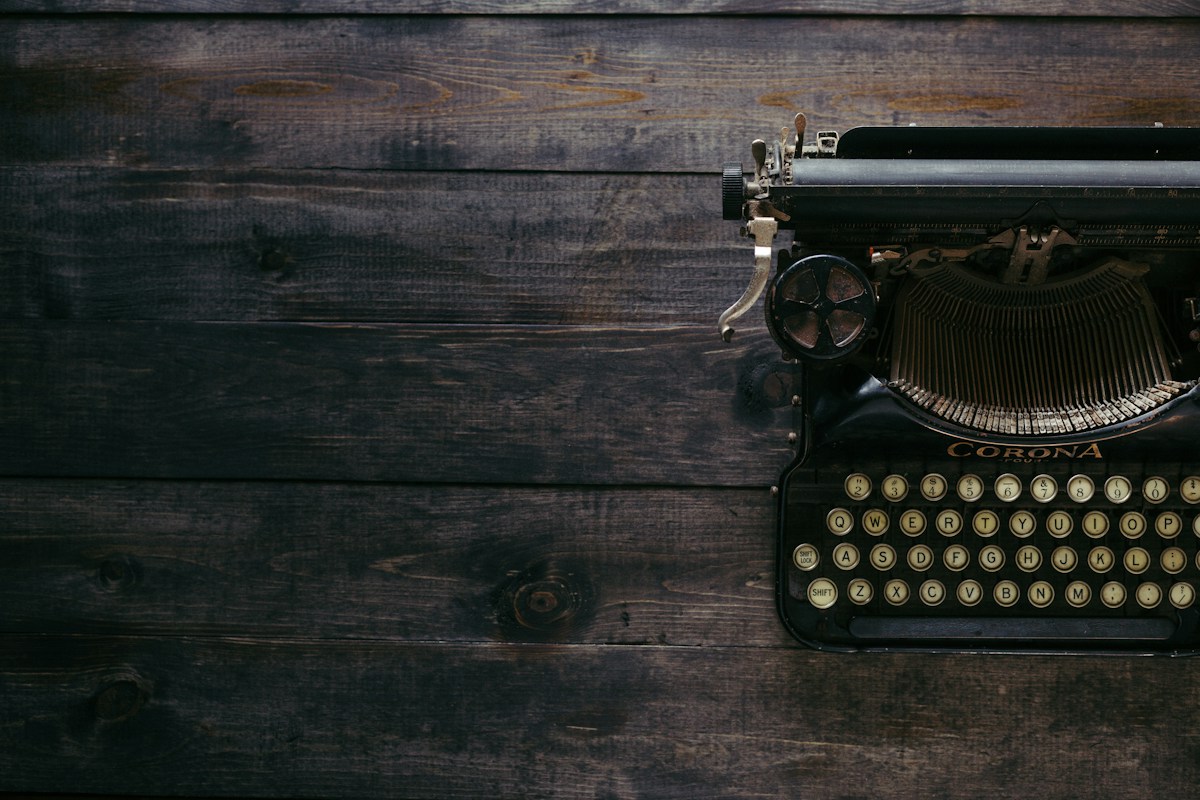
Strike a cast-steel round key on an olive-green Hermes 3000 or a black enamel Underwood No. 5, and experience a mechanical sensation that has been completely eradicated by modern capacitive laptop keyboards. Your finger depresses a mechanical lever with several ounces of deliberate physical resistance; deep inside the stamped-steel belly of the machine, a complex linkage of slotted bell-cranks and sub-levers snaps into action. A slender forged steel typebar leaps from the curved basket, whipping through ambient air to slam a hardened typeface slug against an inked cotton ribbon, driving the physical impression deep into the cotton fibers of heavy bond paper wrapped around a vulcanized rubber platen. A millisecond later, an escapement pawl releases, a coiled mainspring pulls the carriage one space to the left with a sharp metallic clack, and the resonant bell rings with crystalline clarity.
That percussive, tactile rhythm is the timeless music of the manual mechanical typewriter. Far from being a romantic relic for nostalgic hipsters, the manual typewriter was the supreme mechanical cognitive instrument of the twentieth century. From the bustling secretarial typing pools of interwar Chicago and London to the private studies of Ernest Hemingway, Cormac McCarthy, Agatha Christie, and James Baldwin, the typewriter was an unyielding collaborator in human thought. It required physical commitment, moral courage, and absolute cognitive presence: there was no backspace key to erase regret, no internet pop-ups to shatter concentration, and no cloud server monitoring your keystrokes.
In this authoritative engineering, restoration, and literary treatise, we deconstruct the mechanical architecture of the manual typewriter. We trace the nineteenth-century invention of Christopher Latham Sholes’s QWERTY layout, examine the microscopic physics of escapements, drawbands, and segment slots, detail the chemical rejuvenation of rock-hard platen rubber, analyze ribbon re-inking chemistry, and provide a comprehensive conservation guide to resurrecting forgotten mechanical writing machines to showroom perfection.
1. Christopher Latham Sholes and the QWERTY Layout: Solving Typebar Collisions
To understand the mechanical architecture of the manual typewriter, one must first confront the historical origins of the keyboard layout that still governs every smartphone and computer in the modern world: the QWERTY keyboard.
In 1868, Milwaukee printer, journalist, and inventor Christopher Latham Sholes, working with Carlos Glidden and Samuel W. Soule, was granted a patent for the first commercially practical writing machine. Sholes’s earliest prototypes featured keys arranged alphabetically. However, in these early “upstrike” machines (where the typebars hung in a circular basket beneath the carriage and struck the underside of the platen in total invisibility), typists encountered an infuriating mechanical bottleneck: when two keys whose typebars sat physically adjacent in the basket were pressed in rapid succession, the rising and falling steel arms collided and locked together in mid-air.
To solve this physical collision crisis, Sholes, aided by educator Amos Densmore, analyzed letter-pair frequencies in the English language. Rather than designing a layout to slow typists down (a popular historical myth), Sholes engineered a layout that physically separated commonly paired letters across opposite sides of the basket. By positioning frequently paired letters-such as ‘T’ and ‘H’, or ‘S’ and ‘T’-far apart in the mechanical segment, their typebars approached the printing point from opposing trajectories, virtually eliminating mid-air jams. In 1873, Sholes sold manufacturing rights to gunsmith and sewing-machine manufacturer E. Remington and Sons, birthing the Remington No. 1 and cementing QWERTY as the global standard.
2. The Frontstrike Revolution: From Blind Typers to Visible Writing
For the first three decades of commercial typewriter manufacturing, typing was a blind act of faith. On “understrike” machines (such as the early Remingtons, Caligraphs, and Smiths), the typebars struck the bottom of the platen inside a dark cavity.
The typist could not see the sentence they were writing until they reached the end of a page or physically hinged the heavy carriage upward on iron pivots to inspect their work. If an error was made on line three, the typist often did not discover it until line twenty, necessitating a complete, frustrating restart.
The machine that liberated the human writer into the light of day was the Underwood No. 1 and No. 5, engineered by German-American inventor Franz X. Wagner in 1895 and commercialized by John T. Underwood. Wagner pioneered the frontstrike visible typewriter: the typebars rested in a semi-circular basket in front of the platen, striking the front face of the rubber roller in full, unobstructed view of the operator. Wagner’s frontstrike architecture was so ergonomically superior that by 1910, every major manufacturer in the world-Royal, LC Smith, Oliver, and Remington-abandoned blind understrike designs to adopt visible frontstrike geometry, establishing the definitive silhouette of the modern manual typewriter.
3. The Kinetic Kinematics: Sub-Levers, Bell-Cranks, and Accelerating Typebars
When you depress a typewriter key, you are initiating a masterclass in classical Newtonian kinematics and mechanical leverage. A typewriter key does not simply connect to a stick that hits the paper; it operates through a three-stage accelerating linkage system.
Beneath the keytop lies a long, stamped-steel keylever pivoted on an axle comb at the rear of the chassis. When depressed, the front of the keylever pulls down on an intermediate connecting link (the pull-wire), which engages a curved bell-crank sub-lever nestled beneath the type segment. This sub-lever acts as a progressive mechanical velocity multiplier.
During the first half of the keystroke, the linkage provides high mechanical leverage to overcome the static inertia of the heavy steel typebar and stretch the spring. During the second half of the keystroke, the geometry shifts: leverage decreases while rotational velocity multiplies exponentially. The typebar accelerates into a whip-like snap, reaching maximum speed precisely at the moment of impact before flying back instantly under spring tension. This mechanical snap ensures that the cast-steel letterform bites cleanly through the inked ribbon into the paper without blurring or smudging, even when the typist’s finger remains resting on the key.
4. The Escapement Mechanism: The Mechanical Heart of Horizontal Spacing
Just as in fine horology, the component that controls the rhythmic physical progression of a typewriter is the escapement mechanism, located at the rear center of the machine beneath the carriage.
The typewriter carriage-a heavy assembly consisting of the cast-iron frame, rubber platen, paper bail, and feed rollers-is constantly pulled toward the left by a powerful coiled mainspring via a woven linen or braided steel drawband. If left unrestrained, the carriage would violently slam all the way to the left in a fraction of a second.
The escapement arrests this kinetic energy through a star wheel (escapement wheel) and a rocking pawl mechanism containing two distinct teeth: a fixed dog (holding pawl) and a loose dog (stepping pawl). When a key or the spacebar is pressed, the universal bar shifts the rocker. The loose dog engages a tooth of the star wheel while the fixed dog disengages. When the key is released, the rocker rocks back, allowing the loose dog to yield under spring pressure, letting the star wheel advance exactly one tooth. This advances the carriage horizontally by exactly one character space (1/10th of an inch for Pica typeface, or 1/12th of an inch for Elite typeface) with micro-millimeter precision.
5. The Segment and Comb: Precision Milling in Cast Iron and Steel
If you peer behind the typebar basket of a high-grade manual typewriter, you will observe a heavy, semi-circular piece of machined cast iron or bronze known as the type segment (or basket). The segment is the structural spine of the typewriter’s typing alignment.
The segment contains dozens of microscopic radial slots-one for each individual typebar-radiating outward from a central focal point known as the printing point. Each radial slot is machined with extraordinary precision, typically within tolerances of a few thousandths of an inch. A continuous steel fulcrum wire passes through all the typebars, locking them into their individual slots while allowing them to pivot freely without lateral play.
If a single slot accumulates dried oil, hardened dust, or oxidized lead debris, the typebar will hesitate, fail to return cleanly to its rest pad, and cause catastrophic pile-ups with incoming typebars. In premier machines like the Swiss-made Hermes 3000 or the German Olympia SM9, these segments were milled from specialized alloys and hand-lapped by master toolmakers, producing a silky, frictionless key action that feels as fluid and responsive as a concert grand piano.
6. Carriage Shift vs. Segment Shift: The Heavy Shift Dilemma
To print capital letters and punctuation marks, a typewriter must alter the relative vertical alignment between the typebar slugs and the rubber platen. Over the decades, engineers solved this through two competing mechanisms: carriage shift versus segment shift (basket shift).
In early portable and desktop typewriters (such as the Underwood No. 5, Corona 3, and early Remington portables), pressing the “Shift” key physically lifted the entire carriage assembly-including the iron frame, rubber platen, and paper-several millimeters upward on guide rails. This design was known as carriage shift. While mechanically simple, it had a severe ergonomic liability: the carriage weighed several pounds. Depressing the shift key with an outstretched pinky finger required substantial muscular effort, causing rapid hand fatigue during long writing sessions.
In the 1930s, visionary engineers introduced segment shift (basket shift), championed by machines like the Smith-Corona Silent and the Royal Quiet De Luxe. Instead of lifting the heavy carriage, pressing the shift key lowered the lightweight segment basket downward by a fraction of an inch, while the heavy carriage remained completely stationary on its rails. Segment shift required merely an ounce of finger pressure, transforming typing from an athletic workout into an effortless, quiet, and ergonomically joyous experience.
7. The Platen and Feed Rollers: Chemistry of Vulcanized Rubber and Durometer Hardness
The single most critical, yet universally neglected, component in determining the print quality and acoustic volume of a manual typewriter is the platen: the large, black cylindrical roller around which paper feeds.
A typewriter platen is not a solid block of metal or plastic; it consists of a thick wooden or aluminum core jacketed in vulcanized natural rubber. When originally manufactured, a platen had a specific durometer hardness of roughly 85 to 95 Shore A: firm enough to provide a crisp backing for the sharp metal type, yet resilient enough to absorb the shock of impact, cushion the blow, and dampen the loud acoustic crack of the metal slug.
Over sixty to one hundred years, ambient ozone, ultraviolet light, and atmospheric oxygen oxidize the rubber compounds, leaching plasticizers and vulcanizing the material further into hard ebonite. A vintage platen today typically measures 100+ Shore A: as hard and brittle as solid granite or glass. Typing on a petrified platen produces an unbearable, deafening clatter, punctures holes straight through carbon paper, damages delicate metal type slugs, and causes faint, uneven print impressions. Restoring a platen with fresh vulcanized rubber is the supreme upgrade that resurrects a vintage machine to its original factory whisper.
8. The Ribbon Drive and Automatic Reverse Mechanism
To transfer ink to paper, a manual typewriter utilizes a continuous woven fabric ribbon wound between two metal or plastic spools mounted on either side of the chassis. Operating this ribbon requires an ingenious, self-regulating mechanical system: the ribbon advance and automatic reverse.
Every time a key or the spacebar is struck, a mechanical pawl advances the receiving ribbon spool by one or two teeth, ensuring that each successive keystroke strikes a fresh, ink-saturated patch of fabric. Without this advance, the typebar would repeatedly strike the same microscopic spot on the ribbon, punching a hole through the fabric within twenty words.
When the ribbon reaches the end of its length (typically twelve to sixteen yards), the machine must reverse direction automatically without operator intervention. Early machines relied on manual toggle switches, but by the 1920s, engineers introduced automatic ribbon reverses. Most machines utilize a tiny brass eyelet clamped near each end of the ribbon; as the eyelet reaches the ribbon guide, it catches a sensing fork. The tension trips a spring-loaded toggle mechanism, shifting the drive pawl from the right spool to the left spool in a fraction of a second. Other machines (such as Olympias and Hermes) detect the mechanical tension of the tightening ribbon against spring-loaded feeler arms, reversing the spool drive with whisper-quiet elegance.
9. The Type Slug: Hardened Tool Steel and Typographic Geometry
At the tip of each typebar sits the actual printing element: the type slug. Measuring barely a centimeter in length, each slug carries two raised characters cast in relief: the lowercase character on bottom, and the uppercase character (or symbol) on top.
Type slugs were manufactured from high-grade hardened carbon tool steel. They were die-stamped and hand-finished with microscopic precision: the face of each letter was curved to match the exact cylindrical radius of the platen, ensuring that the top, bottom, and center of each letter made contact with the paper with uniform physical pressure. If a slug face were flat, the center of the letter would print dark while the outer edges would fade into invisibility.
Typefaces on vintage typewriters represent a lost golden age of typometry. The two dominant sizes were Pica (10 characters per inch) and Elite (12 characters per inch). However, manufacturers offered hundreds of specialty typefaces: elegant flowing Script fonts, bold architectural Vogue geometric sans-serifs, banking Cheque-Writing fonts, and scientific mathematical sets. The type slug is an indestructible physical archive of industrial typography, surviving decades of impact without losing its crisp, clean edge definition.
10. The Golden Age of Engineering: Hermes, Olympia, Smith-Corona, and Olivetti
Between 1930 and 1965, the manual typewriter reached its golden aesthetic and engineering zenith, dominated by four iconic national manufactures who approached the machine with distinct cultural philosophies:
Hermes (Paillard S.A., Switzerland): Renowned as the Rolls-Royce of portable typewriters. The Hermes Baby/Rocket was an ultra-thin notebook favorite of war correspondents, while the legendary Hermes 3000 (1958), with its sea-foam green curves, curved gull-wing ribbon covers, and patented visible margin indicators (Margi-Clix), delivered a buttery, frictionless typing touch that remains the holy grail of novelists.
Olympia (Erfurt/Wilhelmshaven, Germany): The pinnacle of Teutonic precision engineering. Models like the Olympia SM3, SM4, and SM9 were built like Panzer tanks from heavy stamped steel and cast-aluminum body panels. The SM9, featuring an indestructible carriage suspension and responsive segment shift, was the daily workhorse of writers like Harlan Ellison and David Sedaris.
Smith-Corona (Syracuse, New York): The definitive American writing machine. The 1950s “Super-Silent” and “Silent-Floating Shift” series featured gorgeous crinkle-enamel finishes, piano-key ergonomics, and a light, snappy key return that powered millions of college term papers and journalism newsrooms.
Olivetti (Ivrea, Italy): Where industrial mechanics merged with high sculptural fashion. Designed by architect Marcello Nizzoli, the Olivetti Lettera 22 and Lettera 32 were sleek, low-profile masterpieces exhibited in the Museum of Modern Art (MoMA) in New York, famously chosen by Leonard Cohen and Cormac McCarthy to write their poetic monuments.
11. Chemical Restoration Protocols: Degreasing the Sticky Segment
When you discover a vintage typewriter in an attic, thrift store, or barn, the machine is almost invariably paralyzed by a universal malady: sticky, sluggish typebars that refuse to return to their rest positions.
Well-meaning novices make a catastrophic, fatal error: they reach for a can of WD-40, household machine oil, or sewing machine oil and spray it liberally into the segment slots. Never, under any circumstances, use oil on a typewriter segment! Typewriter segments were engineered to run completely dry. Oil acts as a liquid dust magnet; within weeks, oil mixes with airborne lint, paper fibers, and eraser crumbs, forming a sticky, gummy black paste that seizes the typebars completely.
The proper professional restoration protocol requires thorough chemical degreasing using volatile, residue-free solvents such as odorless mineral spirits, high-purity naphtha (lighter fluid), or pure isopropyl alcohol (99%). Using a glass syringe or dropper, flush solvent into the individual segment slots while vigorously working the keys back and forth. Scrub the slots with a stiff brass bristle brush and dental picks, blotting away the expelled black sludge with microfiber towels. Blow out the segment with compressed air. Repeat this flushing cycle three to five times until the steel typebars pivot with zero resistance, dropping back to their resting pads instantly under pure spring tension.
13. Drawband Replacement and Mainspring Tensioning
Another classic physical failure encountered in vintage typewriters is the snapped drawband. If you strike a key and hear the escapement click, but the carriage refuses to move forward on its own, the drawband has perished.
The drawband is the tensile cord connecting the carriage to the mainspring barrel. Originally made from braided unbleached linen cord, waxed cotton string, or spring steel ribbon, these bands dry rot and snap after seventy years of tension. Replacing a drawband requires mechanical patience and respect for stored kinetic energy.
Modern restorers utilize braided Dacron fishing line (50 to 80 lb test) or heavy woven nylon cord. The procedure requires anchoring the cord to the mainspring drum, winding the drum three to four complete revolutions using specialized winding keys to establish proper kinetic pre-tension, locking the drum with an alligator clamp, and threading the line along guide pulleys beneath the carriage to anchor it to the right-hand carriage stop. When calibrated properly, the mainspring delivers smooth, consistent horizontal pull across the entire width of the writing line without straining the escapement pawls.
13. Platen Rejuvenation: Rubber Shrink-Tubing vs. Professional Recovering
When dealing with a rock-hard, oxidized platen, a restorer has two primary paths depending on budget and preservation goals: professional recovering versus industrial heat-shrink tubing rejuvenation.
The museum-grade gold standard is professional recovering. Specialized shops (such as J.J. Short Associates in New York) take the original steel platen core, strip away the petrified rubber down to bare metal, cast a fresh layer of new vulcanized synthetic nitrile/SBR rubber directly onto the core, and grind it down on a high-precision cylindrical machine lathe to the exact factory diameter within 0.001-inch tolerance. The resulting platen has a perfect 85 Shore A durometer hardness, restoring whisper-quiet typing and flawless paper feed.
For budget-conscious enthusiasts, an ingenious DIY alternative is polyolefin heat-shrink tubing. The restorer removes the platen from the machine, thoroughly degreases the surface, slides a length of heavy-duty, thin-wall 1.5-inch heat-shrink tubing over the roller, and applies heat evenly using an industrial heat gun. The tubing shrinks tightly around the petrified rubber, providing a fresh, grippy, semi-resilient surface that restores paper traction and eliminates direct metal-on-rock impact at minimal cost.
14. Type Alignment and Soldering: Straightening Typebars with Bending Pliers
If you inspect a page typed on an neglected machine and notice that capital letters print higher than lowercase letters, or that the letter ‘e’ leans drunkenly to the left and cuts through the paper, the machine suffers from typebar misalignment.
Decades of violent typing jams, dropped carriages, or careless handling bend the long, slender steel typebars out of true. Aligning type is a delicate art requiring specialized three-pronged type-aligning bending pliers.
A master typewriter technician never bends the typebar from the middle; bending the middle introduces structural bowing that rubs against neighboring bars. Alignment is executed in two deliberate steps: first, using the bending pliers near the upper shoulder to align the slug so it enters the central type guide precisely without scraping the guide walls; second, using twisting pliers to rotate the type slug face so it strikes the platen completely flat, ensuring that the top, bottom, left, and right of the character bite into the paper with identical tonal density.
15. Ribbon Chemistry: Cotton vs. Silk, Dual-Spool Winding, and Ink Formulations
The consumable lifeblood of the manual typewriter is the inked typewriter ribbon. In the heyday of office computing, ribbons were manufactured in millions of variations; today, understanding ribbon chemistry is essential for optimal print clarity.
The standard typewriter ribbon is half-inch (12.7mm) wide woven fabric, wound on universal two-inch diameter metal or plastic spools. Ribbons are primarily available in two textile weaves:
- Cotton Ribbons: The rugged workhorse. Made from woven long-staple cotton, cotton ribbons hold an immense reservoir of ink, lasting for months of heavy writing. However, the slightly coarser weave produces a warmer, slightly fuzzier letter outline.
- Pure Silk Ribbons: The connoisseur’s choice. Silk fibers are microscopic and razor-smooth. A silk ribbon is roughly half the thickness of a cotton ribbon, allowing the sharp steel type slug to strike through the fabric with razor-like sharpness, producing print quality that rivals fine letterpress typography.
The ink itself is a specialized, non-drying formulation of mineral oil, oleic acid, and pure carbon lampblack pigment (for black) or aniline dyes (for red). Unlike water-based fountain pen inks, typewriter ink never dries out in ambient air; it transfers to paper purely through physical pressure, where the porous paper fibers absorb the oil base and permanently trap the carbon pigment.
16. The Psychology of Linear Writing: The Antidote to Digital Distraction
Why are celebrated contemporary authors, screenwriters, poets, and journalists returning in droves to manual typewriters in an era of MacBook Pros and generative artificial intelligence? The answer is rooted in cognitive neurobiology and the psychology of linear creation.
A modern word processor is an engine of cognitive fragmentation. The flickering screen, the siren call of internet browser tabs, incoming email notifications, and the seductive tyranny of the backspace key encourage a neurotic cycle of self-editing. Writers spend an hour writing a paragraph, tweaking sentences, changing fonts, and deleting phrases, ending the day with an empty page and mental exhaustion.
A manual typewriter forces forward momentum. You cannot delete a sentence; you can only strike through it with a line of ‘X’s and keep moving. The percussive mechanical feedback-the physical resistance of the key, the snap of the typebar, the ringing of the bell-activates motor memory and deep neurological flow states. The text is committed irrevocably to paper: physical, permanent, and real. On a typewriter, the inner critic is silenced, allowing the raw creative subconscious to pour onto the page without inhibition.
17. Famous Literary Machines: Hemingway’s Corona, McCarthy’s Lettera 32, and Christie’s Remington
The history of twentieth-century world literature is intimately written in the specific mechanical personalities of the typewriters that forged its greatest masterpieces.
Ernest Hemingway wrote his spare, muscular prose standing at a tall bookcase in his Cuban estate Finca Vigia, pounding on a folding Corona 3 and later a Halda portable. Hemingway famously tracked his daily word count in pencil on the wall, viewing the typewriter as an athletic sparring partner.
Cormac McCarthy bought an olive-drab Olivetti Lettera 32 in a Knoxville pawn shop in 1963 for fifty dollars. Across the next forty-six years, McCarthy typed every single word of his monumental literary canon on that solitary machine-including Blood Meridian, No Country for Old Men, and The Road-cleaning it with an air hose at service stations. When the machine finally wore out in 2009, it was auctioned at Christie’s for an astonishing ,500, with proceeds donated to the Santa Fe Institute.
Meanwhile, Agatha Christie dictated her intricate murder mysteries to an antique Remington Home Portable No. 2, and James Baldwin poured out his searing essays on race and democracy on a sturdy Swiss Hermes Rocket. These machines were not passive tools; they were sacred vessels of human truth, bearing the sweat, cigarette ash, and ink stains of literary history.
18. Collector’s Field Guide: Buying, Inspecting, and Preserving Vintage Typewriters
For collectors and writers hunting for their first vintage manual writing machine, knowing how to evaluate a mechanical typewriter in an antique shop or estate sale can save you hundreds of dollars in costly repairs.
Begin with a comprehensive physical inspection:
- Check the Carriage Movement: Depress the carriage release lever and slide the carriage back and forth across its rails. It should glide smoothly on its ball bearings without grinding. Strike the spacebar repeatedly across the entire line; the carriage must advance one notch per strike without skipping or stopping.
- Test the Typebars: Rapidly type every single key on the keyboard. Check that every typebar flies smoothly to the center guide and drops back instantly to the resting pad under its own spring power without sticking.
- Inspect the Platen: Press your fingernail firmly into the black rubber platen. If your nail leaves a slight temporary indentation that recovers, the rubber retains good durometer resilience. If it feels like tapping a ceramic coffee mug, the platen is petrified and will need a heat-shrink jacket or replacement.
- Check the Drawband and Mainspring: Does the carriage advance on its own when keys are typed? If not, check if the drawband cord is intact under the rear chassis.
- Examine the Feet: Ensure the rubber feet on the bottom of the machine are not melted into sticky tar or cracked into powder. Replace worn feet with fresh rubber to prevent the machine from sliding across your desk under heavy typing.
Store your typewriter inside its hardshell carrying case with the carriage locked to prevent dust accumulation, keep it away from direct sunlight, and enjoy the incomparable tactile thrill of mechanical creation.
Mechanical and Ergonomic Comparison Across Typewriter Generations
To fully grasp the evolution of typing technology from the nineteenth-century industrial revolution to the twilight of mechanical manufacturing in the 1970s, one must compare the distinct mechanical architectures, shift mechanisms, portability factors, and operational acoustics across the four definitive eras of typewriter engineering.
The progression moved from massive cast-iron desktop monoliths built for durability in commercial typing pools toward ultra-sleek, lightweight aluminum portables engineered for globetrotting journalists and novelists. The following comparative matrix outlines the mechanical specifications, key mechanisms, and tactile signatures across the four primary eras of manual typewriter history.
| Typewriter Era | Key Mechanical Features | Shift Mechanism | Chassis & Weight | Tactile & Acoustic Character |
|---|---|---|---|---|
| Early Industrial Desktop (1895-1925) | Underwood No. 5; Open sides, cast-iron frame | Heavy Carriage Shift (entire carriage lifts vertically) | Cast Iron; 30 to 35 lbs; Stationary desktop only | Deep key travel, heavy resistance, thunderous metallic strike |
| Classic Portable Era (1930-1945) | Corona 3 / 4, Remington Portable; Folding elements | Carriage Shift or early Segment Shift | Pressed steel in wooden case; 9 to 14 lbs | Snappy, compact keythrow; sharp mechanical click |
| Mid-Century Golden Age (1950-1965) | Hermes 3000, Olympia SM9, Smith-Corona Silent | Segment Shift (light basket shift mechanism) | Die-cast aluminum/steel body; 14 to 18 lbs | Buttery, cushioned touch; whisper-quiet dampening |
| Late Ultra-Slim Design (1965-1980) | Olivetti Valentine, Lettera 32, Hermes Rocket | Lightweight Segment / Carriage Shift | ABS plastic or thin magnesium alloy; 7 to 10 lbs | Short, crisp key stroke; bright, percussive pop |
Frequently Asked Questions About Manual Typewriter Mechanics
Why should you never use WD-40 or household oil on a typewriter?
Typewriter segment slots and linkages were engineered to operate completely dry. Liquid oils act as magnets for dust, hair, and eraser crumbs. Over time, the oil oxidizes into a sticky, gummy varnish that permanently seizes the typebars. Professional cleaning requires flushing the segment with residue-free solvents like mineral spirits or 99% isopropyl alcohol.
What was the original reason for the QWERTY keyboard layout?
Invented by Christopher Latham Sholes in the late 1860s, QWERTY was designed to prevent mechanical jams on early upstrike typewriters. By physically separating commonly paired letters across opposite sides of the circular basket, the typebars approached the platen from different angles, preventing them from colliding in mid-air.
What does the escapement do in a manual typewriter?
The escapement regulates the horizontal movement of the carriage. A coiled mainspring constantly pulls the carriage to the left. The escapement contains a star wheel and stepping pawls that catch the tension, releasing the carriage by exactly one character space (1/10″ or 1/12″) every time a key or the spacebar is pressed.
What is the difference between carriage shift and segment shift?
Carriage shift physically lifts the entire heavy carriage assembly (3-5 lbs) when the Shift key is pressed to print capital letters, leading to finger fatigue. Segment shift (basket shift) lowers the lightweight typebar basket by a fraction of an inch while leaving the carriage stationary, requiring minimal finger effort.
Why do old typewriter platens become hard as rock?
Typewriter platens are coated in vulcanized natural rubber. Over decades, atmospheric oxygen, ozone, and ultraviolet light cross-link the rubber polymer chains and evaporate plasticizers, turning resilient rubber into brittle, rock-hard ebonite. A hardened platen produces loud typing clatter and poor print quality.
How does an automatic ribbon reverse mechanism work?
Most manual typewriters utilize a tiny brass eyelet clamped near each end of the ribbon. When the spool empties, the eyelet catches on a ribbon guide fork, tripping a spring-loaded toggle mechanism that disengages the empty spool and engages the drive pawl on the opposite spool, reversing ribbon travel automatically.
What is the difference between cotton and silk typewriter ribbons?
Cotton ribbons are durable, absorbent workhorses that hold a large volume of ink, lasting for months of writing with a slightly warm, textured impression. Silk ribbons are woven from ultra-fine silk fibers; being much thinner, they allow the metal type slug to make an exceptionally crisp, razor-sharp imprint resembling fine letterpress printing.
Why are modern writers returning to manual typewriters?
Manual typewriters eliminate digital distraction: there is no internet, no email, and no notifications. Furthermore, the lack of an easy backspace or delete key forces linear forward momentum, preventing premature self-editing and fostering deep psychological flow states and creative immersion.
Conclusion: The Enduring Dignity of the Written Keystroke
In a contemporary civilization dominated by ephemeral touchscreens, autocorrect algorithms, and artificial intelligence text generators that churn out millions of weightless words in seconds, the manual typewriter stands as an unshakeable monument to intentional human thought. It reminds us that writing is not a passive digital transaction; it is a physical, kinetic, and deeply moral act.
When you sit before a restored manual typewriter-whether an imposing 1920s desktop Underwood or a nimble Swiss Hermes 3000-you are engaging with a machine that asks for your total, undivided presence. Every word requires deliberate muscular energy; every punctuation mark bites physically into the paper with permanence. The bells, the gears, and the clattering typebars do not distract from thought; they give thought a physical body, transforming the writer’s desk into a sacred sanctuary of uncorrupted creative freedom.
Scholarly Citations and Authoritative Mechanical Archives
- Smithsonian Institution National Museum of American History: The Evolution of the Typewriter and Office Technology Collection (si.edu)
- Library of Congress Patent Office Archives: U.S. Patent 79,265: Christopher Latham Sholes Type-Writing Machine (loc.gov)
- Early Typewriter Collectors Association (ETCA): Historical Serial Numbers and Machine Identification Archives (typewritercollectors.org)
- Science Museum London: The Mechanics of Communication: From Sholes to Olivetti (sciencemuseum.org.uk)
- The Classic Typewriter Page: Richard Polt’s Mechanical Typewriter Restoration and Platen Care Manual (xavier.edu)
- Internal Archive: Anemoia Vintage Culture, Heritage Machinery, and Epistolary Arts Vault

