

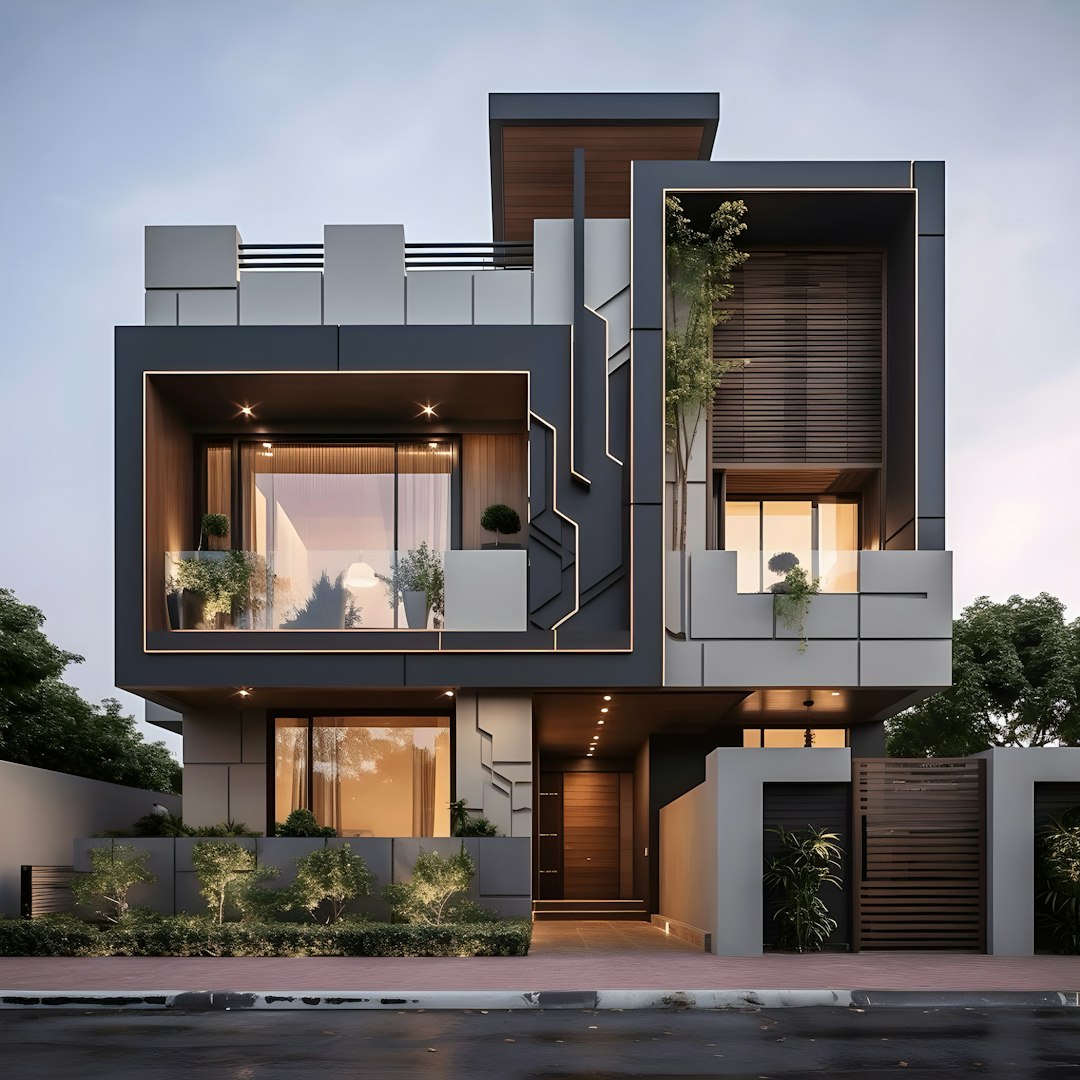
Following the conclusion of World War II, residential and commercial architecture experienced one of the most radical philosophical shifts in modern history. As millions of soldiers returned home, economies pivoted toward peacetime manufacturing, and young families sought fresh beginnings, architects rejected the rigid, compartmentalized floor plans and ornate decorative facades of the pre-war era. In their place arose a design movement rooted in democratic optimism, functional simplicity, and profound harmony with the natural environment: Mid-Century Modernism. Spanning roughly from 1945 to the late 1960s, this architectural language fundamentally transformed how humans inhabit domestic space, leaving behind an indelible aesthetic legacy that continues to command global reverence and real estate premiums today.
Table of Contents
- 1. The Core Principles of Mid-Century Modernism
- 2. Historical Roots: From Bauhaus to Post-War Suburbia
- 3. Joseph Eichler and the Democratization of Modern Design
- 4. Desert Modernism and Regional Expressions
- 5. Architectural Comparison: Mid-Century vs. Historical Styles
- 6. Material Innovation and Structural Purity
- 7. Frequently Asked Questions
- 8. The Enduring Legacy of Modernist Design
1. The Core Principles of Mid-Century Modernism
Mid-century modern architecture is not merely defined by an absence of embellishment; it is an affirmative design ethos based on intentional living. The philosophy revolves around three essential tenets:
- Form Follows Function with Humanistic Warmth: Structures were engineered strictly around the behavioral routines of the modern family. Unused formal parlors were scrapped in favor of open living rooms where conversation, dining, and cooking occurred seamlessly. Unlike the colder industrial strains of European constructivism, American mid-century architecture introduced organic wood finishes, stone fireplaces, and warm brickwork to retain tactile domestic warmth.
- Blurring the Indoor-Outdoor Boundary: Post-war architects viewed the surrounding garden or terrain not as an external boundary, but as an extension of the living room. Floor-to-ceiling glass expanses, sliding glass doors, clerestory windows, and covered terraces invited shifting natural sunlight and green foliage into the core of the dwelling.
- Structural Truth and Material Honesty: Structural elements were celebrated rather than hidden behind decorative plaster. Post-and-beam frameworks, exposed wooden tongue-and-groove ceiling decking, and load-bearing concrete masonry units were left visible, highlighting the craftsmanship and structural mechanics of the building.
2. Historical Roots: From Bauhaus to Post-War Suburbia
While mid-century modernism flourished in the American sunbelt during the 1950s, its intellectual DNA was forged decades earlier in Europe. The pioneering German Bauhaus school-directed by luminaries like Walter Gropius, Marcel Breuer, and Ludwig Mies van der Rohe-had already advocated for the unification of art, craft, and industrial technology. When geopolitical turmoil forced these master architects into exile during the late 1930s, many accepted academic appointments at leading American institutions like Harvard and IIT Chicago.
Simultaneously, Scandinavian modernism-championed by Finnish master Alvar Aalto-introduced organic curves, birch veneers, and acoustic sensitivity into modern design. When these European philosophies synthesized with America’s booming post-war industrial capacity and abundant suburban acreage, an entirely distinct, relaxed architectural movement was born.
3. Joseph Eichler and the Democratization of Modern Design
For most of architectural history, avant-garde design was the exclusive playground of wealthy elites who could commission custom residences. Real estate visionary Joseph Eichler radically altered this equation. Inspired by living in a Frank Lloyd Wright-designed Usonian home, Eichler founded Eichler Homes Inc. and resolved to build affordable, architect-designed modernist subdivisions for middle-class working families in California.
Between 1949 and the mid-1970s, Eichler constructed over 11,000 tract homes throughout the San Francisco Bay Area and Greater Los Angeles. Partnering with world-class architectural firms like Anshen & Allen and Jones & Emmons, Eichler homes featured signature elements: blank street-facing facades for supreme privacy, open central atriums open to the sky, slab radiant floor heating, and post-and-beam engineering that allowed whole rear elevations to consist entirely of glass. Crucially, Eichler instituted a strict non-discrimination policy, selling homes to buyers regardless of race or religion at a time when residential segregation was widespread.
4. Desert Modernism and Regional Expressions
As the movement matured, regional microclimates dictated innovative architectural adaptations. Nowhere was this more dramatically realized than in Palm Springs, California, which gave rise to Desert Modernism. Architects such as Richard Neutra, Albert Frey, William F. Cody, and E. Stewart Williams designed minimalist pavilions tailored to extreme desert heat and intense mountain vistas.
Neutra’s iconic Kaufmann Desert House (1946) utilized silver aluminum louvers, native stone masonry, and cantilevered sunshades to provide thermal defense while framing the rugged San Jacinto Mountains. Albert Frey embraced corrugated sheet metal, fiberglass, and rock outcroppings, anchoring minimalist residences directly into desert boulders. These structures demonstrated that modernism could adapt gracefully to delicate ecosystems through climate-responsive passive solar design.
5. Architectural Comparison: Mid-Century vs. Historical Styles
Understanding mid-century modernism requires contrasting its spatial priorities against both its historical predecessors and subsequent contemporary construction trends.
| Design Metric | Pre-War Traditional (1900-1940) | Mid-Century Modern (1945-1968) | Contemporary Suburban (1990-Present) |
|---|---|---|---|
| Floor Plan Strategy | Compartmentalized, closed cellular rooms | Fluid open-concept, visual sightlines | Semi-open, multi-story vertical zoning |
| Glazing & Windows | Symmetrical double-hung windows with grilles | Floor-to-ceiling glass walls, clerestories | Standard double-glazed energy-rated units |
| Roofline Geometry | High-pitched gables, hip roofs with dormers | Flat, low-slope gabled, or butterfly planes | Complex multi-gable composite shingles |
| Outdoor Relationship | Formal front porch, separated backyard | Integrated patio, central atrium, seamless flow | Enclosed deck or rear yard terrace |
| Material Palette | Plaster, brick, heavy painted woodwork | Exposed timber, glass, steel, breeze blocks | Drywall, composite siding, engineered stone |
6. Material Innovation and Structural Purity
The aesthetic revolution of mid-century architecture was made possible by wartime industrial breakthroughs. Factories that had produced aircraft alloys, laminated wood propellors, and synthetic plastics retooled for peacetime domestic construction. Architects capitalized on these advancements with unprecedented boldness:
- Glulam Beams and Molded Plywood: Glued laminated timber allowed massive structural spans without intermediate vertical supports, giving birth to expansive vaulted ceilings and the sculptural furniture designs of Charles and Ray Eames.
- Concrete Breeze Blocks: Perforated concrete masonry units became both structural walls and artistic screens, diffusing harsh sunlight while encouraging passive cross-ventilation in arid and tropical climates.
- Terrazzo and Radiant Concrete: Monolithic polished floors provided exceptional thermal mass, absorbing winter heat from subterranean hydronic copper coils and keeping interiors cool during summer heatwaves.
7. Frequently Asked Questions
What is post-and-beam construction in mid-century architecture?
Post-and-beam is an engineering method that utilizes sturdy vertical posts and heavy horizontal timber or steel beams to bear the weight of the roof. This transfers structural loads to specific points rather than continuous interior walls, allowing homeowners to knock down interior partitions and install uninterrupted walls of glass.
Why do mid-century modern houses have flat or low-pitch roofs?
Flat and low-slope rooflines reinforced the horizontal geometry of the building, helping homes blend harmoniously into low-lying natural terrain. They also eliminated wasted attic volumes, reducing material expenses while allowing high vaulted or beamed interior ceilings.
What is a butterfly roof and what was its purpose?
A butterfly roof features two inward-sloping planes meeting at a central valley, resembling the wings of a butterfly in mid-flight. Pioneered by architects like William Krisel, it elevated outer walls to accommodate tall clerestory windows while channeling rainwater toward a single collection point.
How can I introduce mid-century architectural principles into a conventional home?
Focus on maximizing natural light, stripping back heavy window treatments, introducing warm natural woods like walnut or teak, choosing low-profile furniture that keeps eye-level sightlines open, and establishing a cohesive connection with your patio or outdoor garden.
Are mid-century modern homes energy-efficient?
Original mid-century homes often struggle with energy conservation due to single-pane float glass and minimal roof insulation. However, modern sensitive retrofits utilizing double-glazed low-E glass, high-density roof foam insulation, and ductless heat pumps bring these classic homes up to modern eco-standards without sacrificing their vintage character.
What is the difference between Mid-Century Modern and Scandinavian Modern?
Mid-Century Modern represents a broader international movement with substantial American, German, and Japanese influences featuring bolder industrial materials like steel and breeze blocks. Scandinavian Modern is a specific northern European branch emphasizing blonde woods, soft organic curves, and cozy textile warmth designed to maximize scarce winter light.
8. The Enduring Legacy of Modernist Design
Mid-Century Modern architecture remains one of the most beloved design movements because it addressed fundamental human desires: light, connection to nature, and spatial freedom. By treating the home as a sanctuary where daily life unfolds naturally without artificial pretense, post-war architects created spaces that uplift human well-being. Whether wandering through a preserved historic district in Palm Springs or restoring an original suburban ranch home, the optimistic spirit of mid-century design continues to remind us that great architecture is not about grandiosity, but about living beautifully and intentionally in harmony with our surroundings.

