

In the summer of 1959, along the bustling boulevards of Paris, a brash young film critic named Jean-Luc Godard pushed his cinematographer, Raoul Coutard, through the crowds in a postal wheelchair, cradling a lightweight, noisy Cameflex 35mm camera loaded with high-speed photojournalist film stock. A young woman with a short pixie haircut, Jean Seberg, walked alongside a swaggering petty thief in a fedora, Jean-Paul Belmondo, hawking the New York Herald Tribune. There were no studio permits, no massive tungsten lighting grids, no script supervisors, and no sound blimps. In the editing room weeks later, Godard took a pair of physical scissors and sliced out chunks of film from the middle of continuous takes, violating every sacred continuity rule of Hollywood editing.
The resulting film, A Bout de souffle (Breathless), detonated across world cinema like an intellectual bomb, signaling the arrival of the French New Wave (La Nouvelle Vague). Between 1958 and 1968, a brilliant cohort of young critics-turned-directors associated with the Parisian film journal Cahiers du Cinema-including Godard, Francois Truffaut, Eric Rohmer, Claude Chabrol, and Jacques Rivette, alongside Left Bank luminaries Agnes Varda and Alain Resnais-demolished the calcified conventions of classical movie grammar. They declared war on the studio-bound “tradition of quality,” replacing theatrical artifice with jump cuts, handheld mobility, direct address to the camera, elliptical narratives, and reflexive cinephilic irony.
In this comprehensive historical, cinematographic, and editorial analysis, we dissect the visual and technical revolutions of the French New Wave. We trace the philosophical origins of the politique des auteurs, examine the optical and mechanical innovations of lightweight 35mm cameras, deconstruct the cognitive psychology of the jump cut, analyze the political and feminist ruptures of the Left Bank cinema, and evaluate how a small group of Parisian cinephiles permanently liberated modern visual storytelling.
1. Cahiers du Cinema and the Birth of Auteur Theory: From Critic to Creator
The French New Wave was unique in the history of art: it was the only major cinematic movement born entirely from film criticism. In post-war Paris, a vibrant culture of cine-clubs flourished, centered around Henri Langlois’s legendary Cinematheque Francaise. Young cinephiles spent twelve hours a day devouring Hollywood films that had been banned during the Nazi occupation, watching films without subtitles and absorbing pure visual grammar.
In 1951, film theorist Andre Bazin founded the revolutionary magazine Cahiers du Cinema (Cinema Notebooks), which quickly became the intellectual launchpad for a group of fiercely passionate twenty-something critics known as the “young Turks”: Francois Truffaut, Jean-Luc Godard, Eric Rohmer, Claude Chabrol, and Jacques Rivette. In 1954, Truffaut published a scorching polemic titled “Une certaine tendance du cinema francais” (A Certain Tendency of the French Cinema), attacking mainstream French cinema as a bourgeois “tradition of quality” dominated by literary adaptations, artificial soundstage sets, and sterile academic craftsmanship.
Truffaut and his colleagues formulated the politique des auteurs (Auteur Theory), arguing that a true film director was not a mere commercial manager coordinating a studio factory, but an individual visual author equivalent to a novelist or painter. A great auteur-such as Alfred Hitchcock, Howard Hawks, or John Ford-infused their films with a distinct visual signature, moral worldview, and thematic obsession, regardless of studio constraints. Having spent years attacking commercial cinema on the printed page, the young critics made a radical decision: they would pick up cameras and prove their theories on the screen.
2. Alexandre Astruc and the Camera-Stylo: The Camera as a Fountain Pen
The philosophical charter that guided the New Wave’s technical and stylistic rebellion was articulated as early as 1948 by French writer and filmmaker Alexandre Astruc in his seminal essay “The Birth of a New Avant-Garde: La Camera-Stylo” (The Camera-Pen).
Astruc envisioned a revolutionary transformation of the medium: “Cinema is in the process of becoming a new means of expression on the same level as painting and the novel… It is gradually becoming a language. By language, I mean a form in which and by which an artist can express his thoughts, however abstract they may be, or translate his obsessions exactly as he does today in the contemporary essay or novel. This is why I call this new age of cinema the age of the camera-stylo.”
For the New Wave directors, the camera-stylo was not an abstract metaphor; it was a physical call to arms. They rejected the massive, 400-pound Mitchell studio cameras mounted on heavy hydraulic cranes that required a dozen technicians to execute a single five-second tracking shot. They demanded mobile, agile, responsive cameras that could be slung over a shoulder like a reporter’s notebook, allowing the filmmaker to write with light as directly and intimately as a poet scribbling verses on a café napkin.
3. The Technical Revolution: The Cameflex 35mm and Ilford HPS Photojournalist Stock
The aesthetic breakthroughs of the French New Wave were intimately tethered to rapid advancements in post-war optical and mechanical technology. The movement could not have existed without two specific innovations: the Eclair Cameflex 35mm camera and high-sensitivity photojournalist still film stock.
Engineered in France by the Eclair company, the Cameflex (also known as the Camerette) was a revolutionary handheld 35mm motion picture camera. Weighing under fifteen pounds, it featured an ergonomic shoulder mount, a rotating three-lens turret, a 200-foot or 400-foot magazine that could be swapped in three seconds, and a bright reflex optical viewfinder that allowed the operator to see precisely what the lens saw. While commercial studios rejected the Cameflex because its mechanical shutter and claw mechanism were excessively loud (unsuitable for synchronous studio dialogue recording), New Wave directors embraced its acoustic chatter, choosing to shoot silently on location and dub dialogue in post-production.
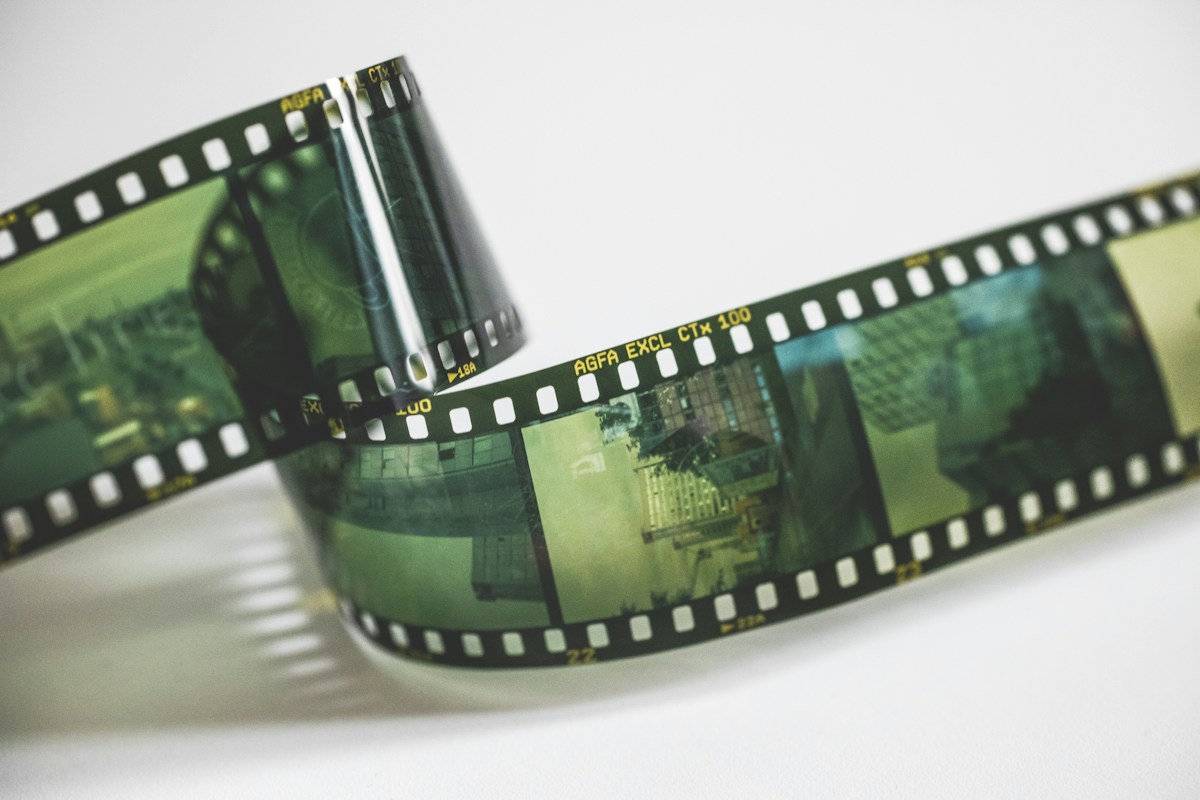
To photograph scenes on the streets of Paris at night or inside dim apartments without blinding studio lights, cinematographer Raoul Coutard executed a daring chemical gamble on Breathless. Coutard persuaded Kodak and Ilford to sell him bulk rolls of Ilford HPS: an ultra-high-sensitivity black-and-white film stock manufactured for photojournalists shooting Leica still cameras in low light. Coutard spliced the still-camera film together into 400-foot motion picture rolls and push-processed the negative in the laboratory. The resulting images possessed a raw, gritty, organic grain structure with blazing highlight contrast that became the unmistakable visual signature of modern street cinema.
4. Deconstructing the Jump Cut: Spatial and Temporal Discontinuity
Among all the technical innovations associated with the French New Wave, none delivered a more profound shock to the human nervous system than the jump cut, unveiled with unapologetic aggression in Jean-Luc Godard’s Breathless.
In classical Hollywood editing, spatial and temporal continuity was an inviolable religion governed by the 30-degree rule: when cutting between two shots of the same subject, the camera position had to change by at least 30 degrees in angle or significantly in focal length. This rule ensured that the edit appeared fluid, natural, and transparent. The goal of classical “invisible editing” was to prevent the audience from ever realizing that a physical cut had occurred.
Godard demolished this rule. In the famous driving scene where Jean-Paul Belmondo drives through Paris talking to Jean Seberg, Godard cut repeatedly between shots of Seberg’s profile filmed from the exact same camera angle, with the background scenery, traffic, and her hand positions jumping erratically every two seconds. The cuts did not advance the narrative in a logical sequence; they chopped time into jagged, syncopated fragments. By violating continuity, Godard reminded the audience of a fundamental truth: you are not watching reality; you are watching a movie composed of edited celluloid. The jump cut transformed film editing from a passive servant of linear realism into a dynamic, musical, and self-reflexive expressive instrument.
5. Breaking the Fourth Wall and Meta-Cinematic Self-Reflexivity
Classical studio cinema was built on the psychological contract of the “fourth wall”: an invisible, impenetrable barrier that separated the fictional world on screen from the spectators sitting in the dark auditorium. Actors were strictly forbidden from looking directly into the camera lens or acknowledging the presence of the audience, as doing so was believed to destroy the spectator’s suspension of disbelief.
The New Wave directors shattered this barrier with subversive joy. In the opening minutes of Breathless, Jean-Paul Belmondo drives an automobile down a country road, turns his head directly toward the camera, stares into the eyes of the viewer, and delivers an insolent monologue: “If you don’t like the sea, if you don’t like the mountains, if you don’t like the city… go take a hike!” Later, in Godard’s Contempt (Le Mepris, 1963), the opening shot shows Raoul Coutard operating a 35mm CinemaScope camera on a dolly tracking directly toward the audience, while Godard recites the film’s production credits via voiceover.
This meta-cinematic self-reflexivity was deeply influenced by the theatrical alienation effects (Verfremdungseffekt) of German playwright Bertolt Brecht. By constantly exposing the physical machinery of filmmaking-the camera, the cuts, the film stock, the director’s voice-the New Wave forced the spectator to abandon passive, consumerist escapism and become an active, critical participant in the construction of artistic meaning.
6. Francois Truffaut and The 400 Blows (1959): Lyrical Humanism and the Freeze Frame
While Jean-Luc Godard represented the radical, iconoclastic wing of the New Wave, Francois Truffaut channeled the movement’s revolutionary energy into lyrical, tender, and autobiographical humanism.
Truffaut’s directorial debut, The 400 Blows (Les Quatre Cents Coups, 1959), captured the Grand Prix for Best Director at the Cannes Film Festival, establishing the international prestige of the New Wave. Based directly on Truffaut’s own troubled childhood as an unloved, misunderstood delinquent in post-war Paris, the film introduced the world to Antoine Doinel, played with incandescent vulnerability by twelve-year-old non-actor Jean-Pierre Leaud. Truffaut followed Doinel across four subsequent films over twenty years, creating cinema’s first multi-decade serialized biographical portrait.
Cinematographer Henri Decae utilized wide CinemaScope lenses to shoot real Parisian classrooms, metro stations, and juvenile detention centers. The film concludes with one of the most famous closing images in world cinema: Antoine escapes from a juvenile camp, runs across miles of open countryside until he reaches the English Channel, wades into the freezing ocean waters, and turns back toward the camera. Truffaut instantly freezes the frame on Antoine’s haunted, questioning face. By ending the film on an unresolved optical freeze frame, Truffaut denied the audience the false closure of a traditional Hollywood happy ending, suspending the boy’s uncertain future forever in the collective conscience of the viewer.
7. Raoul Coutard: The Cinematographic Architect of Natural Light
Behind the intellectual theories and daring scripts of the New Wave stood the greatest technical innovator of the movement: cinematographer Raoul Coutard. Having spent eleven years as a military combat photographer and photojournalist for Life magazine during the French Indochina War, Coutard possessed zero reverence for studio dogmas.
When Godard hired Coutard to shoot Breathless, Coutard abandoned conventional studio lighting entirely. Instead of rigging cumbersome key lights, fill lights, and hair lights on heavy C-stands that cluttered the room, Coutard invented the technique of bounced photoflood lighting. He attached high-powered photoflood bulbs to the ceilings of small Parisian apartments and bounced the light off white plaster ceilings and walls. This produced an ultra-soft, diffused, naturalistic illumination that mimicked real ambient daylight.
More importantly, this lighting technique liberated the actors. In traditional Hollywood cinema, actors had to hit rigid chalk marks on the floor so their faces remained inside narrow spotlight beams. In Coutard’s fully illuminated environments, actors could move freely throughout the apartment, sit on the floor, look out the window, or pace across the room without ever walking out of light. Coutard operated the camera handheld or pushed it on a wheelchair, tracking their natural movements with the fluidity of an eagle in flight.
8. The Left Bank Group: Alain Resnais, Agnes Varda, and Chris Marker
While film history frequently conflates the French New Wave into a single cohesive unit, the movement was divided into two distinct intellectual and geographic camps: the Cahiers du Cinema group (Godard, Truffaut, Chabrol, Rohmer, Rivette) who operated on the Right Bank of the Seine, and the Left Bank group (Rive Gauche), centered in the bohemian quarters of Montparnasse.
The Left Bank filmmakers-primarily Alain Resnais, Agnes Varda, and Chris Marker-were slightly older, politically aligned with the radical anti-colonial left, and deeply connected to the literary avant-garde of the Nouveau Roman (Marguerite Duras, Alain Robbe-Grillet). While the Cahiers group were obsessive cinephiles whose films referenced American B-movies, the Left Bank directors created challenging, philosophical meditations on memory, trauma, time, and political consciousness.
In Hiroshima mon amour (1959), Alain Resnais dismantled traditional chronological narrative entirely, utilizing fluid tracking shots and radical temporal cross-cutting between post-war Japan and occupied France to explore the relationship between personal love and historical atrocity. In La Jetee (1962), Chris Marker constructed a haunting science-fiction post-apocalyptic masterpiece composed almost entirely of static, black-and-white still photographs, demonstrating that cinema’s ultimate emotional power resides in the fertile gap between still images and human memory.
9. Agnes Varda and Cleo from 5 to 7 (1962): Feminist Temporality and Real-Time Cinema
Within the historically male-dominated pantheon of the French New Wave, Agnes Varda stood as a towering pioneer, frequently honored as the “Grandmother of the New Wave” after directing the proto-new-wave classic La Pointe Courte in 1955-years before Godard or Truffaut picked up a 35mm camera.
In 1962, Varda directed her masterpiece, Cleo from 5 to 7 (Cleo de 5 a 7), which tracks ninety minutes in the life of Florence “Cleo” Victoire, a glamorous pop singer wandering Paris while awaiting the medical results of a biopsy for stomach cancer. Varda executed a daring structural feat: the ninety-minute running time of the film matches the ninety minutes of real time experienced by the protagonist, divided into chapter headings tracking the exact minutes of the afternoon.
More significantly, Varda executed a profound feminist deconstruction of the cinematic gaze. In the first half of the film, Cleo is an ornamental spectacle: a woman obsessed with her mirrors, her makeup, and how men perceive her beauty. As the fear of mortality strips away her vanity, Cleo removes her artificial blonde wig, puts on simple black clothing, and steps onto the streets of Paris not to be looked at, but to look at others. Varda transforms her protagonist from an object of male visual pleasure into an active, subjective female observer of urban life, marking a historic turning point in feminist cinema.
10. Eric Rohmer and Moral Tales: Philosophical Dialogue and Natural Geometry
While Godard fragmented editing and Truffaut celebrated romantic lyricism, Eric Rohmer forged a uniquely rigorous, disciplined aesthetic centered on classical language, moral philosophy, and architectural geometry: his celebrated series of Six Moral Tales (Six contes moraux), including My Night at Maud’s (1969) and Claire’s Knee (1970).
Rohmer was the eldest of the Cahiers critics, serving as its editor-in-chief from 1957 to 1963. While his peers embraced flashy kinetic editing, Rohmer remained deeply devoted to the theories of Andre Bazin: long takes, deep focus, and profound respect for the spatial integrity of the scene. In a Rohmer film, characters do not engage in gunfights or high-speed car chases; they sit in sun-dappled living rooms or walk through snowy streets, engaging in extended, intellectually sparkling debates about Pascal’s wager, Jansenism, marital fidelity, and ethical choices.
Working with legendary Spanish cinematographer Nestor Almendros, Rohmer pioneered an uncompromising commitment to natural, unadorned light. If a scene was set in a candlelit room, Almendros lit it with actual candles reinforced by tiny hidden low-voltage bulbs. Rohmer proved that when dialogue is crafted with literary brilliance and spoken by luminous, intelligent actors, the human voice and the subtleties of conversation possess as much kinetic visual drama as any Hollywood action sequence.
11. Direct Sound vs. Post-Synchronization: The Nagra III Portable Tape Recorder
The visual freedom of the French New Wave was matched by a quiet acoustic revolution: the invention and commercial deployment of the Nagra III portable tape recorder in 1958.
Invented in Switzerland by Polish audio engineer Stefan Kudelski, the Nagra III was a precision-machined, battery-operated reel-to-reel tape recorder weighing merely fourteen pounds. Crucially, Kudelski incorporated a crystal-controlled “pilot-tone” synchronization system (neopilot) that recorded a reference timing signal directly alongside the audio track. This allowed the tape recorder to stay in absolute frame-accurate synchronization with a crystal-sync motion picture camera without requiring physical electrical cables connecting the two machines.
For the first time in motion picture history, a two-person crew consisting of a camera operator and a sound recordist carrying a Nagra over his shoulder could walk down a crowded city sidewalk and record pristine, broadcast-quality synchronous location dialogue. Filmmakers no longer had to choose between the artificial silence of MOS shooting or the claustrophobic immobility of heavy studio sound trucks. The sounds of real Paris-screeching tires, café espresso machines, street musicians, and footsteps-became an authentic, living part of the cinematic tapestry.
12. Jean-Luc Godard and Political Radicalism: From Weekend to the Dziga Vertov Group
As the 1960s progressed toward the cataclysmic student and worker uprisings of May 1968, Jean-Luc Godard’s cinema underwent an aggressive, ideological radicalization, abandoning commercial narrative entirely in favor of Marxist-Leninist critique.
In 1967, Godard unleashed Weekend, a savage, apocalyptic satire of bourgeois consumer capitalism. The film features one of the most celebrated tracking shots in cinema history: an unbroken, eight-minute, 300-yard horizontal camera move tracking past a nightmarish, catastrophic highway traffic jam filled with smoking car wrecks, burning corpses, honking motorists, fighting couples, and wandering circus animals. At the end of the film, Godard famously placed a title card reading: “End of Story, End of Cinema.”
Following the May ’68 strikes, Godard renounced commercial filmmaking entirely, forming the militant Dziga Vertov Group with activist Jean-Pierre Gorin. Rejecting the concept of the individual auteur, they produced low-budget, 16mm agitprop cinema designed not to entertain, but to deconstruct capitalist ideology and analyze the mechanics of media production. Godard famously stated: “The problem is not to make political films, but to make films politically.”
13. The May ’68 Disruption: Shutting Down the Cannes Film Festival
The supreme collision between the French New Wave and real-world revolutionary politics occurred in May 1968 on the sun-drenched red carpets of the Cannes Film Festival.
As millions of French students and factory workers occupied universities, erected cobblestone barricades in Paris, and launched a nationwide general strike that brought the French economy to a complete standstill, the Cannes Film Festival opened normally on the French Riviera, screening glamorous films and pouring champagne. For the New Wave directors, this business-as-usual bourgeois spectacle was an intolerable moral outrage.
On May 18, 1968, Francois Truffaut, Jean-Luc Godard, Claude Lelouch, and Roman Polanski stormed the festival’s main screening palace. Godard and Truffaut physically hung from the heavy red velvet stage curtains to prevent the projection of Carlos Saura’s film Peppermint Frappe. When an enraged audience member attempted to push them aside, Godard famously screamed into the microphones: “I’m talking about solidarity with students and workers, and you’re talking about dolly shots and close-ups! You’re bloody idiots!” Several jury members resigned, filmmakers withdrew their titles, and the festival was officially shut down in total chaos. The New Wave had broken the fourth wall of film festival culture itself.
14. The New Hollywood Explosion: How Godard and Truffaut Reshaped American Cinema
The tremors of the French New Wave crossed the Atlantic Ocean in the late 1960s, delivering the decisive intellectual and aesthetic shock that overthrew the old Hollywood studio monopoly and inaugurated the legendary New Hollywood era (American New Wave) between 1967 and 1980.
When screenwriters David Newman and Robert Benton wrote the screenplay for Bonnie and Clyde (1967), they explicitly sent the script to Francois Truffaut and Jean-Luc Godard to direct. While both declined, director Arthur Penn and producer-star Warren Beatty absorbed their aesthetic completely: utilizing sudden jump cuts, rapid shifts between comedy and horrific violence, telephoto lens street compression, and morally ambiguous anti-heroes.
Across the following decade, a new generation of American film school graduates-including Martin Scorsese, Francis Ford Coppola, Robert Altman, Hal Ashby, and Brian De Palma-worshiped at the altar of the French New Wave. Scorsese’s Taxi Driver (1976) and Mean Streets (1973) borrowed Godard’s jump cuts and Coutard’s neon-lit night street photography, while Robert Altman’s overlapping, multi-track audio in MASH and Nashville directly extended the acoustic freedom pioneered by the Nagra III and Left Bank documentary experiments.
15. The British “Free Cinema” and Czech New Wave Parallels
The spirit of youth rebellion and stylistic disruption that defined the French New Wave was mirrored across Europe, igniting parallel national movements that challenged totalitarian state censorship and class rigidity.
In Great Britain, the Free Cinema movement and “Kitchen Sink” realism of directors like Lindsay Anderson (If….), Karel Reisz (Saturday Night and Sunday Morning), and Tony Richardson (The Loneliness of the Long Distance Runner) took cameras into the bleak industrial factories and working-class tenements of Northern England, pairing documentary location photography with furious anti-establishment anger.
Concurrently, in communist Czechoslovakia, the Czech New Wave blossomed during the Prague Spring of the mid-1960s. Directors such as Milos Forman (The Loves of a Blonde, The Firemen’s Ball), Vera Chytilova (Daisies), and Jiri Menzel (Closely Watched Trains) wielded absurdist humor, non-professional actors, improvised dialogue, and surrealist visual montages to deliver devastating satirical critiques of bureaucratic totalitarianism, until Soviet tanks rolled into Prague in August 1968 to crush the cultural spring.
16. The Visual Legacy in Modern Indie and Music Video Aesthetics
Today, six decades after Jean Seberg walked down the Champs-Elysees, the visual DNA of the French New Wave remains the dominant aesthetic currency of modern independent cinema, prestige streaming, and music video culture.
Filmmakers like Quentin Tarantino named his production company “A Band Apart” as a direct homage to Godard’s 1964 film Bande a part (Band of Outsiders), constantly borrowing Godard’s chapter headings, non-linear chronological fractured timelines, and kinetic pop-culture digressions. Directors like Wes Anderson celebrate the meticulous symmetry and nostalgic pastel palettes of Jacques Demy’s The Umbrellas of Cherbourg, while Noah Baumbach (Frances Ha) shot in black-and-white on modern digital sensors while replicating the loose, tracking street energy of Truffaut’s early work.
In the realm of music videos and commercial advertising, the jump cut, the handheld roving camera, natural lens flare, and direct-to-camera glances are no longer considered radical avant-garde disruptors; they are the baseline visual language through which contemporary youth culture expresses authenticity, urgency, and spontaneous intimacy across digital screens worldwide.
17. Critical Controversies: The Exclusion of Women and the Cult of Genius
Despite its universally celebrated historical status, contemporary film scholarship has subjected the French New Wave and the politique des auteurs to rigorous and necessary critical re-examination, particularly regarding gender politics and collaborative authorship.
For decades, the standard canonical history of the New Wave was framed almost exclusively around young male geniuses-Godard, Truffaut, Chabrol, Rohmer-while marginalizing pivotal women who played indispensable roles in the movement’s breakthroughs. Agnes Varda’s foundational contributions were frequently cordoned off into the secondary “Left Bank” category, while brilliant female editors such as Agnes Guillemot (who edited sixteen films for Godard) and Cecile Decugis (who physically executed the revolutionary jump cuts of Breathless) were denied full authorial credit for the movement’s signature editing syntax.
Furthermore, American feminist film theorist Laura Mulvey and film scholar Claire Johnston noted that while New Wave directors broke bourgeois cinematic grammar, their depiction of female characters frequently remained trapped in traditional male romantic fantasies: women were either enigmatic, treacherous muses (Jean Seberg, Anna Karina, Jeanne Moreau) or maternal victims, functioning as mirrors to validate male existential angst.
18. Practical Directing Guide: Channeling New Wave Techniques on a Zero Budget
For aspiring filmmakers seeking to capture the electrifying spirit of the French New Wave today, you possess digital cameras and editing software that offer infinite mobility at zero cost, yet modern independent films often feel dull, formulaic, and lifeless.
To infuse your work with authentic New Wave energy, begin by embracing the rhythm of the jump cut. Do not cut simply to trim time; cut to create musical syncopation, to shock the viewer’s eye, or to reflect the emotional instability of your characters. Splicing out the middle two seconds of an actor’s sigh or sudden gesture immediately injects psychological kinetic energy into a scene.
Second, liberate your camera from the tripod. Mount your camera on your shoulder or push an operator in an office chair or shopping cart. Use lightweight prime lenses, embrace natural lens flares and available window light, and allow your actors to wander freely without rigid blocking marks. Finally, treat cinema as a love affair: reference the art, books, and films that inspire you, speak directly to your audience, and remember Jean-Luc Godard’s immortal axiom: “To make a film, all you need is a girl and a gun-and the courage to break every rule.”
Comparative Analysis of French New Wave and Classical Cinema Paradigms
To fully grasp the magnitude of the aesthetic rupture achieved by the French New Wave, one must evaluate its revolutionary techniques directly alongside the classical Hollywood studio system it rebelled against, as well as the contemporary digital filmmaking practices that inherited its syntactic innovations.
Where the classical studio model prioritized seamless, invisible craftsmanship designed to maintain a frictionless illusion of reality, the New Wave celebrated visible artifice, intellectual provocation, and kinetic spontaneity. The following comprehensive matrix contrasts the core cinematographic, editorial, narrative, and ideological dimensions that distinguish the French New Wave from surrounding cinematic traditions.
| Aesthetic Dimension | Classical Hollywood (1930-1955) | French New Wave (1958-1968) | Contemporary Digital Indie |
|---|---|---|---|
| Camera Mobility & Rigging | Heavy Mitchell 35mm on cranes, tracks, and dollies | Cameflex 35mm handheld, wheelchairs, roving operators | Mirrorless/cinema digital rigs, gimbals, Easy-rigs |
| Lighting Philosophy | 3-point lighting, rigid key/fill ratios, carbon arcs | Bounced ceiling photofloods, available daylight, street sun | High-sensitivity sensors (dual ISO), soft LED panels |
| Editorial Continuity | Strict 30-degree rule, match-on-action, invisible cuts | Aggressive jump cuts, elliptical leaps, optical freeze frames | Fluid pacing, mixed jump cuts, rapid multi-angle montage |
| Spectator Engagement | Passive absorption, fourth wall intact, escapist illusion | Brechtian estrangement, direct camera gaze, reflexivity | Immersive realism or social media irony and awareness |
Frequently Asked Questions About the French New Wave
What exactly is a jump cut and why was it so revolutionary?
A jump cut occurs when two sequential shots of the exact same subject are taken from camera positions that vary only slightly, violating the traditional 30-degree rule of continuous editing. The subject appears to “jump” abruptly forward or sideways in time. Pioneered by Jean-Luc Godard in Breathless, it shattered the classical Hollywood illusion of invisible editing and reminded the audience that they were watching an assembled film.
What was the politique des auteurs (Auteur Theory)?
Formulated by Francois Truffaut and critics at Cahiers du Cinema in the 1950s, the Auteur Theory posited that the film director is the primary creative author of a motion picture, equivalent to a novelist or painter. An auteur leaves a personal stylistic, thematic, and moral imprint on their films, transcending studio commercialism and industrial scripts.
How did Raoul Coutard innovate motion picture lighting?
Cinematographer Raoul Coutard rejected heavy, restrictive studio lights that dictated where actors could stand. Instead, he pioneered bounced photoflood lighting, fixing high-powered bulbs to the ceilings of small Parisian apartments and bouncing light off white walls. This filled entire rooms with soft, naturalistic illumination, allowing actors to move freely without missing chalk marks.
What was the difference between the Cahiers group and the Left Bank group?
The Cahiers du Cinema group (Godard, Truffaut, Rohmer, Chabrol) were young cinephile critics who loved American genre films and operated on Paris’s Right Bank. The Left Bank group (Resnais, Varda, Marker) were slightly older, politically allied with the anti-colonial left, and connected to the literary avant-garde, producing poetic, philosophical meditations on memory and time.
Why was Agnes Varda called the Grandmother of the New Wave?
Agnes Varda earned this title because she directed La Pointe Courte in 1955, four years before Truffaut’s The 400 Blows or Godard’s Breathless. Her film introduced key New Wave hallmarks: on-location shooting, intellectual duality, and documentary realism. Her 1962 masterpiece Cleo from 5 to 7 revolutionized feminist cinema and real-time narrative.
How did portable sound recorders like the Nagra III impact filming?
The Nagra III portable tape recorder, invented by Stefan Kudelski in 1958, introduced crystal-sync audio recording without physical cables connecting the recorder to the camera. Lightweight and battery-powered, it allowed a single sound recordist to capture broadcast-quality synchronous location dialogue on busy streets, eliminating heavy sound trucks.
Why did French New Wave directors shut down the 1968 Cannes Film Festival?
In May 1968, millions of French students and workers launched a massive general strike, bringing France to the brink of revolution. Godard, Truffaut, and colleagues believed holding a glamorous film festival was an intolerable bourgeois distraction. They stormed the festival hall, physically hung from the curtains, and forced the cancellation of the festival in political solidarity.
How did the French New Wave influence Hollywood?
The New Wave directly inspired the New Hollywood American cinema of the late 1960s and 1970s. Films like Bonnie and Clyde (1967), The Graduate (1967), and the works of Martin Scorsese, Francis Ford Coppola, and Robert Altman adopted handheld cameras, location shooting, jump cuts, and morally complex anti-heroes, overthrowing the studio monopoly.
Conclusion: The Enduring Freedom of the New Wave Spirit
The French New Wave was never merely a stylistic catalog of jump cuts, roving Cameflex cameras, and bounced ceiling lights; it was an act of supreme artistic emancipation. In a cultural moment when cinema was suffocating under the weight of commercial studio formulas, academic literary adaptations, and rigid industrial rules, a small band of passionate young cinephiles possessed the audacity to pick up cameras and declare that the medium belonged to those who truly loved it.
By transforming cinema into a dynamic, personal language capable of expressing philosophical doubt, political rage, youthful joy, and poetic intimacy, the Nouvelle Vague permanently dismantled the boundaries between life and art. Sixty years later, their masterworks continue to burn with youthful fire, reminding every emerging storyteller that the greatest cinematic masterpieces are not born from multi-million-dollar budgets or corporate approvals, but from a relentless passion to see the world with uncompromised, revolutionary clarity.
Scholarly Citations and Authoritative Cinematic Archives
- Cinematheque Francaise: Archives Historiques de la Nouvelle Vague et d’Henri Langlois (cinematheque.fr)
- British Film Institute: BFI Screenonline: The French New Wave and Modern Film Grammar (bfi.org.uk)
- Criterion Collection Historical Essays: Godard, Truffaut, Varda, and the Revolution of 1959 (criterion.com)
- Centre National du Cinema et de l’Image Animee: Histoire et Restauration des Films de la Nouvelle Vague (cnc.fr)
- University of California Film Studies: Film Quarterly: Jump Cuts, Auteurism, and Brechtian Cinema (filmquarterly.org)
- Internal Archive: Anemoia Historical Cinematography and Visual Arts Repository

