

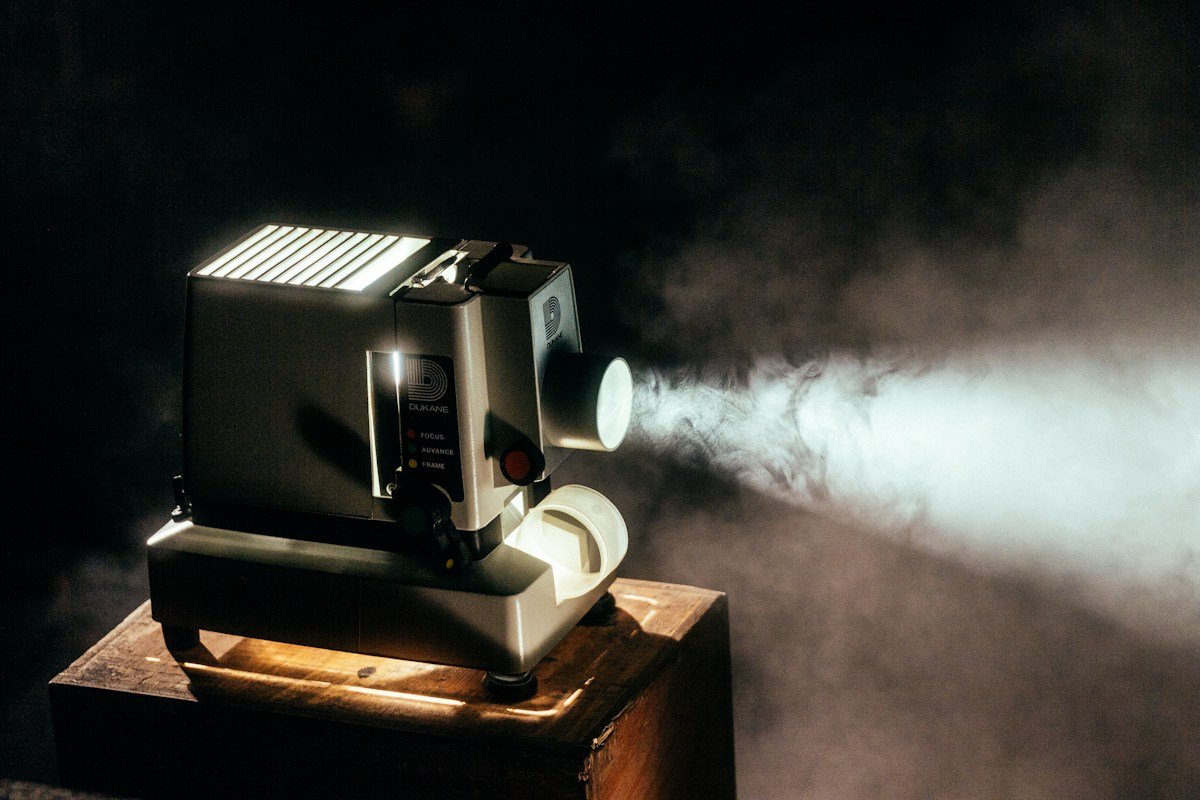
To watch an authentic early silent film projected from an archival silver nitrate print is to witness an optical phenomenon that modern digital projection cannot replicate. The projected image does not simply display light upon a flat screen; it glows from within with a luminous, pearlescent radiance that seems almost supernatural. Figures emerging from shadows possess a sculptural, silver density, their skin tones glowing with an ethereal phosphorescence that borders on the spectral. This unique visual aesthetic, which captivated the first generations of cinema-goers at the turn of the twentieth century, was the direct physical byproduct of silver nitrate emulsion chemistry: a volatile, dangerous, and magnificent chemical medium that captured the ephemeral dawn of moving pictures.
The human visual cortex processes light and contrast through specialized neural pathways in the primary visual cortex (V1) and higher-order lateral occipital complexes. When optical projections present deep, non-linear tonal gradations and silver halide crystal grain, the visual system registers an extraordinary illusion of volumetric depth. Landmark motion picture preservation initiatives led by the Museum of Modern Art emphasize that cellulose nitrate film possessed an unparalleled dynamic range and silver gelatin saturation that created a uniquely painterly chiaroscuro. When nitrate film stock was exposed and developed, metallic silver crystals clustered in natural organic formations, creating an optical texture that felt alive, breathing, and inextricably bound to the physical realm.
Yet the physical medium that granted early cinema its haunting beauty was also cursed with tragic chemical instability. Cellulose nitrate, chemically related to guncotton, is inherently flammable, capable of burning underwater without atmospheric oxygen, and subject to inexorable chemical decay into acidic honeycombs and spontaneous combustion. The vast majority of silent cinema masterpieces have been lost forever to fire and chemical decomposition. This acute ephemerality imbues every surviving frame of silent cinema with profound anemoic melancholy. To gaze upon a silent film is to look through a fragile temporal window at a vanished world of actors, cities, and landscapes that survived annihilation by sheer historical miracle.
To decode why silent cinema exerts such a hypnotic emotional pull upon the modern imagination, one must investigate the deep intersection of photochemical science, hand-cranked camera mechanics, expressive gesture, and visual psychology. This comprehensive study examines the physical chemistry of silver nitrate, the lost art of tinting and toning, the hypnotic cadence of variable frame rates, and the haunting presence of silent screen performers, exploring why these ephemeral shadows continue to radiate timeless emotional light.
Photochemistry of Cellulose Nitrate: Silver Halide Crystals and High-Contrast Depth
The foundation of early motion picture photography rested upon cellulose nitrate base film, first commercially manufactured by George Eastman in 1889. The base consisted of nitrocellulose, created by treating purified cotton cellulose with a mixture of nitric and sulfuric acids, plasticized with synthetic camphor to form a flexible, transparent ribbon. Onto this volatile transparent substrate, chemists coated a delicate gelatin emulsion suspended with billions of light-sensitive silver halide crystals, predominantly silver bromide combined with small proportions of silver iodide.
The physical structure of this emulsion differed fundamentally from modern safety films. Early nitrate emulsions were relatively thick and rich in metallic silver content. When photographic lenses focused light upon the moving film ribbon, photons struck the silver halide crystal lattices, liberating electrons that were trapped by sensitivity specks of silver sulfide. These trapped electrons attracted mobile interstitial silver ions, forming microscopic sub-latent clusters of elemental metallic silver. In the darkroom developing bath, these latent specks acted as catalytic centers, reducing entire silver halide grains into tangled filaments of pure, opaque metallic silver.
Because the silver crystals were suspended in thick, multi-layered gelatin depths rather than modern ultra-thin planar layers, light passing through the developed film was refracted and scattered by millions of microscopic silver particles. This physical refraction generated the legendary nitrate glow: high-contrast highlights appeared brilliant and luminous, while deep shadows retained a rich, velvety blackness devoid of digital clipping. The tonal gradation between blinding white and impenetrable black unfolded across a smooth, logarithmic S-curve that closely matched the biological sensitivity of the human eye.
Furthermore, early nitrate stocks were orthochromatic, meaning they were sensitive primarily to blue and ultraviolet wavelengths of light while remaining completely blind to red. This spectral limitation produced dramatic, idiosyncratic photographic distortions: blue skies exposed as stark, cloudless whites; actors’ lips and rosy cheeks rendered unnaturally dark; and deep shadows swallowed peripheral details. Rather than hindering artistic expression, early silent cinematographers turned these photochemical idiosyncrasies into high art, sculpting scenes with dramatic carbon-arc backlights and mirrors to carve glowing figures out of ink-black voids.
The Inherent Ephemerality: Autocatalytic Decay and the Lost Heritage of Cinema
The tragedy of silent cinema is inseparable from the chemical destiny of nitrocellulose. Unlike stable cellulose acetate safety films introduced in the 1950s or polyester stocks utilized in contemporary archives, cellulose nitrate is inherently self-destructive. From the moment a nitrate film is manufactured, it begins an irreversible, five-stage process of autocatalytic chemical decay that cannot be completely arrested, only temporarily decelerated through freezing temperatures and controlled low humidity.
In the first stage of decay, the nitrate base releases volatile nitric acid and nitrogen dioxide gases, producing a distinctive, pungent odor reminiscent of nitric acid and decomposing camphor. In the second stage, the clear film ribbon turns yellow and brittle, while the gelatin emulsion softens and begins to stick to adjacent layers on the reel. In the third stage, the film forms sticky, viscous blisters and emits dense, noxious gases. By the fourth stage, the entire film roll congeals into a solid, unrollable cake of toxic amber-brown foam. Finally, in the fifth stage, the decomposed mass disintegrates into a shocking, shock-sensitive brown dust that can spontaneously ignite at temperatures as low as one hundred degrees Fahrenheit.
Because early film distributors and production studios regarded motion pictures as transient commercial novelties with zero long-term cultural value, hundreds of thousands of silent film reels were routinely melted down for silver salvage, discarded into oceans, or stored in unventilated tin shacks where catastrophic fires inevitably erupted. Devastating vault fires at major studios like Universal (1924), Fox (1937), and MGM (1965) incinerated vast catalogs of cinematic history in minutes, turning irreplaceable master negatives into roaring infernos that could not be extinguished by water.
Scholarly surveys coordinated through the Library of Congress estimate that over seventy-five percent of all silent feature films made in the United States between 1893 and 1929 have vanished forever from human civilization. This staggering cultural loss casts a profound shadow over the surviving twenty-five percent. When modern viewers watch a restored silent film, they are conscious of gazing upon an endangered species of cultural memory, a precious survivor of a lost cinematic Atlantis that narrowly escaped complete physical obliteration.
Variable Frame Rates and Hand-Cranked Temporal Cadence
One of the most persistent misconceptions surrounding silent cinema is that films were meant to be viewed with the jerky, comically accelerated motion commonly seen in poorly transferred television copies. In the silent era, cinematography was a manual, physical craft executed by camera operators who hand-cranked the camera mechanism using a side-mounted wooden or brass handle. There was no absolute, standardized motor speed; standard sound speed of twenty-four frames per second was not universally established until the arrival of synchronized sound-on-film systems in the late 1920s.
Silent camera operators turned the crank at variable speeds, typically averaging between fourteen and eighteen frames per second, adhering to the standard rhythmic rule of two turns per second (which exposed eight frames per turn, or sixteen frames per second). However, master cinematographers deliberately varied their cranking speed to achieve specific dramatic and psychological effects. Under-cranking the camera (turning the handle slowly, around twelve to fourteen frames per second) meant that when the film was later projected at normal speed, on-screen action became accelerated, imparting frantic energy to comedic chases, train collisions, and battle sequences.
Conversely, over-cranking the camera (cranking rapidly, at twenty to twenty-four frames per second) produced subtle, poetic slow-motion when projected at standard speeds. Directors like F.W. Murnau and D.W. Griffith used over-cranking to prolong emotional close-ups, romantic embraces, and tragic deaths, giving the actors a floating, dreamlike quality that felt suspended outside ordinary terrestrial time. The camera operator was not a passive mechanical recorder, but an active, breathing collaborator whose physical stamina and rhythmic intuition directly shaped the temporal heartbeat of the film.
When silent films are projected today at their historically accurate frame rates, the jerky distortion vanishes, replaced by a hypnotic, flowing cadence. The subtle human variations in cranking speed introduce microscopic temporal fluctuations that feel remarkably natural to the human visual system. The on-screen world breathes with an organic elasticity that modern digital cinema, locked to rigid crystal clock oscillators, can never duplicate, drawing the viewer into an intimate, dreamlike state of temporal immersion.
Tinting, Toning, and Stenciling: The Lost Palette of Monochrome Cinema
Although silent cinema is commonly remembered as a black-and-white medium, the overwhelming majority of silent motion pictures were presented in vivid, expressive color. Before the invention of three-strip Technicolor, filmmakers utilized sophisticated chemical processes, including tinting, toning, mordanting, and hand-cut stencil coloring, to bathe monochrome nitrate prints in atmospheric chromatic baths.
Tinting was achieved by immersing a developed black-and-white print into an aqueous bath of synthetic aniline dyes, or by utilizing pre-dyed film base manufactured in factory colors. The gelatin absorbed the dye uniformly, so that highlights and clear areas of the film glowed with brilliant color while the metallic silver shadows remained black. Toning, by contrast, was a chemical replacement process where the black metallic silver particles themselves were converted into colored chemical compounds, such as iron ferrocyanide (Prussian blue), copper ferrocyanide (red-brown), or cobalt salts, turning the shadows into rich color while highlights remained pristine white.
These chemical color systems established a universal emotional language for silent cinema audiences. Amber and warm yellow signified domestic warmth, candlelit interiors, and joyful daylight; deep Prussian blue denoted nightscapes, maritime mystery, and romantic moonlight; emerald green represented mysterious forests, supernatural dread, and toxic jealousy; while fiery scarlet red accompanied infernos, explosions, and catastrophic rage. In masterworks like Fritz Lang’s Metropolis (1927) and Robert Wiene’s The Cabinet of Dr. Caligari (1920), color shifts were choreographed with operatic precision, guiding the audience’s emotional journey through chromatic symbolism.
Furthermore, luxury European productions employed the exquisite Pathécolor stencil system, where teams of skilled artisans used magnifying lenses and micro-scalpels to cut separate celluloid stencils for each color in every individual film frame (sixteen frames for every second of screen time). Colored dyes were then applied mechanically via velvet rollers through the stencils, producing delicate, jewel-like color fields that resembled animated medieval illuminated manuscripts. The lost art of silent film coloration reminds modern viewers that early cinema was an intensely colorful, multi-sensory spectacle that combined industrial technology with exquisite handcrafted artistry.
The Expressive Face and the Elimination of Acoustic Distraction
The absence of synchronized spoken dialogue in silent cinema was not a primitive defect waiting to be corrected; it was a sovereign aesthetic discipline that forced actors and directors to invent a profound visual language based on physical mime, eye choreography, and emotional expression. When speech is eliminated from dramatic storytelling, the human brain reallocates vast cognitive resources toward decoding visual facial micro-expressions and body language.
Silent screen actors, such as Lillian Gish, Falconetti, Buster Keaton, and Conrad Veidt, developed an astonishing mastery of eye movement and facial micro-gestures. Under the magnifying intensity of nitrate close-ups, every subtle twitch of an eyebrow, dilation of a pupil, or slight tremble of the lip assumed monumental dramatic significance. In Carl Theodor Dreyer’s masterpiece The Passion of Joan of Arc (1928), the camera lingers in merciless, unadorned close-ups upon Falconetti’s face, capturing waves of spiritual terror, divine ecstasy, and mortal agony with an emotional transparency that has never been surpassed in the history of cinema.
Psychologically, the absence of acoustic dialogue invites deep, active audience projection. When watching a modern sound film, the actor’s spoken voice and vocal inflection dictate precisely how a line must be interpreted, leaving little room for imaginative participation. In silent cinema, the viewer reads the brief title card, but must internally voice the dialogue, providing the emotional tone, cadence, and timbre from their own subjective consciousness. The viewer becomes a co-creator of the dramatic performance, forging an intense, intimate bond with the silent figures on the screen.
This silent communion taps directly into the primal roots of human visual communication. Long before infants develop spoken language, they learn to read the emotional states of their mothers and caregivers through facial expressions and eye contact. Silent cinema reconnects adult viewers with this ancient, pre-verbal mode of empathy, allowing the luminous faces of long-departed actors to speak directly to the soul across the silence of a century.
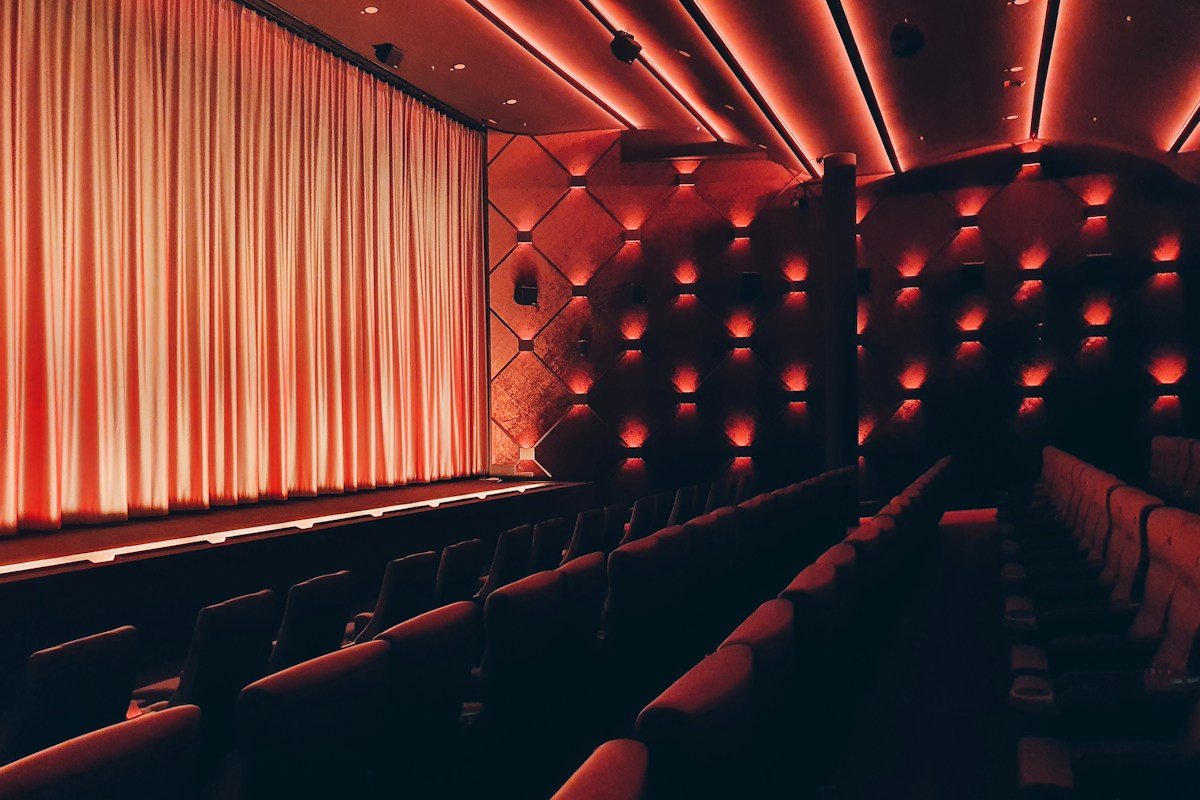
Visual Chiaroscuro and German Expressionism: Shadows as Psychological Architecture
In the aftermath of the First World War, German filmmakers operating under the Weimar Republic created a revolutionary cinematic aesthetic that transformed the screen into a direct projection of fractured human psychology: German Expressionism. Facing severe economic sanctions, international isolation, and limited access to expensive studio lighting, directors like Robert Wiene, F.W. Murnau, and Fritz Lang turned visual limitation into transcendent artistic triumph.
Rather than attempting to simulate realistic physical environments, Expressionist filmmakers commissioned avant-garde painters and theatrical designers to construct distorted, nightmarish sets defined by jagged angles, tilted walls, and claustrophobic corridors. Most radically, because studio electricity was strictly rationed, lighting technicians painted dramatic, distorted shadows and sharp shafts of light directly onto the canvas walls, wooden floors, and actor costumes using black and white paint. In The Cabinet of Dr. Caligari (1920), the physical architecture ceases to be a passive container for the action; it becomes an active externalization of madness, paranoia, and authoritarian tyranny.
This radical chiaroscuro aesthetic was perfectly suited to the unique contrast characteristics of silver nitrate film. The sharp division between blinding white and pitch-black shadows mirrored the moral and psychological fragmentation of post-war European civilization. In Murnau’s Nosferatu (1922), the iconic shadow of Count Orlok climbing the staircase, his elongated, claw-like fingers reaching toward the heroine’s door, demonstrated that a shadow could carry far greater terror and emotional weight than the physical monster itself. The shadow became a symbol of the subconscious id, the unexpressed trauma that haunted modern humanity.
For contemporary anemoic observers, German Expressionist cinema offers an intoxicating visual portal into the anxieties and genius of Weimar culture. The stark, painted shadows and architectural distortions resonate with an uncanny power, proving that the deepest truths of the human condition are often revealed not through photographic realism, but through the poetic, terrifying geometry of the illuminated shadow.
The Ghostly Gaze: Confronting the Mortality of Silent Screen Witnesses
There is a profound, haunting phenomenon unique to silent cinema that film theorist Roland Barthes described in photography as the punctum: the sudden, piercing realization that every person captured on the screen has ceased to exist, that their flesh, blood, laughter, and private heartbreaks have dissolved into history, leaving behind only these dancing shadows of silver metallic particles. In silent cinema, this confrontation with mortality achieves an unbearable, beautiful intensity.
When an actor in a 1910s or 1920s film looks directly into the camera lens, their eyes pierce the temporal divide, locking gazes with a modern viewer who had not yet been born when that camera shutter snapped shut. The actor’s gaze is vibrant, intelligent, and alive; we see the pulse in their throat, the glint of daylight on their hair, and the spontaneous breath escaping their lips on a cold morning. Yet we possess the tragic foreknowledge of their complete historical fate. We know the wars they will endure, the illnesses that will claim them, and the forgotten graves where their bones now rest.
This temporal vertigo induces a profound anemoic state known as mortality awareness. The viewer is forced to acknowledge the ultimate transience of all human existence, including their own. The bustling street scenes captured in early actualities by the Lumière brothers or Thomas Edison, showcasing hundreds of anonymous pedestrians crossing Parisian bridges or boarding Brooklyn ferries in 1900, transform into moving necropolises. Every child carrying a wooden hoop, every coachman holding leather reins, and every fashionable woman holding a parasol has returned to the earth.
Yet silent cinema also represents human victory over time. Through the miracle of silver nitrate photochemistry, these long-dead witnesses are resurrected anew every time light passes through the celluloid ribbon. In the dark sanctuary of the cinema, death is momentarily suspended. The departed walk among us once again, reminding us that we are all transient travelers journeying together through the vast, mysterious landscape of human time.
The Acoustic Counterpoint: Live Musical Accompaniment and Temporal Synthesis
A silent film was never truly silent; from the earliest nickelodeon screenings in the 1890s through the final silent epics of 1929, motion pictures were universally accompanied by live acoustic music. Whether provided by an exhausted honky-tonk piano player in a working-class neighborhood theater or a ninety-piece symphony orchestra accompanied by a massive Wurlitzer theater pipe organ in a luxury metropolitan picture palace, live music was the indispensable acoustic soul of the silent film experience.
The live musical accompaniment performed a vital psychological function: it humanized the cold, mechanical projection of light. The physical presence of live acoustic musicians performing in the room bridged the gap between the two-dimensional shadows on the screen and the three-dimensional audience in the auditorium. The acoustic vibrations of acoustic strings, brass horns, and rumbling organ pipes physically filled the theater, enveloping the audience in a warm, resonant sensory field that grounded the visual spectacle in real physical time.
Furthermore, silent film accompaniment was a dynamic art of spontaneous improvisation and thematic leitmotif construction. Talented theater organists sat before multi-manual consoles equipped with hundreds of sound-effect ranks, including horse hooves, train whistles, thunder sheets, and bird calls, improvising seamless musical scores that matched the emotional pacing and visual rhythms of the film in real time. The organist was an acoustic conductor who sculpted the emotional atmosphere, guiding the audience from tears to laughter with a single shift in registration or modal modulation.
When contemporary audiences attend a restored silent film screening accompanied by a live orchestra or master theater organist, the experience is electrifying. The combination of historical visual imagery and live physical acoustic music creates a complete sensory synthesis that dissolves the distance of a century. The modern spectator enters a timeless collective consciousness, experiencing the communal wonder that first united humanity in darkened theaters at the dawn of the cinematic age.
Nitrate Vaults and the Science of Modern Archival Preservation
The preservation and digital restoration of surviving silver nitrate films represent one of the most perilous and technically demanding frontiers in modern cultural heritage stewardship. Because nitrate film is a classified hazardous material capable of burning with explosive fury and generating toxic nitrogen oxide fumes, national film archives must store surviving nitrate collections in specialized, blast-resistant bunker vaults engineered to contain catastrophic fires.
Institutions like the Library of Congress Packard Campus in Culpeper, Virginia, and the British Film Archive store thousands of nitrate reels in reinforced concrete vault cells maintained at a constant freezing temperature of thirty-nine degrees Fahrenheit and twenty-five percent relative humidity. Each individual vault cell is equipped with blow-out explosion panels, independent fire containment walls, and exhaust ducting designed to vent toxic gases safely into the atmosphere in the event of spontaneous combustion. In these cryogenic sanctuaries, archivists work tirelessly to slow the clock of chemical decay.
Before a deteriorating nitrate film can be scanned, archivists must perform painstaking manual physical restoration. Brittle, shrunken film ribbons are placed in humidification chambers to restore flexibility; torn sprocket holes are repaired using microscopic polyester tape under stereo microscopes; and accumulated dirt and dried lubricants are cleaned using gentle ultrasonic solvent baths. The film is then scanned on specialized archival film scanners utilizing gentle optical pin registration and cold-light LED sources that prevent heat damage to the delicate nitrate base.
Digital restoration teams then work frame by frame, at resolutions of 4K or 8K, to digitally repair chemical abrasions, stabilize frame weave, and restore original contrast balances while preserving the authentic organic texture of the silver halide grain. This heroic preservation work ensures that the luminous legacy of silent cinema will survive beyond the physical death of its original celluloid hosts, securing these fragile historical memories for the enrichment of future human generations.
The Industrial Machinery: Hand-Cranks, Carbon-Arcs, and Geneva Drives
To fully appreciate the sensory magic of early cinema, one must understand the exquisite industrial machinery that brought silent images to life. Before the era of microchips, solid-state electronics, and digital laser projectors, cinema was a triumphant achievement of nineteenth-century precision mechanical clockwork, casting iron gears, brass bushings, and optical physics.
At the mechanical heart of every motion picture camera and projector was the Geneva drive, also known as the Maltese cross mechanism. The Geneva drive solved an essential physical puzzle: how to transform the continuous rotational motion of an electric motor or hand crank into the rapid, intermittent motion required to stop each individual film frame dead in front of the lens for a fraction of a second, hold it rock-steady while the rotating shutter opened to expose or project it, and then instantly advance the next frame into position before the shutter reopened. Without the precision engineering of the Geneva drive, motion picture projection would be an unviewable blur of vertical light streaks.
The illumination source inside silent era theater projectors was equally dramatic: the carbon-arc lamp. In a carbon-arc lamp, an intense electric current is passed between two carbon rods in open air, generating a brilliant, miniature sun of blinding plasma light that burned at temperatures exceeding six thousand degrees Fahrenheit. This carbon-arc plasma generated an intense, high-color-temperature white-blue light spectrum that was exceptionally rich in ultraviolet frequencies. When this blazing electric fire illuminated a silver nitrate print, it caused the metallic silver crystals to glow with an intensity that modern xenon lamps or laser diodes can never quite recreate.
The physical presence of the projection booth was a sensory spectacle of its own: the rhythmic, mechanical clatter of the Geneva cross advancing thirty-five millimeter film, the whir of exhaust fans venting carbon fumes, the faint smell of hot oil and ozone, and the focused beam of white light cutting through atmospheric dust motes. In this mechanical temple, light, chemistry, and craftsmanship united to project dreams onto the silver screen, crafting a visual language that forever altered human consciousness.
The Contemporary Resurrection: Modern Filmmakers Embracing Silent Aesthetics
In the twenty-first century, a passionate contingent of visionary filmmakers and visual artists is deliberately rejecting modern high-frame-rate, ultra-clean digital cinematography to resurrect the formal aesthetics and photochemical techniques of early silent cinema. Works like Michel Hazanavicius’s The Artist (2011), Guy Maddin’s The Saddest Music in the World (2003), and Robert Eggers’s The Lighthouse (2019) demonstrate the enduring artistic vitality of silent era visual syntax.
When Robert Eggers filmed The Lighthouse, he utilized vintage 1930s Baltar lenses and a rare orthochromatic optical filter manufactured to replicate the exact spectral sensitivity of 1910s silent nitrate film stock. The resulting imagery, presented in the narrow, historical 1.19:1 aspect ratio, exhibits the harsh, high-contrast chiaroscuro, luminous skin tones, and ink-black sea shadows characteristic of early silent horror. The film bypasses modern digital polish, using the formal visual language of historical cinema to plunge the audience into an authentic atmosphere of psychological isolation and maritime madness.
Similarly, experimental filmmakers working in hand-processed celluloid collectives around the world are actively manufacturing their own handmade silver gelatin emulsions, hand-cranking vintage 35mm cameras, and practicing traditional chemical tinting and toning in basement darkrooms. These artists recognize that the tactile imperfections of chemical film: the unexpected light leaks, chemical drying spots, and organic grain variations, are not technical errors to be eliminated, but authentic marks of human physical authorship.
This ongoing contemporary resurrection proves that the luminescence of silver nitrate is not an obsolete historical footnote, but an eternal visual vocabulary. In a modern media landscape saturated with slick, synthetic digital content, the raw, luminous magic of early silent cinema continues to captivate the human soul, reminding us that true cinematic wonder was born in the sacred dance of silver crystals, mechanical gears, and blazing light.
Comparative Diagnostic Matrix of Film Stock Chemistry and Optical Characteristics
A rigorous photographic and cinematographic analysis of motion picture history requires systematic comparison across different film stock chemistries, optical properties, preservation risks, and visual textures. The physical composition of the base ribbon and the structure of the light-sensitive emulsion directly dictate how an image responds to light, ages over time, and stimulates human aesthetic perception.
The comparative diagnostic matrix below illustrates the definitive chemical formulas, optical characteristics, degradation risks, and sensory profiles that distinguish historic cellulose nitrate film from twentieth-century acetate safety stocks and modern high-resolution digital cinema sensors. This matrix synthesizes archival preservation science, photochemical engineering, and neuroaesthetics.
| Medium Dimension | Cellulose Nitrate Film Stock (1889 – 1951) | Modern Digital Cinema Sensor (CMOS / Bayer) |
| Chemical / Physical Substrate | Nitrocellulose plasticized with camphor; thick gelatin emulsion with high metallic silver density. | Silicon photodiode wafer with micro-lens arrays, RGB color filter mosaic, and analog-to-digital converters. |
| Optical & Tonal Quality | Luminous highlights, deep velvety blacks, organic silver grain refraction, smooth logarithmic S-curve response. | Linear tonal response, mathematically sharp pixel edges, uniform noise floor, risks clinical harshness. |
| Color Reproduction Method | Chemical aniline dye tinting, metallic salt toning (iron, copper), and hand-cut celluloid stencils. | Tri-color sensor filtration interpolated via demosaicing algorithms; 10-bit to 16-bit digital color spaces. |
| Temporal & Frame Rate Motion | Variable hand-cranked speed (14-18 fps); organic micro-temporal elasticity and breathing motion. | Rigid crystal-clock synchronization (exact 24.000 or 29.970 fps); perfectly uniform frame intervals. |
| Preservation & Permanence | Extremely hazardous; highly flammable; autocatalytic chemical decay requires sub-freezing bunker vaults. | Non-flammable, but vulnerable to digital bit rot, magnetic demagnetization, and software format obsolescence. |
As demonstrated across these physical and optical parameters, the unique luminescence of silver nitrate cinema represents an irreplaceable pinnacle of analog photographic craft. Its pearlescent highlights, deep silver shadows, and organic hand-cranked rhythm created an optical language that spoke directly to the dreaming subconscious, establishing a standard of visual poetry that remains undiminished by the passage of a century.
Frequently Asked Questions Regarding Silver Nitrate and Silent Cinema
What gave silver nitrate film prints their legendary luminous visual glow?
Early nitrate film featured thick gelatin emulsions packed with dense, irregular clusters of metallic silver crystals. When illuminated by high-intensity carbon-arc lamps, light refracted and scattered through these microscopic silver particles, producing luminous, pearlescent highlights and velvety, deep blacks that modern thin-layer safety films cannot match.
Why was cellulose nitrate film so dangerous and prone to catastrophic fires?
Cellulose nitrate is chemically related to guncotton. It contains its own internal oxygen supply, meaning it can burn rapidly underwater or in closed film cans, generating intense heat and toxic nitric gases that cannot be extinguished by water or standard fire extinguishers.
Why do silent films often appear unnaturally fast and jerky on modern televisions?
Silent films were hand-cranked at variable speeds, typically fourteen to eighteen frames per second. When early television broadcasters transferred these films at sound speed (twenty-four frames per second) without proper frame compensation, the action became artificially accelerated and jerky. At correct projection speeds, silent motion is smooth, fluid, and natural.
How were colors added to silent films before the invention of Technicolor?
Silent films were colored using chemical tinting (dyeing the gelatin so highlights glowed in color), toning (chemically converting silver into colored iron or copper salts), and hand-cut stencil systems like Pathécolor, which applied intricate dyes frame by frame through velvet rollers.
What percentage of silent films have been permanently lost to history?
Historians estimate that over seventy-five percent of all silent feature films made in the United States have been completely lost due to studio fires, deliberate destruction for silver salvage, and natural autocatalytic chemical decomposition.
How did the absence of spoken dialogue change the nature of silent film acting?
Without spoken dialogue, actors relied on physical mime, posture, and facial micro-expressions. Because the viewer had to internally voice the dialogue, they projected their own subjective emotions into the performance, creating an extraordinarily intimate bond with the performers.
What was the role of the Geneva drive mechanism in early motion picture projectors?
The Geneva drive, or Maltese cross mechanism, converted continuous motor rotation into intermittent motion. It stopped each individual frame stationary in front of the lens for an instant, allowing the shutter to expose or project it, before advancing the next frame smoothly.
How did German Expressionism use shadows to depict psychological trauma?
Following World War I, German Expressionist filmmakers painted stark, distorted shadows directly onto sets and actors. This heightened chiaroscuro reflected inner madness, paranoia, and existential dread, turning physical architecture into an external mirror of a fractured psyche.
How do modern film archives safely store and preserve surviving nitrate films?
National archives store nitrate films in blast-resistant concrete bunkers maintained at freezing temperatures (thirty-nine degrees Fahrenheit) and low humidity. Archivists perform careful humidification, mechanical repair, and high-resolution 4K/8K digital scanning to rescue the images before chemical decay destroys the base.
Conclusion: Enduring Phosphorescence of Vanished Dreams
The study of silver nitrate cinema reveals that motion pictures were born in a crucible of extraordinary physical magic and acute mortal danger. The luminous shadows that danced across the screens of early twentieth-century picture palaces were not abstract digital data, but tangible physical traces of human life etched into metallic silver and suspended on a volatile ribbon of fire and camphor. In the delicate luminescence of nitrate, the first generation of cinematic artists captured the fleeting beauty of their world with an emotional depth, visual poetry, and expressive purity that has never been surpassed.
As we gaze upon these surviving silent masterpieces today, preserved through the heroic devotion of archivists and conservators, we are reminded of the profound transience that underpins all human creation. The luminous faces of the silent screen, glowing like phosphorus in the dark, remind us that art is humanity’s most triumphant protest against mortality. Though the physical celluloid may crumble and the physical bodies of the actors have long returned to dust, their silent, radiant gaze endures: a timeless beacon of light shining across the chasm of centuries, whispering that beauty, wonder, and human empathy are immortal.
