

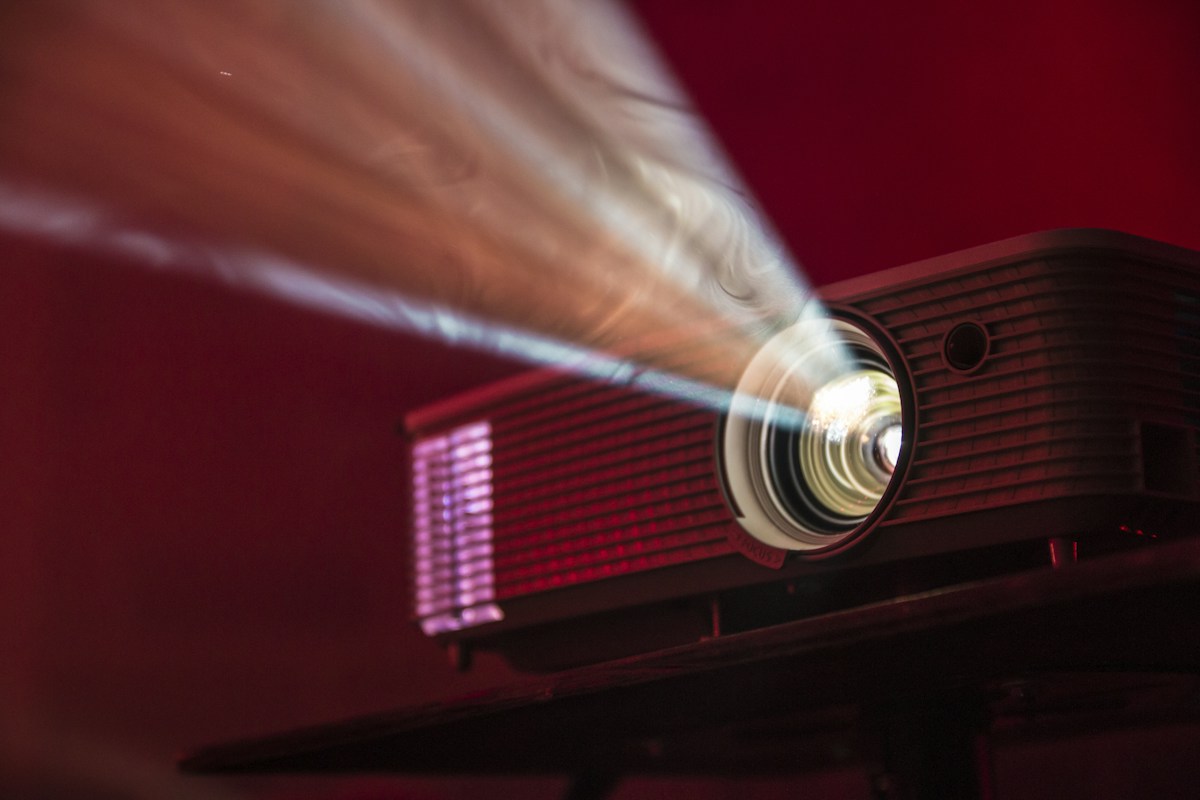
In the autumn of 1953, inside the cavernous Roxy Theatre in New York City, moviegoers sat in stunned silence as the heavy velvet curtains parted twice as wide as usual. Across a monumental curved panoramic screen stretching sixty-five feet horizontally, twentieth-century cinema exploded into a breathtaking new geometry: CinemaScope. When the Roman legions marched across the screen in The Robe, bathed in stereophonic four-track magnetic sound and captured in a massive 2.55:1 aspect ratio, the traditional Academy ratio that had governed motion pictures for sixty years was shattered overnight. Hollywood had declared war on the small, square television box invading American living rooms, fighting back with pure, uncontainable optical grandeur.
That monumental visual transformation was made possible by one of the most brilliant optical inventions in photographic history: the cylindrical anamorphic lens. Originally engineered in French military laboratories during World War I to allow tank commanders a panoramic field of view through narrow vision slits, anamorphic optics solved an impossible mechanical and economic dilemma for twentieth-century studios: how to project panoramic widescreen images without replacing millions of standard 35mm cameras, projector gates, and film stocks across global theaters.
In this definitive historical, optical, and cinematographic treatise, we deconstruct the anamorphic revolution that permanently altered how human beings view motion pictures. We explore the physics of cylindrical lens elements, analyze the early widescreen battle between CinemaScope, VistaVision, Cinerama, and 70mm Todd-AO, examine how directors like Nicholas Ray and Akira Kurosawa revolutionized visual blocking for widescreen compositions, and explain why the distinct optical aberrations of vintage anamorphic glass-oval bokeh, horizontal cyan flares, and unique depth falloff-remain the holy grail of modern digital cinematography.
1. The Academy Ratio and the Post-War Crisis: Hollywood vs. The Television Box
From the birth of commercial cinema in the late 1890s through the early 1950s, motion picture photography was standardized around an almost square aspect ratio: the 1.33:1 (4:3) frame, formalized in 1932 by the Academy of Motion Picture Arts and Sciences as the Academy Ratio (1.37:1) to accommodate an optical soundtrack alongside the image.
For fifty years, theatrical film grammar-close-ups, over-the-shoulder shots, two-shots, and architectural framing-was designed strictly for this vertical, rectangular box. However, in the late 1940s, an existential catastrophe struck the American studio system: the rapid commercial explosion of broadcast television. Millions of post-war families bought suburban homes and installed tiny black-and-white television sets in their living rooms. Between 1946 and 1952, weekly theatrical movie attendance in the United States plummeted from 90 million patrons to under 45 million.
Hollywood studio executives realized that black-and-white dramatic films presented inside a square frame were no longer enough to pull suburbanites away from free living-room broadcasts. Cinema had to offer a visceral, immersive physiological experience that television could never replicate: monumental size, overwhelming color, wrap-around stereophonic audio, and a vast panoramic field of view that matched the peripheral vision of the human eye.
2. Professor Henri Chretien and the Hypergonar: Military Origins of Anamorphic Glass
The technological salvation of twentieth-century Hollywood did not originate on a California studio lot; it was invented three decades earlier in the physics laboratories of Paris by French astronomer and optical physicist Henri Chretien.
In 1918, during the darkest days of the First World War, the French military approached Chretien with an urgent defense dilemma: tank commanders inside armored vehicles were vulnerable to enemy snipers whenever they poked their heads out, yet looking through narrow steel vision slits gave them severe tunnel vision, making them susceptible to flanking infantry attacks. Chretien engineered an optical solution he named the Hypergonar: an optical attachment utilizing precision cylindrical lens elements.
Unlike spherical lens elements, which refract light rays symmetrically in all directions (both horizontally and vertically), Chretien’s cylindrical elements compressed light in only one dimension: the horizontal axis. The lens optically squeezed a 180-degree panoramic field of view horizontally by a factor of 2:1 onto a narrow viewing slit, allowing tank commanders to scan wide battlefields. After the war, Chretien attempted to sell his Hypergonar system to commercial film studios in Paris and London, but executives dismissed it as an unnecessary, expensive novelty-until 20th Century Fox came knocking on his door thirty-five years later in 1952.
3. Spyros Skouras and the Fox Gamble: Buying Henri Chretien’s Patents
In December 1952, the president of 20th Century Fox, Greek-American mogul Spyros Skouras, witnessed a demonstration of a rival widescreen format called Cinerama in New York. While mesmerized by the panoramic spectacle, Skouras recognized that Cinerama was economically impractical for mainstream theater chains: it required three synchronized 35mm projectors, three projection booths, six projectionists, and a deeply curved screen costing hundreds of thousands of dollars.
Remembering Henri Chretien’s pre-war optical patents, Skouras immediately dispatched Fox production chief Darryl F. Zanuck and technical head Earl Sponable to Paris. They tracked down seventy-five-year-old Professor Chretien living in a quiet suburb, dusted off his prototype Hypergonar lenses, and secured a worldwide exclusive commercial license for his patents. Fox rebranded the optical process as CinemaScope.
Skouras made one of the most audacious, all-or-nothing corporate gambles in industrial history: in February 1953, before a single frame of a CinemaScope film had been publicly screened, Skouras announced to the press that every single future feature film produced by 20th Century Fox would be photographed exclusively in CinemaScope. The studio poured millions of dollars into retooling its stages and manufacturing thousands of projection lenses for theater owners worldwide.
4. Optical Mechanics: The 2:1 Squeeze Factor and Cylindrical Refraction
To understand why CinemaScope was an engineering stroke of genius, one must examine the optical physics of the 2:1 horizontal anamorphic squeeze factor.
In a standard spherical 35mm camera, the lens projects a round, symmetrical optical image cone onto the rectangular 35mm film frame. If a filmmaker wanted a wide 2.35:1 image using spherical lenses, they had to “crop” the top and bottom of the frame using a black matte in the camera or projector (“flat widescreen”). This cropping wasted more than 50 percent of the physical film negative area, resulting in excessive film grain, reduced sharpness, and dim theatrical projection.
An anamorphic lens system solved this by utilizing the entire physical surface area of the 35mm frame. The camera taking lens was fitted with an anamorphic front element featuring cylindrical glass curved horizontally but flat vertically. As light entered the camera, the cylindrical optics compressed the horizontal field of view by exactly 50 percent (a 2:1 squeeze ratio), while leaving the vertical dimension untouched. On the developed 35mm film strip, human faces appeared tall, unnaturally thin, and grotesquely elongated, but every single square millimeter of the 35mm negative emulsion was densely packed with photographic information.
5. De-Squeezing in the Projection Booth: Miracle of the Anamorphic Projection Lens
The true economic brilliance of CinemaScope lay in its seamless, non-destructive compatibility with existing theatrical projection infrastructure.
A theater owner did not need to rip out their expensive Simplex or Century 35mm projectors, replace their electric motors, or rebuild their projection booths. They simply unbolted their existing spherical projection lens, mounted an anamorphic de-squeezing projection lens directly in front of the projector gate, and installed a wider, curved reflective screen (the “Miracle Mirror” screen) at the front of the auditorium.
When the distorted, horizontally squeezed 35mm film passed through the projector gate, the intense arc-lamp beam traveled through the anamorphic projection lens. The cylindrical elements in the projection lens executed the exact mathematical reverse of the camera optics: they expanded the light beam horizontally by 200 percent (a 2:1 stretch) while maintaining the original vertical height. The elongated figures on the film strip blossomed across the auditorium into a breathtaking, razor-sharp 2.55:1 panoramic image of majestic grandeur, accompanied by magnetic stereophonic sound.
6. Four-Track Magnetic Sound: The Dawn of True Cinematic Stereophony
CinemaScope was never merely a visual revolution; it was an acoustic earthquake that introduced mainstream audiences to modern multi-channel surround sound: Fox Four-Track Magnetic Stereo.
Standard 35mm film prints utilized an optical variable-density or variable-area soundtrack printed along the left edge of the film, which was inherently monophonic and suffered from limited dynamic range and high surface hiss. To provide a spatial audio experience that matched the vast horizontal screen, Fox engineered a revolutionary release print format: “mag-optical” and four-track magnetic striped film.
Four narrow stripes of brown iron-oxide magnetic recording tape were laminated directly onto the celluloid film strip alongside the sprocket holes. These magnetic tracks carried four discrete high-fidelity audio channels: Left, Center, Right, and Surround. In the theater, as a chariot raced across the sixty-foot screen from left to right, the thundering sound of horse hooves and cracking whips panned dynamically across three discrete stage loudspeakers behind the screen, while battle shouts and thunderclaps echoed from speakers mounted along the side walls of the auditorium. Cinema had achieved three-dimensional spatial immersion.
7. The Anamorphic Mumps: Optical Distortions and the Bausch & Lomb Crisis
While CinemaScope was a commercial triumph, its earliest iterations suffered from a severe optical flaw that horrified Hollywood cinematographers and glamorous movie stars: a distortion known clinically as the “anamorphic mumps”.
The original cylindrical lenses manufactured by Henri Chretien and later refined by Bausch & Lomb maintained an accurate 2:1 horizontal squeeze ratio only when focused at infinity (distant landscapes and horizons). As a subject moved closer to the camera lens-for instance, during a tight close-up at six feet or less-the cylindrical elements lost their precise refractive power. The horizontal squeeze ratio dropped from 2.0x down to approximately 1.5x or 1.6x.
When this defect was de-squeezed by a constant 2.0x projection lens in the theater, the center of the image stretched excessively horizontally. Actors photographed in close-ups appeared to have swollen jowls, flattened noses, and grotesquely widened faces, resembling victims of the mumps. Legendary stars like Marilyn Monroe and Humphrey Bogart were outraged by their distorted screen appearances. Early CinemaScope directors were strictly instructed by studio technicians to avoid intimate close-ups entirely, forcing them to keep actors at medium-shot distances, which threatened to rob cinema of psychological intimacy.
This optical aberration created acute panic among studio cinematographers. On early CinemaScope sets, camera operators taped physical measuring tapes to the base of the lens barrel, strictly enforcing a minimum camera-to-actor distance of seven feet. Studio makeup artists attempted to compensate by applying heavy contouring powders to actors’ cheeks and jawlines to visually slim their faces before the lens. However, the fundamental mechanical limitation remained: the cylindrical optics could not maintain equal focal length across varying conjugate distances, creating an urgent, multi-million-dollar optical crisis across Hollywood.
8. Panavision and Gottschalk’s Triumph: The Elimination of the Mumps
The salvation of the anamorphic format and the eventual eclipse of CinemaScope arrived through the genius of an independent optical inventor and camera rental shop owner in Westwood, California: Robert Gottschalk, founder of Panavision.
In 1953, Gottschalk began manufacturing high-precision, variable anamorphic projection lenses (the Super Panatar) to solve theater owners’ compatibility issues. Seeing the devastating optical flaw of the anamorphic mumps in Fox’s camera lenses, Gottschalk assembled a world-class optical engineering team, including Walter Wallin, to completely redesign the anamorphic camera lens from the ground up.
In 1958, Panavision unveiled the Auto Panatar anamorphic lens, followed by the legendary Panavision C-Series and E-Series lenses. Gottschalk solved the anamorphic mumps through an ingenious mechanical synchronization: as the camera operator rotated the focus ring, a secondary set of corrective cylindrical optical elements counter-rotated inside the lens barrel, maintaining a mathematically perfect 2.0x horizontal squeeze factor across every focal distance from infinity down to three feet. Panavision’s optics were sharper, exhibited minimal chromatic aberration, and allowed directors to shoot intimate, flattering close-ups without distortion. By the mid-1960s, Hollywood studios abandoned CinemaScope and turned universally to Panavision, whose credit line-“Filmed in Panavision”-became synonymous with prestige Hollywood cinema.
Gottschalk paired this optical superiority with a brilliant corporate business strategy: Panavision refused to sell its lenses to studios or camera operators. Every Panavision camera body and anamorphic lens could only be leased under exclusive rental contracts. This policy ensured that every single piece of optical equipment returned to Panavision’s machine shops after a production to be meticulously serviced, recalibrated, and optical-bench tested before its next lease. By maintaining complete quality control over the rental pool, Panavision guaranteed flawless optical performance on set, establishing a technological monopoly that dominated Hollywood prestige cinematography for over half a century.
9. Compositional Revolution: Replacing Close-Ups with Spatial Choreography
The sudden expansion of the cinema screen from a compact 1.37:1 box to a sweeping 2.35:1 or 2.55:1 canvas forced film directors and cinematographers to completely invent a new visual language of mise-en-scene and spatial blocking.
Director Fritz Lang famously quipped that CinemaScope was “only good for funerals and snakes,” expressing the initial frustration of veteran directors accustomed to classical framing. In a square Academy frame, an actor’s face in close-up commanded 80 percent of the visual field. In CinemaScope, a solitary human face left vast expanses of empty, dead space on either side of the head, creating compositional awkwardness.
Visionary directors like Nicholas Ray (Rebel Without a Cause, 1955) and Samuel Fuller (Forty Guns, 1957) recognized that widescreen was not an obstacle, but a revolutionary narrative canvas. Ray replaced rapid cross-cutting between characters with complex, horizontal choreography: James Dean, Natalie Wood, and Sal Mineo could be framed simultaneously across the wide frame, with their physical distance, posture, and spatial separation revealing their psychological isolation without a single cut. Directors learned to compose in deep focus, staging major dramatic action on the far left, intermediate reactions in the center, and approaching threats on the far right, transforming the cinema frame into an expansive theatrical stage.
In the iconic planetarium sequence of Rebel Without a Cause, Nicholas Ray used the extreme horizontal edges of the 2.55:1 frame to dramatize adolescent alienation. Dean sits hunched on the extreme left edge of the frame, bathed in cool blue shadows, while his alienated peers sit clustered on the distant right. The immense physical void separating them across the curved screen visualized their emotional estrangement far more powerfully than any spoken dialogue. Widescreen framing ceased to be a simple panoramic landscape format; it became an architectural instrument of psychological portraiture.
10. Akira Kurosawa and the Geometry of the Widescreen Frame: The Seven Samurai Legacy
Across the Pacific in Tokyo, Japanese master Akira Kurosawa embraced the anamorphic widescreen format (branded as Tohoscope) to forge some of the most dynamic, visually commanding compositions in cinema history, most notably in The Hidden Fortress (1958), Yojimbo (1961), and High and Low (1963).
Working with his genius cinematographers Kazuo Miyagawa and Asakazu Nakai, Kurosawa rejected static camera setups. He deployed multiple telephoto anamorphic lenses simultaneously from distant vantage points, flattening the spatial perspective and compressing dozens of moving warriors, horses, and swirling banners into dense, multi-layered geometric tableaux.
In High and Low, Kurosawa utilized the widescreen frame for masterclasses in social psychology. Inside a modern hilltop mansion overlooking the slums of Yokohama, Kurosawa blocked five or six businessmen and police detectives across the frame, positioning them in strict triangular and diamond geometric formations. As power dynamics shifted during a tense ransom negotiation, characters shifted positions like chess pieces across the wide horizontal plane, using the expansive geometry of the lens to visualize corporate hierarchy and moral tension with mathematical precision.
Furthermore, Kurosawa was a master of dynamic diagonal movement across the horizontal frame. In The Hidden Fortress, as rival armies clash across rugged mountain ridges, Kurosawa staged running warriors charging diagonally from the lower left corner toward the upper right horizon. By cutting between opposing diagonal trajectories, Kurosawa generated tremendous kinetic momentum and physical spatial disorientation, proving that anamorphic widescreen could convey raw, percussive physical energy alongside contemplative formal beauty.
11. The Rival Systems Battle: VistaVision, Todd-AO 70mm, and Cinerama
While CinemaScope and Panavision conquered the commercial mainstream, the 1950s was characterized by a ferocious technological war between competing widescreen formats, each championing distinct approaches to image resolution.
Paramount Pictures rejected anamorphic optical squeezing, arguing that anamorphic lenses introduced optical softness and edge flare. Instead, Paramount engineered VistaVision in 1954. VistaVision ran standard 35mm film horizontally through the camera gate across eight perforations per frame instead of the standard vertical four perforations. This yielded a physical negative area more than double the size of standard 35mm, producing breathtaking optical sharpness and virtually non-existent film grain, famously utilized by Alfred Hitchcock in Vertigo, North by Northwest, and To Catch a Thief.
Simultaneously, theatrical producer Michael Todd and the American Optical Company developed Todd-AO in 1955: a non-anamorphic wide-gauge 65mm camera negative projected on 70mm prints at 30 frames per second on deeply curved screens, debuting with Oklahoma! (1955). Meanwhile, MGM introduced Camera 65 (Ultra Panavision 70), which combined wide 65mm film stock with a 1.25x anamorphic squeeze, yielding an astonishing 2.76:1 ultra-widescreen spectacle for William Wyler’s Ben-Hur (1959). This format battle pushed motion picture image resolution to heights that modern digital cameras are only now matching.
12. The Anatomy of Anamorphic Bokeh: Cylindrical Astigmatism and Oval Blur
Beyond widescreen aspect ratios, the most celebrated visual hallmark of anamorphic lenses is the unique, unmistakable texture of their out-of-focus background elements: oval anamorphic bokeh.
In a conventional spherical camera lens, the optical elements are symmetrical spheres, meaning that out-of-focus points of light in the background blur into round, circular discs (spherical bokeh) matching the circular aperture blades. In an anamorphic lens, however, light rays are subjected to cylindrical astigmatism: the lens has two completely different focal lengths simultaneously-one for the vertical axis, and another for the horizontally compressed axis.
Because the background light is squeezed horizontally by a factor of 2:1 during capture and subsequently stretched by 2:1 during projection, circular points of background light do not render as circles; they are stretched into gorgeous, vertical elliptical or oval shapes. Furthermore, the out-of-focus falloff has a painterly, three-dimensional character: foreground subjects appear to physically pop outward from the softly blurred background with a sculpted dimensionality (often called the “anamorphic look”) that flat spherical glass cannot duplicate.
13. Horizontal Lens Flares: The Physics of Internal Cylindrical Scattering
Alongside oval bokeh, the most instantly recognizable aesthetic signature of vintage anamorphic cinematography is the horizontal streak flare, typically glowing in electric cyan, cobalt blue, or golden amber.
In spherical lenses, anti-reflective chemical coatings are engineered to minimize internal lens reflections, and any flare that occurs renders as circular or hexagonal rings. In an anamorphic lens, the curved surfaces of the front cylindrical elements act as microscopic optical mirrors along the horizontal axis. When a high-intensity point source of light-such as an automobile headlight, a flashlight, or a practical spotlight-shines directly into the front lens element, light reflects across the curved cylindrical face.
Because the curvature of the cylinder is horizontal, the scattered photons are refracted along a single linear plane, projecting a razor-sharp, horizontal beam of light across the entire width of the frame. While mid-century optical engineers considered these flares to be unwanted defects to be suppressed, modern directors like Steven Spielberg (Close Encounters of the Third Kind) and J.J. Abrams embraced horizontal anamorphic flares as evocative visual poetry, conveying futuristic technology, emotional intensity, and cinematic mystery.
14. Sergio Leone and the Spaghetti Western: Re-Inventing the Extreme Close-Up
While early 1950s Hollywood directors obeyed studio warnings to avoid close-ups in widescreen, Italian maestro Sergio Leone arrived in the mid-1960s with a sledgehammer to shatter that convention forever.
In his immortal Dollars Trilogy (A Fistful of Dollars, For a Few Dollars More, The Good, the Bad and the Ugly) and his 1968 magnum opus Once Upon a Time in the West, Leone, working with cinematographer Tonino Delli Colli, created the definitive visual syntax of the widescreen format. Utilizing Techniscope (a 2-perf 35mm spherical format cropped to 2.35:1) and anamorphic lenses, Leone juxtaposed two radical spatial extremes.
Leone would open a scene with a panoramic, mile-wide extreme long shot of the desolate Spanish desert, where tiny human figures appeared like ants against monumental rock formations. Then, in a fraction of a second, Leone would cut to an extreme anamorphic close-up: filling the entire 2.35:1 screen solely with the sweaty, squinting eyes of Clint Eastwood, Lee Van Cleef, or Charles Bronson. The wide horizontal frame allowed Leone to showcase both eyes and the bridge of the nose while capturing background landscape over their shoulders, ratcheting up psychological tension during iconic shootouts to excruciating, mythic levels.
In the legendary three-way cemetery shootout of The Good, the Bad and the Ugly, Leone pushed this widescreen syntax to operatic perfection. As Ennio Morricone’s score swells, Leone cuts between three men standing at opposite points of a circular cobbled arena. The edits accelerate from full-body three-shots, to medium shots framing holstered pistols on the left and eyes on the right, down to lightning-fast cuts between three pairs of staring eyes filling the horizontal screen. The widescreen format enabled a complete spatial and psychological triangulation that remains the greatest shootout sequence in the history of cinema.
15. The Rise of Flat Cropping: Super 35 and Optical Convenience
By the mid-1980s, despite the romance of anamorphic glass, the mechanical difficulty of shooting with heavy, slow anamorphic lenses (which typically required deep light stops of f/4 or f/5.6 to stay sharp) led to the rise of a rival workflow: Super 35mm.
Championed by cinematographers like James Cameron (The Abyss, Terminator 2) and David Fincher, Super 35 utilized standard spherical lenses on 35mm cameras with expanded film gates that exposed the soundtrack area of the film negative. The spherical negative was then framed for 2.35:1 widescreen by cropping the top and bottom in an optical printer or digital scanner.
Super 35 offered immense production advantages: spherical lenses were smaller, lighter, cheaper, much faster in low light (allowing shooting at f/1.4 or f/2.0), and suffered from zero anamorphic mumps or extreme distortion. However, cinephiles and purists lamented the trade-off: cropped Super 35 lacked the glorious oval bokeh, the organic horizontal flares, and the unique optical depth of true front-anamorphic glass. The debate between true optical anamorphic capture and cropped spherical widescreen remains one of the most passionate debates in contemporary cinematography.
16. The Digital Sensor Challenge: Squeeze Ratios and Sensor Gate Dimensions
When cinema transitioned from physical celluloid to digital image sensors in the early 2010s, anamorphic optics faced an acute geometrical crisis: digital sensor aspect ratios.
Most modern digital cinema cameras-such as the Sony Venice, RED, or standard ARRI Alexa models-were engineered with 16:9 (1.78:1) rectangular digital sensors designed to match HDTV and standard flat spherical production. If you mount a vintage 2.0x anamorphic lens onto a 16:9 sensor, the 2:1 horizontal expansion yields an ultra-stretched 3.56:1 image: an impossibly wide, narrow letterbox slit that cuts off actors’ foreheads and wastes massive sensor area.
To rescue anamorphic cinematography in the digital age, camera manufacturers had to introduce specialized 4:3 and “Open Gate” large-format digital sensors (such as the ARRI Alexa Mini LF and Alexa 35 in 4:3 mode). A 4:3 (1.33:1) digital sensor perfectly matches the dimensions of a classic 4-perf 35mm silent film gate. When a 2.0x anamorphic lens is mounted on a 4:3 digital sensor, the de-squeezed image lands on a pristine, mathematically perfect 2.39:1 theatrical widescreen frame, preserving the full optical character of the vintage glass.
17. The Modern Anamorphic Craze: Alexa, Cooke, Hawk, and Vintage Glass Resurgence
In an age where modern digital cinema cameras produce hyper-sharp, mathematically flawless 8K images with clean, noise-free clinical precision, the global film industry is experiencing a massive, unprecedented Anamorphic Lens Craze.
Directors and cinematographers working on major Hollywood blockbusters, prestige Netflix and HBO television series, and high-end commercials are aggressively hunting down vintage 1960s and 70s anamorphic lenses-such as vintage Kowa Prominar, Todd-AO, Cooke Anamorphic/i, and Hawk V-Lite lenses. Cinematographers deliberately seek out the optical “imperfections” that mid-century engineers tried to eliminate: soft edge falloff, chromatic aberration, barrel distortion, and unpredictable streak flares.
These optical characteristics serve as an organic antidote to the sterile perfection of digital sensors. Anamorphic glass acts as an analog acoustic filter for light, re-introducing organic warmth, textural unpredictability, and painterly three-dimensional separation between characters and backgrounds, transforming clean digital pixels into timeless, mythic cinema.
18. Practical DP Guide: Achieving the Anamorphic Look on Modern Indie Budgets
For independent directors, cinematographers, and content creators working without a million-dollar Panavision rental budget, you no longer need to sacrifice the anamorphic aesthetic. Modern optical engineering has democratized anamorphic filmmaking for indie creators.
To achieve authentic anamorphic imagery on a budget, consider affordable modern 1.33x, 1.5x, or 1.6x anamorphic prime lenses (such as those from Sirui, Laowa, or Great Joy) paired with mirrorless or cinema cameras. If using a 16:9 sensor camera, a 1.5x or 1.6x squeeze lens will de-squeeze directly into a standard 2.39:1 or 2.40:1 widescreen frame without cropping away resolution.
Alternatively, you can utilize vintage projection anamorphic adapters (such as Kowa 16-H, Sankor, or Bell & Howell anamorphic adapters) mounted to the front of affordable spherical vintage taking lenses (like Helios 44-2 or Canon FD primes) using custom clamp rings. When shooting, compose your shots with bold horizontal geometry, light your scenes with practical point-source lights in the background to activate horizontal streak flares, and shoot at wider apertures to reveal the mesmerizing oval bokeh that immediately separates high-end cinema from amateur video.
Optical and Technical Comparison of Historical Widescreen Formats
To appreciate how CinemaScope and anamorphic lenses conquered the motion picture industry, one must compare their optical architecture, mechanical workflows, film gate dimensions, and projection mechanics against competing widescreen systems of the mid-twentieth century.
The widescreen wars were fought between two distinct technical philosophies: optical squeezing on standardized 35mm film versus large-gauge physical negative expansion (VistaVision and 70mm Todd-AO). While wide-gauge formats offered unmatched resolution, anamorphic systems triumphed commercially because of their extraordinary economic compatibility with existing global projection booths. The following comparative matrix outlines the technical specifications across the four primary widescreen formats of Hollywood’s Golden Age.
| Widescreen System | Optical Mechanism | Native Aspect Ratio | Film Transport & Gauge | Primary Commercial Legacy |
|---|---|---|---|---|
| CinemaScope (1953) | 2:1 Cylindrical Anamorphic Squeeze | 2.55:1 (magnetic) / 2.35:1 (optical) | Vertical 4-perf 35mm standard transport | Launched global widescreen revolution; 4-track stereo |
| VistaVision (1954) | Spherical Optics; Flat Crop | 1.85:1 (variable 1.66:1 to 2.00:1) | Horizontal 8-perf 35mm transport | Hitchcock masterpieces; ILM visual effects plates |
| Todd-AO (1955) | Spherical Optics on Large Gauge | 2.20:1 | Vertical 5-perf 65mm negative / 70mm print | Monumental prestige roadshow epics; 30 fps clarity |
| Panavision Anamorphic (1958) | 2:1 Anamorphic with Anti-Mumps Prisms | 2.39:1 (standard modern anamorphic) | Vertical 4-perf 35mm (and modern 4:3 digital) | Defeated CinemaScope; Hollywood prestige gold standard |
Frequently Asked Questions About CinemaScope and Anamorphic Lenses
What is an anamorphic lens and how does it differ from a spherical lens?
A spherical lens refracts light symmetrically across both horizontal and vertical axes, projecting a circular image onto the sensor or film. An anamorphic lens incorporates specialized cylindrical glass elements that refract light horizontally while leaving vertical light untouched. It compresses a panoramic 2:1 field of view horizontally onto a standard square film frame, which is subsequently stretched back to panoramic width during projection.
Why did Hollywood studios adopt CinemaScope so rapidly in 1953?
Hollywood faced an existential financial crisis due to the post-war rise of commercial television, which caused movie attendance to drop by 50 percent. CinemaScope offered monumental panoramic spectacle and multi-channel stereophonic sound that television could not compete with. Furthermore, CinemaScope utilized standard 35mm film and projectors with simple lens adapters, making it economically accessible to theater chains worldwide.
What caused the notorious “anamorphic mumps” in early CinemaScope films?
Early cylindrical anamorphic lenses manufactured by Bausch & Lomb maintained an accurate 2:1 squeeze ratio only when focused at infinity. When focused on close-up subjects (under six feet), the horizontal squeeze ratio diminished to approximately 1.5x. When projected through a constant 2:1 lens, the center of the image stretched horizontally, causing actors’ faces to look unnaturally wide and swollen.
How did Panavision defeat CinemaScope in the marketplace?
Founded by Robert Gottschalk, Panavision engineered the Auto Panatar and C-Series lenses, which incorporated counter-rotating optical elements that corrected the anamorphic mumps at every focal distance. Panavision lenses produced sharper images, flatter close-ups, and superior mechanical reliability, prompting Hollywood studios to abandon CinemaScope for Panavision by the 1960s.
Why do anamorphic lenses produce oval bokeh instead of round bokeh?
Oval bokeh is caused by cylindrical astigmatism. In an anamorphic lens, the vertical and horizontal focal planes operate at different magnification factors. Out-of-focus background light highlights are compressed horizontally by 2:1 inside the camera and stretched by 2:1 during projection, transforming circular points of light into vertical ellipses.
What causes the iconic horizontal blue lens flares in anamorphic cinematography?
Horizontal flares are generated by internal reflections bouncing across the cylindrical front elements of the lens. When a point light source (like headlights or a flashlight) strikes the cylindrical glass, light scatters exclusively along the horizontal axis, projecting a vibrant streak across the width of the frame.
How did Akira Kurosawa utilize widescreen lenses in his films?
Akira Kurosawa used long telephoto anamorphic lenses (Tohoscope) to compress depth and stage intricate group dynamics. In films like The Hidden Fortress and High and Low, Kurosawa arranged characters across the wide horizontal frame in geometric formations, tracking their emotional and power dynamics across the horizontal plane without relying on rapid cross-cutting.
Why are vintage anamorphic lenses so popular with modern digital cinematographers?
Modern digital camera sensors are exceptionally sharp and clean, which can look clinical or sterile. Vintage anamorphic lenses reintroduce organic, analog imperfections: painterly depth falloff, soft edge focus, horizontal flares, and oval bokeh. These characteristics humanize digital sensors, imbuing contemporary productions with classic Hollywood cinematic warmth.
Conclusion: The Lasting Grandeur of the Anamorphic Horizon
More than seven decades after Spyros Skouras staked the entire future of 20th Century Fox on Henri Chretien’s French military patents, the anamorphic widescreen frame remains the ultimate visual signature of cinematic majesty. It transformed the movie theater from a simple storytelling venue into an immersive temple of peripheral vision, permanently expanding how human beings imagine and experience narrative space.
While digital sensor technology continues to evolve toward higher resolutions and automated software corrections, filmmakers around the globe remain fiercely devoted to the optical soul of anamorphic glass. In its oval bokeh, its sweeping horizontal flares, and its majestic panoramic embrace, anamorphic cinematography preserves the eternal magic of the movie theater: reminding us that cinema at its grandest is an invitation to step beyond the narrow confines of our everyday view and gaze across a limitless, illuminated horizon.
Scholarly Citations and Authoritative Optical Archives
- American Society of Cinematographers: The History and Optics of Anamorphic Cinematography (theasc.com)
- Academy of Motion Picture Arts and Sciences: Margaret Herrick Library Widescreen Technical Revolution Papers (oscars.org)
- Society of Motion Picture and Television Engineers: SMPTE Standards for Anamorphic Squeeze and Aspect Ratios (smpte.org)
- British Film Institute: The Widescreen War: CinemaScope, VistaVision, and Todd-AO (bfi.org.uk)
- Panavision Optical Archives: Historical Evolution of Auto Panatar and C-Series Anamorphic Optics (panavision.com)
- Internal Archive: Anemoia Historical Cinematography and Visual Arts Repository

