

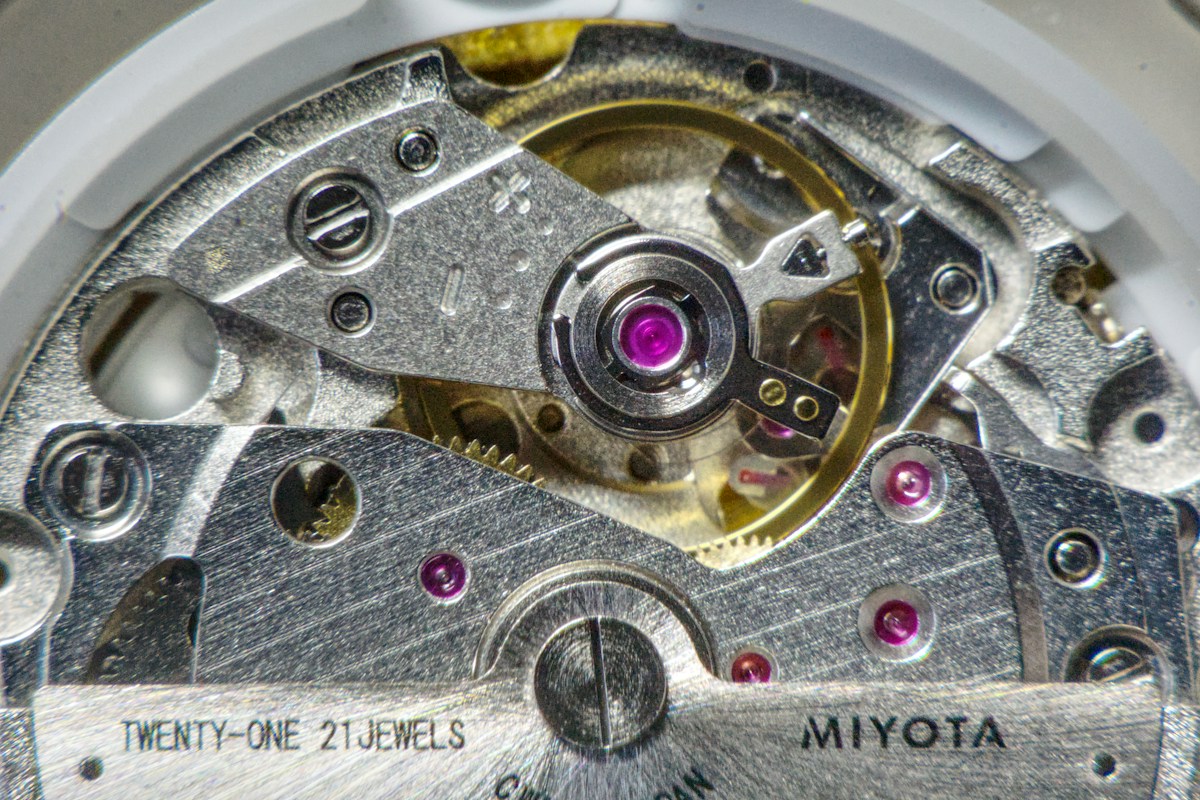
Hold a mechanical pocket watch from 1912 to your ear in a silent room. Beneath the polished 18-karat gold case and the sapphire crystal caseback, you are not merely listening to the passage of seconds; you are communing with a living mechanical heartbeat. Five times every second-18,000 times an hour, day and night without batteries, microchips, or wireless signals-a tiny synthetic ruby pallet jewel strikes an escape wheel tooth, releasing an infinitesimal fraction of stored kinetic energy from a coiled spring of high-carbon steel. That rhythmic, metallic whisper is the acoustic signature of humanity’s oldest, most intimate mechanical triumph: the art of horology.
In an era dominated by disposable smartwatches and cloud-synced digital screens whose lifespan is measured in software update cycles, the mechanical watch stands as an enduring monument to permanence, micro-engineering, and kinetic artistry. Composed of over two hundred microscopic gears, pinions, springs, and synthetic jewels operating within tolerances measured in micrometers, a fine mechanical timepiece is built to function continuously for centuries. It transforms the invisible, philosophical flow of cosmic time into a tangible physical dance of gears, escapements, and oscillating balance springs.
In this comprehensive technical, historical, and conservation manual, we deconstruct the inner universe of mechanical horology. We trace the physics of the mainspring barrel and the gear train, explore the microscopic mechanics of the Swiss lever escapement, examine Abraham-Louis Breguet’s tourbillon and overcoil balance springs, evaluate the devastating impact of the 1970s Quartz Crisis, and detail the painstaking chemistry, micro-lubrication protocols, and conservation ethics required to preserve vintage mechanical timepieces for future generations.
1. The Philosophical and Physical Architecture of Time Measurement
To appreciate the genius of the mechanical watch, one must first confront the metaphysical challenge that perplexed human philosophers and astronomers for millennia: what is time, and how do we trap it inside a physical machine small enough to strap to a human wrist?
In classical physics, time cannot be measured directly; it can only be quantified by counting the regular, periodic oscillations of a physical system. For centuries, humanity relied on celestial movements-the rotation of the Earth on its axis, the phases of the moon, or the shadow of a sundial gnomon. In the seventeenth century, Christiaan Huygens discovered that a swinging pendulum possessed isochronism: the property where each swing takes an identical duration of time regardless of the swing’s amplitude, provided the angle remains small.
While pendulums enabled towering grandfather clocks and church tower clocks, a pendulum was useless on a moving ship or in a gentleman’s pocket: any physical tilt, motion, or vibration stopped the mechanism instantly. The birth of portable timekeeping demanded a radical mechanical substitute for gravity: a spring-driven harmonic oscillator that could function in any orientation, under constant acceleration, and through severe temperature swings. This breakthrough transformed horology from static architectural engineering into portable micro-mechanics.
2. The Motor: The Mainspring Barrel and Hooke’s Law of Elastic Potential
At the foundation of every mechanical timepiece sits its primary power source: the mainspring barrel. Inside a flat, brass gear drum measuring barely a centimeter in diameter lies a tightly coiled ribbon of specialized spring steel alloy measuring roughly twenty to thirty centimeters in length.
When the wearer winds the watch-either by turning the winding crown or through the kinetic motion of a weighted oscillating rotor in an automatic watch-torque is transferred through the winding stem and ratchet wheel to wind the spring around the central barrel arbor. In doing so, the spring stores mechanical energy according to Hooke’s Law of Elasticity, storing potential energy in the molecular tension of the metal crystal lattice.
Historically, early watchmakers wrestled with a severe physical flaw: a coiled spring exerts immense torque when fully wound, but steadily loses torque as it unwinds, causing early watches to run fast in the morning and slow in the evening. Early horologists solved this with complex equalizing mechanisms like the fusee and chain (a miniature cone-shaped pulley and bicycle-style chain). In modern horology, metallurgy solved the crisis: twentieth-century metallurgists engineered proprietary alloys like Nivaflex (a blend of cobalt, nickel, chromium, titanium, and beryllium), which maintain an exceptionally flat torque-discharge curve across forty to seventy hours of continuous power reserve, remaining completely immune to magnetic fields and structural fatigue.
3. The Gear Train: Wheels, Pinions, and Mathematical Torque Multiplication
The raw mechanical torque stored inside the mainspring barrel cannot be delivered directly to the time-telling hands; if released uncontrolled, the mainspring would unleash its entire energy in a fraction of a second, destroying the delicate gears in an explosive spin. The energy must be stepped down in torque and stepped up in rotational velocity through the gear train (wheel train).
The gear train consists of four precisely calculated toothed wheels and their corresponding hardened steel pinions:
- The Great Wheel (Barrel Drum): Meshes directly with the center pinion, typically rotating once every several hours.
- The Center Wheel: Completes exactly one revolution per hour (60 minutes). The minute hand is mounted directly to the arbor of this wheel via the cannon pinion.
- The Third Wheel: Serves as an intermediary speed multiplier, transferring torque from the center wheel to the fourth wheel.
- The Fourth Wheel: Geared to complete exactly one revolution per minute (60 seconds). In watches with a sub-seconds dial at six o’clock, the small second hand is mounted directly to the extended pivot of the fourth wheel.
- The Escape Wheel: Meshes with the fourth wheel pinion, spinning rapidly to interact with the escapement mechanism.
Every gear tooth profile is cut to an epicycloidal or involute curve rather than a triangle. This mathematical tooth geometry ensures that as teeth roll against one another, friction is minimized, transmitting torque with over 95 percent mechanical efficiency through microscopic bronze pivots resting in oiled jewels.
4. The Swiss Lever Escapement: The Mechanical Heartbeat of Horology
If the mainspring is the engine and the gear train is the transmission, the escapement is the soul of the mechanical watch. It performs two opposing, miraculous functions: it prevents the gear train from running wild by arresting its motion, while simultaneously delivering an infinitesimal mechanical impulse to the balance wheel to keep it oscillating indefinitely.
While dozens of escapement designs were invented over centuries (including the cylinder, virgule, duplex, and detent escapements), the undisputed monarch of modern horology is the Swiss Lever Escapement (Ancre Suisse), invented by British watchmaker Thomas Mudge in 1754 and perfected by Swiss makers in the nineteenth century.
The Swiss lever escapement consists of two primary components: the escape wheel, featuring fifteen club-shaped teeth, and the lever (pallet fork), a balanced brass or steel anchor carrying two precisely angled synthetic ruby stones: the entry pallet and the exit pallet. As the balance wheel swings, an impulse jewel (ruby pin) on its underside enters the notch of the lever fork. The lever pivots, lifting the entry pallet and allowing one tooth of the escape wheel to “escape.” As the tooth slides across the impulse face of the ruby, it pushes the lever, which in turn delivers a tiny kinetic kick to the balance wheel, maintaining its motion. The exit pallet instantly drops into the path of the next tooth, locking the train once more. This locking and unlocking cycle creates the unmistakable “tick-tock” sound that defines mechanical time.
5. The Balance Wheel and Hairspring: The Harmonic Resonator
The component that actually determines the precise rate and accuracy of a mechanical watch is the regulating organ: the balance wheel and hairspring (balance spring). Operating as a torsional pendulum, this microscopic assembly oscillates back and forth with exquisite mathematical regularity.
Invented independently by Robert Hooke and Christiaan Huygens in the 1670s, the balance spring is a gossamer-thin, spiral ribbon of metal coiled around a central collet. The outer end is pinned to the balance cock. As the balance wheel rotates in one direction, it winds the spring, creating restorative torque that arrests the wheel and flings it back in the opposite direction, creating a continuous, self-sustaining harmonic oscillation.
The vibrational frequency of a modern balance wheel is typically 28,800 vibrations per hour (vph), or 4 Hertz (four complete cycles, or eight discrete ticks, per second). Some high-frequency movements, such as the legendary Zenith El Primero, oscillate at 36,000 vph (5 Hz), dividing each second into ten microscopic fractions. The sheer physical endurance of this component is staggering: in a watch oscillating at 28,800 vph, the balance wheel rotates back and forth nearly 700,000 times every single day, traveling an equivalent distance of several miles along its outer rim without ever stopping.
6. Abraham-Louis Breguet and the Overcoil Balance Spring
In the pantheon of horological history, one name towers above all others as the undisputed Da Vinci of timekeeping: Swiss-born Parisian master Abraham-Louis Breguet (1747-1823). Breguet’s innovations touched every facet of watch design, but his contribution to chronometric precision remains legendary: the Breguet Overcoil.
In a standard flat spiral hairspring, the spring expands and contracts asymmetrically (“breathes” unevenly) during oscillation. Because the outer end of the spring is pinned to a fixed stud on one side, the center of gravity of the spring shifts laterally with every swing, placing uneven lateral friction on the delicate balance wheel pivots. This causes the watch to run at different rates depending on whether it is lying flat on a table or hanging vertically in a pocket.
In 1795, Breguet solved this fundamental physical flaw through an exquisite geometric stroke of genius. He elevated the final outer coil of the hairspring above the spiral plane and bent it inward toward the center in a precise mathematical curve, pinning it near the central arbor. This Breguet overcoil allowed the spring to expand and contract concentrically in all directions, maintaining a stationary center of gravity throughout its oscillation. The Breguet overcoil dramatically enhanced isochronism, allowing pocket watches to achieve marine chronometer-grade accuracy and becoming the defining hallmark of haute horlogerie.
7. The Tourbillon: Gravitational Compensation in Haute Horlogerie
Breguet’s most celebrated, visually intoxicating invention was patented in 1801: the Tourbillon (French for “whirlwind”). The tourbillon was engineered specifically to conquer the single greatest enemy of portable pocket watch precision: Earth’s gravity.
A pocket watch spent the vast majority of its life sitting vertically in a gentleman’s waistcoat pocket. Because gravity constantly pulled down on the delicate balance wheel and hairspring, microscopic manufacturing imperfections caused the heavy spot of the balance wheel to accelerate as it swung downward and decelerate as it swung upward. This gravitational bias produced positional errors: the watch might gain fifteen seconds a day in the crown-up position, yet lose ten seconds in the crown-down position.
Breguet solved this by mounting the entire escapement-the balance wheel, hairspring, lever fork, and escape wheel-inside a lightweight, rotating steel cage weighing a fraction of a gram. Driven by the third wheel, the tourbillon cage completed one full 360-degree rotation every sixty seconds. By constantly rotating the regulating organ through every vertical angle, the gravitational errors incurred in one position were mechanically canceled out by the opposing errors incurred thirty seconds later. While modern wristwatches are constantly moving on the wearer’s arm (rendering the tourbillon functionally unnecessary for accuracy), the tourbillon remains the supreme aesthetic exhibition of high-end horological mastery.
8. Jewel Bearings: The Science of Synthetic Corundum and Friction Reduction
If you examine the bridges of a fine mechanical watch movement, you will notice translucent crimson stones pressed into polished gold chatons: jewel bearings. Far from being decorative jewelry, these stones are critical mechanical components that prevent the watch from grinding itself into powder.
In early clocks, steel gear arbors rotated inside simple brass holes. Under constant torque, microscopic friction between steel and brass caused the holes to wear into oblong shapes within a few years, causing gear teeth to misalign and the movement to halt. In 1704, Swiss mathematician Nicolas Fatio de Duillier, working with Pierre and Jacob Debaufre, patented the art of piercing natural rubies and diamonds to serve as low-friction bearings for watch pivots.
In 1902, French chemist Auguste Verneuil invented the flame-fusion process, allowing the mass production of synthetic ruby and sapphire (corundum, or aluminum oxide, $\text{Al}_2\text{O}_3$). Synthetic rubies possess an extraordinary hardness of 9 on the Mohs scale (second only to diamond), a microscopic surface roughness near zero, and chemically inert properties. Polished steel pivots rotating inside lubricated synthetic ruby jewels experience almost zero friction and zero mechanical wear, allowing movements to run for decades without bearing degradation. A standard high-grade time-only mechanical movement contains seventeen to twenty-one functional jewels protecting every critical pivot point.
9. Automatic Winding: The Perrelet Oscillating Weight to Rolex Perpetual Rotor
While manual-wind watches required the wearer to turn the crown every morning, the dream of a self-winding timepiece that derived its energy from the natural physical movement of the wearer occupied horologists for two centuries.
The concept was pioneered in the late 1770s by Swiss master Abraham-Louis Perrelet for pocket watches, utilizing a weighted swinging arm that bounced against buffer springs. However, because pocket watches sat relatively motionless inside snug pockets, automatic pocket watches were inefficient and prone to mechanical breakage.
The true revolution of automatic winding arrived with the advent of the wristwatch in the 1920s and 30s. In 1923, British watchmaker John Harwood patented the first commercial automatic wristwatch, utilizing a weighted “bumper” rotor that swung back and forth through a 180-degree arc. In 1931, Rolex perfected the technology by unveiling the Perpetual Rotor: a heavy, semi-circular brass or tungsten weight mounted on a central jewel bearing, capable of rotating 360 degrees freely in both directions. Connected to a complex reversing gear train, every casual movement of the wearer’s wrist wound the mainspring continuously, establishing the mechanical template that powers millions of automatic watches today.
10. Shock Protection Systems: Incabloc and Kif Elastomer Engineering
Prior to the mid-twentieth century, the greatest physical hazard to any mechanical watch was a sudden physical impact. Dropping a pocket watch or wristwatch onto a hardwood floor or cobblestone street almost invariably proved fatal to the movement.
The vulnerability lay in the balance staff: the microscopic steel axle upon which the balance wheel spins. To minimize friction, the balance staff pivots taper down to an astonishing diameter of roughly 0.07 to 0.08 millimeters (thinner than a single strand of human hair). When a watch struck a hard surface, the inertia of the heavy balance wheel sheared these microscopic pivots instantly, snapping the balance staff and stopping the watch.
In 1934, Swiss engineers Fritz Marti and Georges Braunschweig invented the Incabloc shock protection system. Incabloc mounts the balance staff’s endstone and hole jewel inside a spring-loaded brass housing held by a distinctive lyre-shaped gold spring. Under a severe physical shock, the spring yields slightly, allowing the thicker, heavy shoulder of the balance staff to contact the solid bridge, absorbing 99 percent of the impact force. Once the shock dissipates, the spring instantly centers the jewel and delicate pivot back into its operating position with micrometer precision, making mechanical watches durable enough for military combat and sports.
11. Chronometer Certification and the Neuchatel Observatory Trials
Long before marketing departments invented lifestyle branding, the commercial prestige of a watch manufacture was forged in the freezing mountain observatories of Switzerland: the legendary Observatory Timing Trials at Neuchatel, Geneva, Kew-Teddington, and Besancon.
Throughout the nineteenth and early twentieth centuries, elite watch manufactures (including Patek Philippe, Omega, Longines, Zenith, and Rolex) submitted specially prepared movements to independent astronomical observatories. Movements were subjected to brutal testing regimens spanning forty-five consecutive days: tested across five distinct physical positions (dial up, dial down, crown left, crown up, crown down) and subjected to extreme temperature chambers ranging from freezing ice boxes (4 degrees Celsius) to heated ovens (36 degrees Celsius).
The master craftsmen who adjusted these movements-legendary regleurs (timing adjusters) like Rene Gygax and Paul-Adolphe Chopard-were revered as national heroes. In 1973, this competitive tradition was formalized into the Controle Officiel Suisse des Chronometres (COSC). To earn the coveted title of “Certified Chronometer,” an uncased mechanical movement must pass fifteen days of multi-positional and multi-temperature testing, maintaining an average daily rate variation between -4 and +6 seconds per day.
12. The Quartz Crisis (Quartz Revolution) of the 1970s: The Horological Apocalypse
In December 1969, a catastrophic technological earthquake struck the historic watchmaking valleys of Switzerland: Japanese electronics corporation Seiko unveiled the Astron 35SQ, the world’s first commercial quartz wristwatch.
The quartz watch operated on a completely different physical universe: an integrated circuit battery passed an electrical current through a microscopic synthetic quartz crystal tuning fork, causing it to vibrate at an astronomical frequency of 32,768 Hertz. While the finest mechanical chronometer achieved an accuracy of a few seconds per day, an inexpensive mass-produced quartz watch was accurate to a few seconds per month, sold for a fraction of the price, and never required winding.
Between 1970 and 1983-an era known in Switzerland as the Quartz Crisis and in Asia as the Quartz Revolution-the mechanical watchmaking industry was devastated. Over sixty thousand Swiss watchmakers lost their jobs, and more than a thousand historic watch manufactures closed their doors or were liquidated for scrap. Legendary machinery was dumped into rivers or sold for pennies. It appeared that mechanical horology had joined the steam engine and the horse-drawn carriage as an obsolete relic of industrial archaeology.
14. Finishing and Haute Horlogerie Decorations: Cotes de Geneve and Anglage
What resurrected the mechanical watch from the ashes of the Quartz Crisis was a profound cultural realization: humanity does not purchase a mechanical watch merely to tell the time-a smartphone or digital microwave does that with superior accuracy. Humanity treasures a mechanical watch as an exquisite kinetic sculpture of handcrafted decorative mastery.
In the upper echelons of Swiss and German watchmaking (haute horlogerie), movements are decorated with traditional hand-finishing techniques passed down across three centuries:
- Cotes de Geneve (Geneva Stripes): Parallel, undulating wave patterns applied to bridges using a spinning wooden boxwood or abrasive lap, which diffuse light in shimmering optical ribbons.
- Anglage (Chamfering): Filing and mirror-polishing the sharp edges of brass and steel bridges to a perfect 45-degree angle using gentian wood pegs and diamond paste, creating gleaming highlights that separate components visually.
- Perlage (Circular Graining): Overlapping circular stippling applied to baseplates using an abrasive rotating peg, historically used to trap microscopic dust particles away from gears.
- Black Polish (Specular Polish): Polishing steel screws and tourbillon cages on a zinc plate with diamond powder until the surface is so optically flat that it reflects zero light when viewed from an angle, appearing pitch black.
These finishing disciplines require hundreds of hours of painstaking manual labor under high-magnification microscopes, turning cold industrial steel into breathless kinetic art.
14. Modern Material Frontiers: Silicon (Silinvar) Hairsprings and Ceramic Escapements
While mechanical watchmaking honors centuries-old traditions, it is simultaneously one of the most technologically advanced material sciences in modern precision engineering.
The most revolutionary material breakthrough of the twenty-first century is the adoption of silicon (monocrystalline silicon, or Silinvar) for hairsprings and escapements, pioneered collaboratively by Patek Philippe, Rolex, Swatch Group, and the Swiss research institute CSEM. Unlike traditional metallic alloys, silicon components are manufactured using deep reactive-ion etching (DRIE), allowing microscopic parts to be carved with sub-micrometer mathematical perfection.
Silicon hairsprings possess miraculous physical properties: they are completely non-magnetic, highly resistant to thermal fluctuations, weigh a fraction of steel, and require zero lubrication. In an era saturated with magnetic fields from smartphones, laptop speakers, and magnetic handbag clasps-the number one cause of modern watch rate errors-silicon hairsprings ensure that mechanical watches maintain chronometric stability in high-tech environments without losing a beat.
15. The Micro-Chemistry of Horological Lubrication: Moebius Synthetics
Ask any master watchmaker what the most critical, delicate factor is in determining whether a restored vintage movement will run for five years or five days, and they will give you a single word: lubrication.
Historically, watchmakers used natural animal oils-primarily refined neat’s-foot oil or oil extracted from the jaws of arctic porpoises and blackfish. These organic oils were notoriously unstable: within twelve to eighteen months, they oxidized, turned gummy and rancid, absorbed atmospheric dust, and dried into abrasive green sludge that destroyed delicate pivot jewels.
Modern horology relies entirely on advanced synthetic chemical lubricants developed by Swiss laboratories like Moebius. A master watchmaker uses five distinct specialized lubricants within a single movement:
- Moebius 9010: An ultra-light synthetic oil applied to high-speed, low-torque pivots like the balance staff and escape wheel.
- Moebius HP-1300 (or D5): A heavy, viscous synthetic oil used on high-torque, low-speed pivots like the center and third wheels.
- Moebius 9415: A specialized thixotropic grease applied exclusively to the impulse faces of the pallet fork jewels, which liquefies under the kinetic impact of the escape wheel tooth and instantly re-solidifies to prevent oil fling.
- Kluber or Molykote: Heavy graphite or PTFE-infused greases applied to the mainspring and barrel walls to ensure smooth slip during winding.
Applying these oils requires specialized microscopic oilers and high-magnification stereomicroscopes. An excess of oil will run off the jewel and flood the hairspring, causing the coils to stick together and making the watch gain hours per day, while too little oil leads to catastrophic friction wear.
16. The Conservation Ethics of Vintage Timepieces: Preservation vs. Over-Restoration
In the booming global vintage watch collecting community, the philosophy of horological conservation has undergone a profound, necessary ethical revolution over the past two decades: the transition from destructive cosmetic “restoration” to strict museum-grade preservation.
During the 1980s and 90s, watch dealers routinely subjected vintage timepieces to aggressive, irreversible cosmetic overhauls: refinishing dials with modern reprint inks (“redials”), heavily polishing gold and stainless-steel cases on high-speed buffing wheels to remove scratches (which permanently erased sharp factory bevels and lug chamfers), and replacing aged, tritium hands with bright modern luminova parts.
Today, serious collectors and museum curators view such practices as cultural vandalism. The market now fiercely prizes unpolished original condition and authentic patina. A vintage dial with honest tropical sun-fading or aged creamy tritium markers carries far greater historical value and commercial worth than a pristine, sanitized replacement. Conservation ethics dictate that a watchmaker should service the internal mechanical movement to optimal running condition with fresh synthetic oils and original period-correct parts, while preserving the external physical case and dial as an untouched, irreplaceable physical archive of the timepiece’s lived history.
17. Ultrasonic Cleaning, Disassembly, and Timing Calibration on the Timegrapher
The physical procedure of overhauling and restoring a vintage mechanical watch movement is a sacred ritual of surgical precision, demanding hundreds of specialized tools and years of mechanical training.
The watchmaker begins by carefully decasing the movement, removing the hands using specialized hand-lifters and dial protectors, and disassembling the entire movement down to its last individual screw, spring, and jewel: typically between 150 and 250 distinct components. Every microscopic part is inspected under an 80x microscope for worn pivot shoulders, chipped jewels, or stripped pinion teeth.
The components are loaded into mesh baskets and placed inside an automated multi-stage ultrasonic cleaning machine, cycling through ultrasonic jars of specialized solvent cleaning solutions (such as L&R or Elma) and multiple jars of isopropyl alcohol rinse to dissolve dried oils, carbon deposits, and microscopic brass shavings. Once dried under heated air, the watchmaker reassembles the movement piece by piece, applying microscopic droplets of synthetic Moebius oils to jewel oil sinks.
Finally, the movement is placed on a digital acoustic Timegrapher (microphone rate monitor). The Timegrapher picks up the acoustic vibrations of the escapement, displaying the movement’s health in real time: its daily rate (seconds gained or lost per day), amplitude (the degrees of balance wheel rotation, ideally 270 to 310 degrees), and beat error (the millisecond symmetry between clockwise and counter-clockwise swings, ideally under 0.4 ms). Through delicate adjustments to the regulator arm and the balance wheel screws, the watchmaker tunes the physical heartbeat of the machine to astronomical precision.
18. Collector’s Preservation Field Guide: Caring for Vintage Mechanical Watches
For collectors, enthusiasts, and custodians of vintage mechanical timepieces, proper ownership protocols are essential to ensure these micro-mechanical wonders survive for the next generation.
First, treat vintage water resistance as completely non-existent. Even if a vintage watch was marketed in the 1960s as a “diver” or “waterproof,” decades of age have degraded its rubber gaskets, crystal seals, and metal threads. Never expose a vintage timepiece to rain, swimming, or hot showers; the steam from a shower will penetrate the case and condense onto the dial, causing catastrophic rust across the steel balance spring and gear arbors within hours.
Second, avoid strong magnetic fields. Modern life is saturated with neodymium magnets inside iPad smart covers, magnetic phone mounts, laptop baseplates, and refrigerator doors. If your mechanical watch suddenly begins gaining twenty minutes a day, it has been magnetized, causing hairspring coils to stick together. Invest in a simple, inexpensive plug-in demagnetizer to clear magnetic fields instantly.
Finally, adhere to a regular four-to-five-year service interval with a certified independent watchmaker who respects preservation ethics. A mechanical watch is a high-precision kinetic machine operating under continuous physical friction; regular inspection, ultrasonic cleaning, and fresh synthetic micro-lubrication will ensure that your timepiece continues to measure human time with soul and dignity for centuries to come.
Comprehensive Comparison of Timekeeping Paradigms
To fully understand the enduring appeal and technical mechanics of the mechanical watch, one must compare its physical architecture, power sources, accuracy tolerances, and generational longevity directly against electronic quartz movements and modern digital smartwatches.
While quartz and digital devices achieve superior mathematical chronometric precision at lower costs, they are inherently disposable technologies vulnerable to chemical battery leakage, microchip degradation, and planned software obsolescence. A mechanical timepiece, by contrast, operates on pure physics and classical metallurgy: an autonomous kinetic organism that can be serviced, repaired, and passed down across generations. The following comparative matrix contrasts the core specifications across the four primary eras of personal timekeeping.
| Timekeeping Paradigm | Oscillating Regulating Organ | Primary Power Reservoir | Chronometric Accuracy | Generational Longevity |
|---|---|---|---|---|
| Manual-Wind Mechanical | Balance Wheel & Hairspring (2.5 to 5 Hz / 18k-36k vph) | Coiled metal mainspring wound manually via crown | +/- 4 to 15 seconds per day | 100+ years; completely serviceable with fabricated metal parts |
| Automatic Mechanical | Balance Wheel & Hairspring (usually 4 Hz / 28,800 vph) | Mainspring wound continuously by 360-deg weighted rotor | +/- 2 to 10 seconds per day (COSC standard: -4/+6s) | 100+ years; autonomous kinetic power, zero batteries required |
| Electronic Quartz (1969+) | Piezoelectric Synthetic Quartz Crystal (32,768 Hz) | Silver-oxide chemical button cell battery or solar capacitor | +/- 10 to 15 seconds per month | 10 to 30 years; circuit boards degrade and leak battery acid |
| Modern Connected Smartwatch | Silicon clock generator synced to GPS/NTP network | Rechargeable Lithium-Ion battery pack | Atomic clock synchronization (millisecond precision) | 3 to 6 years; obsolete by OS updates, unrepairable battery death |
Frequently Asked Questions About Mechanical Watchmaking and Horology
How does a mechanical watch work without a battery?
A mechanical watch stores potential energy in a tightly coiled elastic spring called the mainspring, housed inside a toothed barrel drum. As the spring slowly uncoils, it transfers rotational torque through a step-up gear train to an escapement mechanism. The escapement releases this energy in tiny, controlled pulses to a weighted balance wheel and hairspring that oscillates back and forth at a fixed frequency, driving the watch hands with precision.
What are synthetic ruby jewels used for in a watch movement?
Jewel bearings are not decorative; they serve as ultra-hard, low-friction bearings for rotating steel gear pivots. Made of synthetic corundum (aluminum oxide), ruby jewels have a Mohs hardness of 9 and an exceptionally smooth surface. They prevent steel pivots from wearing away brass plates and eliminate friction, ensuring the movement operates for decades without mechanical degradation.
What is the difference between a manual-wind watch and an automatic watch?
A manual-wind watch must be wound by hand every 24 to 48 hours by turning the winding crown to tension the mainspring. An automatic (self-winding) watch contains a weighted metal rotor pivoted to the back of the movement. As the wearer moves their arm throughout the day, the rotor swings, winding the mainspring automatically through a series of reduction gears.
Why was Abraham-Louis Breguet’s tourbillon so revolutionary?
Patented in 1801, the tourbillon was designed to eliminate the negative effects of Earth’s gravity on pocket watches kept vertically in pockets. Breguet placed the entire regulating organ (balance wheel, hairspring, and escapement) inside a lightweight cage that rotated 360 degrees every minute. By constantly rotating the mechanism, positional rate errors caused by gravity were averaged out and canceled.
What was the Quartz Crisis and how did it impact the Swiss watch industry?
The Quartz Crisis of the 1970s and early 1980s was triggered by the commercial introduction of battery-powered electronic quartz watches by Seiko and other manufacturers. Quartz watches were vastly more accurate and significantly cheaper to produce. The disruption caused more than 1,000 Swiss watch companies to close and eliminated sixty thousand horological jobs before the industry repositioned mechanical timepieces as luxury art.
Why are silicon hairsprings becoming so popular in modern movements?
Silicon (monocrystalline Silinvar) hairsprings are manufactured using microscopic photolithographic etching. They are completely immune to magnetic fields (the primary cause of modern watch rate errors), unaffected by temperature fluctuations, lightweight, and require zero oil lubrication, allowing modern mechanical movements to achieve superior long-term chronometric stability.
Why should collectors avoid polishing vintage watch cases?
Polishing a vintage watch case on high-speed abrasive wheels removes metal, permanently rounding off sharp factory bevels, softening lug contours, and thinning hallmarks. Serious collectors and auction houses value unpolished, original cases with authentic patina and sharp edges far higher than polished, rounded cases that have lost their architectural integrity.
How often should a mechanical watch be serviced?
A fine mechanical watch should be fully overhauled by a qualified watchmaker every four to five years. Over time, synthetic oils evaporate, break down, and collect microscopic debris. A comprehensive service involves complete disassembly, ultrasonic cleaning, pivot inspection, reassembly, fresh application of specialized Moebius oils, and timing calibration on a digital Timegrapher.
Conclusion: The Eternal Poetry of Kinetic Permanence
In a hyper-digital twenty-first century characterized by planned obsolescence, virtual software ecosystems, and disposable electronics, the mechanical watch represents a profound cultural sanctuary. It is an unyielding testament to what human hands, classical physics, and microscopic craftsmanship can achieve when guided by patience, discipline, and uncompromising devotion to perfection.
When you wear a fine mechanical watch on your wrist, you carry no silicon batteries, no antennas tracking your data, and no pixels destined to burn out in a decade. You carry a self-contained kinetic universe: an intimate symphony of polished steel, glowing brass, and gleaming ruby jewels that transforms the invisible, relentless flow of the cosmos into a tangible physical heartbeat. As generations come and go, the mechanical watch ticks quietly forward: an eternal bridge of human ingenuity connecting the past, the present, and the distant future.
Scholarly Citations and Authoritative Horological Archives
- Foundation Haute Horlogerie: FHH Historical Encyclopedia of Horological Inventions and Escapements (hautehorlogerie.org)
- Controle Officiel Suisse des Chronometres: COSC Certification Standards and Chronometric Testing Trials (cosc.swiss)
- Musee International d’Horlogerie: MIH La Chaux-de-Fonds: Conservation of Historic Mechanical Timepieces (chaux-de-fonds.ch)
- British Horological Institute: BHI Technical Manuals: Lever Escapement Geometry and Micro-Lubrication (bhi.co.uk)
- Smithsonian Institution: National Museum of American History: Precision Timekeeping Collections (si.edu)
- Internal Archive: Anemoia Vintage Culture and Heritage Horology Vault

