


Modern audio engineering has achieved an extraordinary milestone that past generations of acoustic researchers could scarcely imagine: the absolute eradication of audible background noise. Through modern twenty-four-bit digital signal processing, advanced quantization, and algorithmic dithering, recorded sound can now be captured and reproduced with clinical, mathematically pristine transparency. Yet across the global listening landscape, a profound counter-intuitive reaction has unfolded. Audiophiles, musicians, and ordinary listeners are demonstrating an intense yearning for the physical imperfections of historical recording media: the delicate crackle of vinyl microgrooves, the warm flutter of magnetic tape, and the gentle, continuous floor of analogue tape hiss. This bittersweet sonic longing is not mere fashionable nostalgia, but a complex psychoacoustic phenomenon rooted in how the human auditory cortex decodes presence, space, and temporal memory.
In psychoacoustics, the human auditory system does not process sound as isolated mathematical data streams, but as environmental cues laden with spatial and somatic significance. When sound waves enter the cochlea and stimulate hair cells along the basilar membrane, the ascending auditory pathways extract spatial dimensions, material resonance, and ambient atmosphere. Archival acoustic collections maintained by the Library of Congress illustrate that historical recordings possess distinct acoustic fingerprints shaped by the physical limitations of mechanical styli, vacuum tube preamplifiers, and magnetic iron oxide emulsions. These physical artifacts provide the brain with tactile evidence of an authentic physical event unfolding in a genuine physical space.
The term timbral ghosting describes the subtle, non-linear acoustic artifacts that accompany historical analogue audio. When a shellac disc or vinyl record rotates beneath a sapphire or diamond stylus, the physical friction between needle and groove wall generates low-amplitude stochastic noise. Rather than degrading the listening experience, this low-level mechanical murmur acts as an acoustic foundation, an auditory veil that softens harsh transients and adds perceptual depth to the soundstage. In digital reproduction, the sudden drop to absolute digital silence during musical pauses feels unnatural to the human brain, triggering a mild sensory disorientation known as the acoustic uncanny valley. In contrast, the continuous, gentle whisper of analogue tape hiss reassures the nervous system that the acoustic environment remains alive, continuous, and grounded.
To understand why analogue audio artifacts evoke such powerful anemoic reactions, one must investigate the deep intersection of mechanical physics, auditory neuroscience, and emotional memory consolidation. This investigation examines the precise psychoacoustic mechanisms through which tape hiss, wow and flutter, and harmonic saturation transform recorded music into a vessel of profound temporal longing, exploring why the auditory imperfections of the past resonate with such timeless emotional warmth.
Physics of Mechanical Sound: Stylus Friction, Microgrooves, and Surface Noise
The reproduction of sound from a vinyl record is a marvel of microscopic mechanical engineering. Unlike optical discs or digital solid-state memory, a vinyl phonograph record stores acoustic waveforms as physical undulating variations etched directly into the sidewalls of a continuous microgroove. As the record rotates at thirty-three and a third revolutions per minute, a finely polished diamond stylus with a tip radius measured in thousandths of an inch rides within this microscopic canyon. The physical undulations of the groove walls vibrate the stylus cantilever, which in turn moves a tiny magnet or coil within an electromagnetic pickup cartridge, generating microscopic electrical currents that correspond to sound waves.
Because this process relies upon direct physical contact between moving mechanical components, friction is an unavoidable physical reality. Even the highest-grade virgin vinyl compound possesses microscopic surface irregularities, dust particles, and molecular boundaries. As the stylus glides across these physical textures, it produces a continuous, low-amplitude broadband acoustic signal known as surface noise. In technical measurement, surface noise spans the entire audible frequency spectrum, exhibiting a gentle spectral roll-off at higher frequencies reminiscent of pink noise.
Furthermore, vinyl reproduction is subject to mechanical phenomena like tracing distortion and pinch effect. As the stylus tracks intricate high-frequency modulations, the physical geometry of the stylus tip cannot perfectly mirror the cutting stylus that originally carved the lacquer master. This geometric discrepancy generates subtle second-order harmonic distortion, introducing octave-related overtones that enrich the original timbre of acoustic instruments like grand pianos, cellos, and brass horns. The resulting acoustic texture feels rounded, organic, and physically substantial to human ears.
The periodic clicks and pops characteristic of vinyl playback arise from static electrical discharges and microscopic dust particles settled within the grooves. When the stylus strikes these anomalies, it produces instantaneous, high-energy impulse transients. Interestingly, the human auditory cortex possesses specialized neural mechanisms that rapidly habituate to these predictable, non-threatening transient impulses. The brain learns to separate the continuous musical performance from the rhythmic surface crackle, treating the noise floor not as a defect, but as an affectionate reminder of the physical vulnerability and tactile reality of the mechanical recording.
From an evolutionary perspective, the human ear developed in complex natural environments where low-level friction, rustling foliage, and ambient wind were continuous acoustic companions. The presence of physical friction within vinyl playback mirrors these ancestral acoustic landscapes, reassuring the sensory nervous system that the sonic source is situated within a tangible, three-dimensional physical habitat. When this tactile friction is stripped away by digital mastering, the brain experiences an unnatural isolation, missing the grounding comfort of a physical material medium.
Magnetic Domains, Iron Oxide Particles, and the Genesis of Tape Hiss
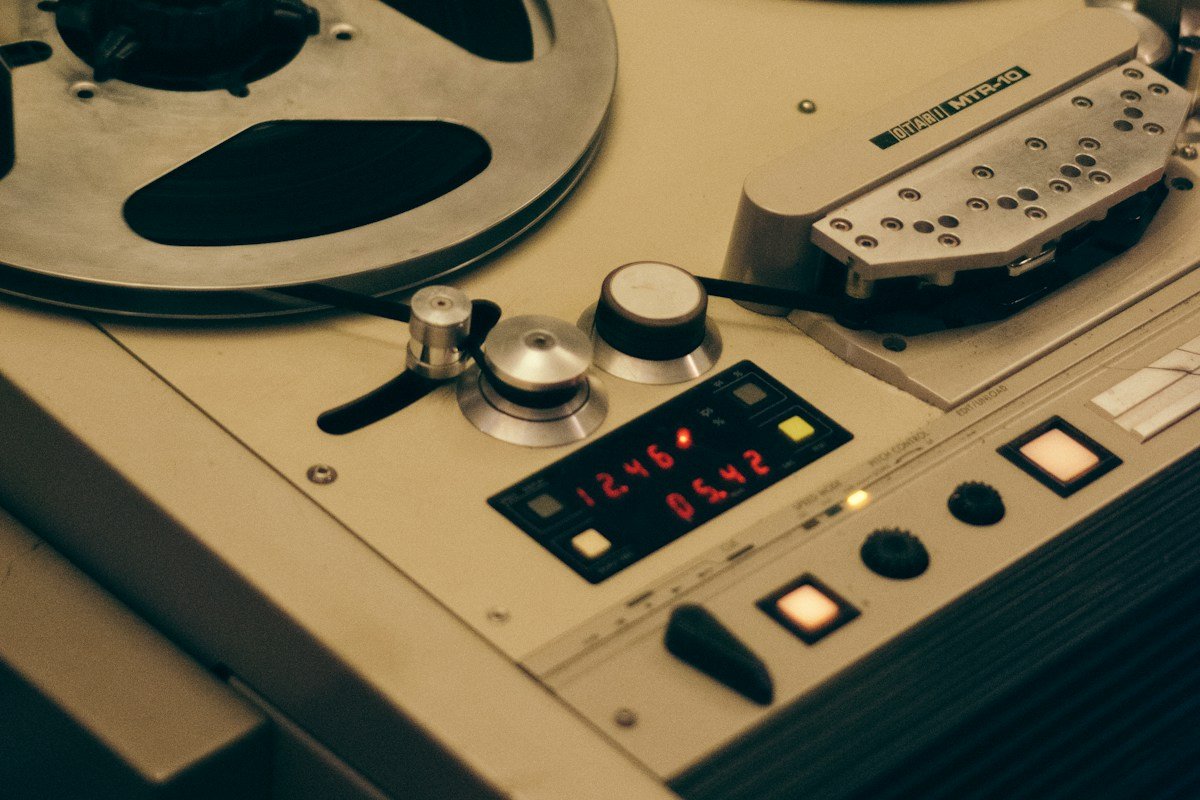
The transition from mechanical disc recording to magnetic tape in the mid-twentieth century transformed modern audio production, introducing unprecedented fidelity, multi-track editing, and dynamic range. Yet magnetic tape recording introduced its own unique physical signature, fundamentally shaped by the microscopic physics of ferromagnetism. Magnetic recording tape consists of a flexible polymer backing ribbon coated with billions of microscopic needle-shaped iron oxide or chromium dioxide particles suspended in a synthetic chemical binder.
During the recording process, unrecorded tape passes across an electromagnetic recording head. In its unmagnetized state, the magnetic dipoles of the individual iron oxide particles are randomly oriented in every conceivable direction, canceling each other out and presenting zero net external magnetic field. As audio signals energize the recording head, an oscillating magnetic field forces these microscopic magnetic domains to align in alternating polarities along the length of the tape ribbon, effectively freezing the audio waveform into a permanent physical pattern of magnetic flux.
However, because the iron oxide particles are discrete physical entities rather than a continuous mathematical continuum, complete alignment is physically impossible. Even under optimal bias currents and saturation levels, a residual degree of microscopic randomness persists among the magnetic particles. When the magnetized tape passes across the playback head, this statistical randomness induces tiny, erratic electrical fluctuations in the head coil. The acoustic result of this particle-level randomness is magnetic tape hiss, a continuous, uniform, broadband whisper that rests beneath every analogue tape recording.
Historically, acoustic engineers invested decades of research and millions of dollars into developing sophisticated noise reduction systems, such as Dolby A, Dolby SR, and dbx, designed to suppress tape hiss through multi-band compression and expansion. Yet contemporary listeners frequently express an aesthetic preference for original, uncompressed analogue master tapes where the gentle hiss remains audible. The brain perceives this magnetic hiss as a soft, atmospheric cushion that binds disparate instruments together into a coherent, unified acoustic space, preventing the clinical, clinical isolation that often characterizes digital multi-track mixes.
Moreover, the continuous presence of magnetic tape hiss acts as a psychoacoustic glue that bridges the gaps between individual instrument stems. In modern digital production, individual audio tracks are often recorded in isolation, resulting in a fractured mix where instruments sound artificially detached from one another. In magnetic tape multi-tracking, however, the shared noise floor and subtle inter-channel crosstalk weave the instruments into a cohesive, organic sonic tapestry that feels like a unified musical performance unfolding in a shared physical acoustic room.
Stochastic Resonance and Auditory Perception: Noise as an Acoustic Enhancer
One of the most profound discoveries in contemporary sensory biophysics is the phenomenon of stochastic resonance: the paradoxical mechanism whereby the addition of an optimal level of random background noise enhances, rather than degrades, the detection and processing of faint sensory signals. While conventional engineering dogma assumes that noise is always the enemy of signal fidelity, the human nervous system evolved in noisy natural environments and frequently utilizes stochastic resonance to optimize sensory sensitivity.
Within the human inner ear, the mechanical motion of the basilar membrane is coupled to the electrical activation of auditory nerve fibers through non-linear threshold dynamics. A faint acoustic signal, such as the quiet decay of a concert hall reverb tail or the subtle breath of a vocalist, may fall just below the activation threshold of individual auditory neurons. When low-amplitude stochastic noise, such as vinyl surface noise or tape hiss, is introduced into the auditory stream, the random noise peaks intermittently combine with the sub-threshold musical signal, pushing it above the neural activation threshold. The brain then filters out the random noise while successfully decoding the subtle musical detail that would otherwise have been lost to consciousness.
In digital audio systems, the sudden cutoff of reverberation tails below the least significant bit can cause truncation distortion, rendering quiet sounds brittle and unnatural. In analogue systems, the continuous presence of background tape hiss acts as a natural dither, linearizing the recording system and allowing acoustic signals to decay smoothly into the noise floor. The human ear tracks musical notes down through the hiss, experiencing an unbroken continuum of sound that mimics natural acoustic reality.
This biophysical mechanism explains why historical analogue recordings frequently exhibit an extraordinary sense of ambient air and three-dimensional depth. The stochastic noise floor provides a continuous perceptual benchmark against which the brain calibrates acoustic distance and room volume. Far from obscuring musical details, timbral ghosting functions as an active perceptual catalyst, inviting the auditory cortex to lean in, engage deeply, and extract profound emotional nuances from the recording.
Harmonic Saturation, Non-Linear Dynamics, and Analogue Warmth
The term analogue warmth is ubiquitous in contemporary music production, yet it is frequently used without a clear understanding of its precise electroacoustic definition. When audiophiles praise the warm, rich character of vintage recordings, they are responding to specific patterns of non-linear harmonic saturation generated by vacuum tube preamplifiers, discrete transformer circuits, and magnetic tape heads operating near their physical limits.
In linear digital systems, an audio signal remains perfectly clean until it reaches zero decibels full-scale, at which point the digital converter runs out of bits, producing harsh, unmusical odd-order harmonic clipping that creates unpleasant high-frequency distortion. In analogue systems, however, signal overload behaves in an entirely different, non-linear manner. As an audio waveform approaches the magnetic saturation threshold of tape or the plate voltage limits of a vacuum tube, the physical medium begins to compress the waveform peaks gently and progressively. This soft-knee compression rounds off sharp transients, increasing the perceived loudness and density of the audio without generating harsh clipping artifacts.
Crucially, this non-linear compression generates an array of musical harmonics, primarily even-order harmonics (second, fourth, and sixth harmonics) along with controlled odd-order harmonics. Second-order harmonics occur exactly one octave above the fundamental frequency, adding richness, body, and fullness to the sound. To the human ear, even-order harmonics are perceived not as distortion, but as intrinsic timbre, creating the sensation that a musical instrument possesses greater resonance, warmth, and physical presence than it actually did in reality.
Extensive historical audio documentation curated through the Internet Archive preserves tens of thousands of early shellac, vinyl, and open-reel magnetic recordings, demonstrating how vintage analogue recording equipment imparted this unique harmonic warmth to global musical culture. This harmonic richness resonates deeply with the human auditory cortex, which evolved to appreciate the harmonic series found in natural vocalizations, woodwind instruments, and vibrating acoustic strings.
Psychoacoustics of Wow, Flutter, and Temporal Micro-Fluctuations
In an ideal world of theoretical physics, an audio recording playback mechanism would maintain an absolutely constant rotational velocity. In the physical realm of mechanical motors, rubber drive belts, idler wheels, and capstan flywheels, however, minute speed variations are an inevitable reality of physical friction and mechanical tolerances. These mechanical fluctuations introduce pitch and timing variations known technically as wow and flutter.
Wow refers to low-frequency speed variations, typically occurring at rates between zero point one and ten cycles per second, often caused by warped vinyl records, off-center spindle holes, or eccentric turntable platters. The acoustic effect of wow is a gentle, undulating rise and fall in pitch that imparts a slow, hypnotic vibrato to sustained piano chords or orchestral strings. Flutter, by contrast, describes higher-frequency rotational variations occurring between ten and two hundred cycles per second, often resulting from motor cogging, capstan surface roughness, or tape scrape across guide pins. Flutter introduces a subtle timbral shimmering or chorus-like texture to recorded instruments.
In excessive amounts, wow and flutter produce unlistenable pitch instability. However, at subtle, low levels characteristic of well-maintained vintage studio equipment, these micro-fluctuations introduce acoustic life into recorded performances. Modern digital clocks maintain timing precision down to fractions of a nanosecond, resulting in an absolute, rigid tempo that can feel sterile and mechanical to human ears. In contrast, the micro-fluctuations of analogue recording introduce organic timing variations that mimic the natural, expressive imperfections of live human musicianship.
When the human brain listens to analogue music exhibiting gentle wow and flutter, the auditory cortex detects these subtle pitch oscillations as expressive nuance. The ear perceives the sound as dynamic and evolving rather than static and frozen. This acoustic movement creates an impression of fragility and transience, evoking an intuitive sense of passing time that resonates powerfully with anemoic nostalgia, reminding the listener that both the musical performance and the physical medium that captured it are transient, vulnerable human creations.
The Acoustic Uncanny Valley: Digital Pristineness Versus Analogue Organicism
In robotics and computer animation, the concept of the uncanny valley describes the revulsion human beings feel when confronted with an android or digital avatar that appears almost human, but lacks subtle biological imperfections. A remarkably similar phenomenon occurs in the realm of acoustic perception, where hyper-pristine digital audio triggers an acoustic uncanny valley that leaves listeners emotionally detached despite flawless technical specifications.
Early digital audio enthusiasts celebrated the complete absence of surface noise, distortion, and wow as the ultimate triumph of acoustic science. Yet as digital audio became ubiquitous, listeners began reporting a subtle sense of fatigue and detachment. High-resolution digital streams capture every microscopic transient with mathematical precision, but they often present that information in an acoustic void. In the digital realm, a musical note ceases to exist the instant its amplitude reaches zero, plunging the listener into an artificial, airless vacuum that never occurs in the physical world.
In nature, absolute silence does not exist. An ear in an ancient forest, a quiet medieval monastery, or a Victorian drawing room is continuously enveloped in subtle ambient micro-acoustics: the rustle of leaves, the thermal agitation of air molecules, the distant murmur of weather, and the heartbeat of the listener. Human evolution conditioned our sensory nervous system to interpret absolute silence as a signal of extreme danger, such as the sudden quiet that precedes an ambush or an environmental catastrophe. Consequently, the stark, digital silence between tracks or within multi-track pauses can trigger subconscious vigilance in the brain.
Analogue audio, with its omnipresent tape hiss and vinyl groove friction, avoids this acoustic uncanny valley entirely. The persistent noise floor assures the listener’s subconscious that an acoustic environment is present and stable. The music emerges from a living, breathing physical medium and returns gently to it, creating an organic continuity that comforts the nervous system and fosters deep emotional immersion.
Material Ephemera and the Ritual of Analogue Audio Playback
The psychoacoustic experience of sound cannot be separated from the physical rituals and material objects that mediate its delivery. The resurgence of vinyl records and reel-to-reel magnetic tape is deeply driven by the human hunger for tactile, embodied engagement with art. In the modern era of streaming platforms, music has been dematerialized into invisible cloud data files, accessible instantly via a tap on a glass screen, accompanied by zero physical effort, zero material presence, and zero sensory friction.
In contrast, the playback of an analogue vinyl record requires deliberate, multi-sensory physical choreography. The listener must handle a large twelve-inch card sleeve, admiring full-scale typography and photographic artwork; slide the vinyl disc from its anti-static paper inner sleeve; carefully place it upon the turntable spindle; clean the microgrooves with a carbon fiber brush; gently unlatch the tonearm; cue the cueing lever; and watch as the diamond stylus lowers gracefully into the lead-in groove. Each step of this physical ritual demands patience, physical dexterity, and focused attention.
This tactile engagement dramatically alters the cognitive framework through which music is received. Because the listener has invested physical effort and focused attention into initiating playback, the prefrontal cortex shifts into a state of high intentionality and cognitive receptivity. The listener is far less likely to skip tracks, multi-task, or treat the music as mere background noise. The physical vulnerability of the medium, knowing that every pass of the stylus causes microscopic mechanical wear, imbues each listening session with value and ceremonial significance.
Furthermore, the physical presence of the revolving turntable platter provides an enchanting visual focal point. Watching the rotating record, observing the rhythmic drift of the tonearm across the grooves, and witnessing the delicate mechanical ballet of tracking anchors the visual system in the reality of physical sound generation. The sensory synergy of sight, touch, and sound creates a holistic experience that deepens anemoic connection, transforming a simple musical recording into a profound communion with historical craftsmanship.
Cross-Generational Sonic Memory and Cultural Ingestion of Lo-Fi Aesthetics
A fascinating development in contemporary popular culture is the explosive rise of lo-fi music genres, synthwave, and vintage audio emulation plugins among younger generations who never lived through the eras of vinyl or cassette dominance. Millions of listeners born in the digital twenty-first century actively seek out music artificially infused with heavy vinyl crackle, tape warble, radio frequency band-pass filtering, and analogue saturation. This widespread cultural phenomenon demonstrates the power of cross-generational sonic memory.
Through movies, vintage cartoons, classic television re-runs, and familial storytelling, younger generations have absorbed the sonic signifiers of past decades as universal cultural archetypes. In the collective cultural imagination, the sound of vinyl surface noise and muffled cassette tape has become synonymous with warmth, safety, innocence, and emotional intimacy. When a modern teenager listens to a lo-fi hip-hop track featuring heavy vinyl crackle, their default mode network synthesizes an internal landscape of cozy nostalgia, imagining an unexperienced 1980s or 1990s childhood marked by tape players, CRT televisions, and quiet afternoon rain.
This aesthetic ingestion demonstrates that musical timbre functions as a cultural language. Just as a specific dialect or vocabulary evokes geographic regions, acoustic textures evoke historical eras. Timbral ghostings operate as sonic shorthand for historical authenticity. By deliberately incorporating tape flutter and vinyl hiss into modern compositions, contemporary artists trigger instant anemoic responses in their audience, wrapping modern existential themes in the comforting, time-tested emotional blanket of historical sound.
This cross-generational dynamic ensures that analogue audio aesthetics will continue to thrive long after their original mechanical recording technologies have been superseded. The yearning for timbral imperfection is not a passing commercial novelty, but a permanent aesthetic value, proving that the human soul craves the soulful, breathing presence of analogue sound in an increasingly automated world.
Auditory Memory Consolidation and the Evocation of Phantom Nostalgia
The human memory system processes acoustic memories through uniquely direct and durable neural pathways. While visual memories are often subject to rapid decay and cognitive overwriting, auditory memories, particularly those associated with musical timbre and emotional atmosphere, can persist intact across decades. Auditory signals originating in the cochlea travel through the brainstem and medial geniculate nucleus to the primary auditory cortex, with immediate collateral projections into the amygdala and hippocampal formation.
When an individual hears a piece of music rendered through authentic vintage analogue media, the auditory cortex does not merely decode the melody and lyrics; it decodes the entire acoustic envelope, including the frequency bandwidth, dynamic compression, and characteristic noise floor. These acoustic parameters act as potent associative keys that unlock deep episodic and semantic memory networks. In anemoic listeners, this process triggers constructive episodic simulations: the brain automatically constructs an entire imaginary historical context around the sound, filling in the atmospheric room, the clothing of the musicians, and the social ambience of the era.
This acoustic memory consolidation explains why listening to historical audio often evokes a feeling of visceral homesickness that visual media alone cannot induce. Sound is physically immersive; unlike a photograph that sits quietly before the eyes, sound waves physically vibrate the eardrum, resonate within the cranial bones, and envelop the body in physical air pressure waves. To hear the acoustic atmosphere of a 1940s jazz club or a 1970s analogue recording session is to feel, however briefly, that one is standing within the physical air of that vanished era.
Through this acoustic immersion, anemoia achieves its most profound expression. The listener closes their eyes, letting the crackle of the needle and the hum of the vacuum tubes dissolve the physical boundaries of the present room. In the sacred space of analogue sound, the past is no longer dead history; it is a living, breathing acoustic reality that speaks directly to the timeless depths of human consciousness.
Acoustic Restoration Versus Aesthetic Authenticity in Digital Archiving
The preservation and restoration of historical audio recordings present audio archivists and cultural institutions with profound philosophical and technical dilemmas. As digital audio restoration tools, such as machine-learning spectral de-noising, automated de-clicking, and harmonic reconstruction, have advanced, archivists now possess the technical capability to strip historical recordings of virtually all surface noise, tape hiss, and frequency limitations, rendering century-old recordings astonishingly clean.
However, leading archival institutions increasingly recognize that over-restoration can destroy the very soul and historical authenticity of a recording. When an acoustic engineer aggressively removes every trace of vinyl surface noise or shellac grain, they frequently strip away delicate acoustic overtones, hall reverberation, and natural room ambience, leaving the music sounding hollow, unnatural, and sterile. The historical artifact is stripped of its physical context, transformed into an uncanny hybrid that belongs neither to its original epoch nor to the present day.
Contemporary archival philosophy champions a balanced, conservative approach that respects timbral ghostings as vital historical data. The surface noise, tape hiss, and frequency rolloff are not viewed as unwanted defects to be erased, but as integral components of the acoustic artifact. They bear testament to the physical history of the medium, the engineering standards of the era, and the physical passage of time. Preserving these acoustic textures preserves the dignity of the original performance, allowing future generations to encounter the past on its own authentic sensory terms.
This preservation philosophy directly honors the anemoic instinct. Listeners do not seek sanitized, homogenized perfection; they seek genuine historical presence. By preserving the delicate acoustic imperfections of analogue recordings, audio archivists ensure that the haunting, beautiful ghostings of past centuries will continue to whisper their timeless secrets to generations yet unborn.
Sonic Craftsmanship and the Resurrection of Analogue Recording Traditions
In response to the total digitalization of commercial music production, a passionate global renaissance of analogue recording craftsmanship has taken root over the past two decades. Independent studios, visionary recording engineers, and dedicated musicians are actively rejecting purely in-the-box digital production, resurrecting vintage tape machines, vacuum tube mixing consoles, and traditional live-room recording techniques.
This revival is not merely an exercise in vintage gear fetishism; it represents a profound philosophical return to discipline, intentionality, and musical camaraderie. Analogue recording on magnetic tape imposes strict physical constraints. With limited track counts (often eight, sixteen, or twenty-four tracks) and the absence of digital pitch correction or endless cut-and-paste editing, musicians must perform together in a physical room, capturing complete, authentic takes that capture genuine ensemble chemistry. Every decision regarding microphone placement, instrument balance, and dynamic performance must be made committed to tape in real time.
This artisanal discipline restores the human element to music creation. The recording studio ceases to be a computer workstation where an operator manipulates visual waveforms with a mouse; it becomes once again an acoustic workshop where air, electricity, magnetism, and human emotion combine in a singular physical moment. The subtle imperfections captured on tape, the natural room bleed between microphones, and the gentle saturation of magnetic flux become cherished hallmarks of an authentic human performance.
For listeners, music produced through these resurrected analogue traditions carries an unmistakable emotional weight. It bridges the gap between past and present, demonstrating that the profound beauty of timbral ghostings is not an accident of primitive history, but an enduring artistic standard. In these warm, resonant recordings, the spirit of analogue craftsmanship lives on, offering a timeless acoustic sanctuary in a digital world.
Comparative Diagnostic Matrix of Sonic Characteristics in Analogue Versus Digital Reproduction
To establish clinical and acoustic clarity, sound engineers, psychoacousticians, and reflective listeners must examine the fundamental physical, electrical, and perceptual differences between historical analogue audio media and modern digital reproduction systems. While digital audio excels in mathematical precision and dynamic range, analogue sound provides unique perceptual benefits rooted in human evolutionary biology and sensory physics.
The comparative diagnostic matrix below illustrates the precise technical parameters, acoustic signatures, neurobiological responses, and emotional outcomes that distinguish vintage analogue playback from modern high-resolution digital streams. This matrix synthesizes laboratory measurements, electroacoustic principles, and psychoacoustic listening tests across contemporary sound research facilities.
| Acoustic Dimension | Vintage Analogue Reproduction (Vinyl & Tape) | High-Resolution Digital Reproduction (PCM / DSD) |
| Noise Floor Profile | Continuous stochastic noise (tape hiss, vinyl groove friction), natural dither, absence of dead silence. | Near-zero noise floor (>120 dB dynamic range), abrupt truncation to absolute silence in digital gaps. |
| Harmonic Distortion Character | Soft-knee non-linear saturation generating musical even-order harmonics (second/fourth overtones), adding warmth. | Extremely low total harmonic distortion, but hard-clipping produces harsh odd-order harmonics if overloaded. |
| Time-Domain Stability | Subtle micro-fluctuations (wow and flutter) that mimic human performance nuance and temporal organicism. | Nanosecond clock precision, absolute pitch stability, mathematically rigid timing down to sample level. |
| Perceptual Depth & Space | Continuous acoustic continuum, stochastic resonance enhances sub-threshold reverberation and room air. | High clinical transient separation, hyper-detailed imaging, but risk of acoustic uncanny valley and dryness. |
| Psychodynamic & Affective Impact | Fosters parasympathetic relaxation, anemoic nostalgia, tactile engagement, and deep emotional resonance. | Optimized for analytical evaluation, instant accessibility, portability, but prone to listening fatigue. |
As demonstrated across these acoustic and neurobiological metrics, the preference for analogue sound is neither irrational nor regressive. It reflects a sophisticated human intuitive appreciation for organic complexity, physical presence, and the comforting embrace of historical imperfection. In the living whisper of timbral ghostings, the human ear finds an enduring sanctuary of warmth, depth, and timeless emotional truth.
Frequently Asked Questions Regarding Analogue Sound and Timbral Ghostings
What is the scientific explanation for why analogue sound is described as warm?
Analogue warmth is primarily caused by gentle non-linear harmonic saturation from vacuum tubes and magnetic tape, which introduces musical second-order and even-order harmonics. These octave-related overtones enhance low-midrange frequencies, rounding off harsh high-frequency transients and making the audio feel richer and more physically resonant to human ears.
How does tape hiss actually improve the human listening experience through stochastic resonance?
Stochastic resonance is a biophysical process where low-level random background noise adds energy to faint sensory signals that would otherwise fall below neural firing thresholds. The gentle, continuous hiss of analogue tape allows the auditory cortex to track quiet musical decays and reverberation tails smoothly, preventing the abrupt cutoffs common in early digital systems.
Why do modern digital audio systems sometimes trigger an acoustic uncanny valley?
In nature, absolute silence does not exist; our nervous system evolved in environments with continuous ambient noise. Modern digital audio drops to absolute mathematical silence during pauses, creating an artificial, airless vacuum that can induce subtle subconscious vigilance and listening fatigue.
What causes the surface crackle on vinyl records, and why is it emotionally comforting?
Vinyl crackle results from microscopic dust particles and static discharges as the diamond stylus navigates the physical microgrooves. Far from being a defect, the brain easily habituates to this rhythmic texture, treating it as an acoustic marker of physical presence, craftsmanship, and tangible human connection.
How do subtle wow and flutter micro-fluctuations humanize mechanical audio playback?
Mechanical playback systems introduce minor pitch variations known as wow and flutter. In subtle amounts, these micro-fluctuations mimic the natural pitch vibrato and expressive timing variations of live acoustic musicianship, softening rigid tempos and infusing the music with a living, breathing pulse.
Why are younger digital natives so intensely attracted to lo-fi and retro audio aesthetics?
Through cultural absorption of vintage films, television, and archives, younger listeners associate analogue textures with authenticity, comfort, and unhurried childhoods. Lo-fi aesthetics provide a calming emotional shelter from the hyper-speed, commercialized demands of modern digital living.
What role does the physical ritual of vinyl playback play in emotional memory consolidation?
Handling large artwork sleeves, cleaning microgrooves, and cueing the tonearm require focused physical dexterity and intentionality. This deliberate ritual primes the prefrontal cortex for high cognitive receptivity, converting passive listening into an immersive, memorable experience.
Should audio archivists digitally remove all surface noise when restoring historic recordings?
Modern archival science advocates for conservative restoration because aggressive noise reduction strips away authentic room reverberation and delicate high-frequency overtones. Preserving original timbral ghostings maintains the physical integrity and historical context of the recording.
How does analogue recording enforce greater musical discipline compared to digital production?
Analogue tape enforces physical track limits and prohibits cut-and-paste editing, requiring musicians to perform complete, cohesive takes together in a shared acoustic space. This captures genuine ensemble chemistry and spontaneous human expression that cannot be manufactured artificially.
Conclusion: Enduring Resonance of the Physical Soundscape
The journey into the psychoacoustics of analogue sound reveals that our love for timbral ghostings is far more than sentimental nostalgia. It is an intuitive recognition of how human beings are wired to perceive the world: through warmth, nuance, physical presence, and the gentle beauty of natural imperfection. In an era where digital technology continually strives to clean, optimize, and streamline every aspect of our sensory lives, the enduring appeal of vinyl crackle and tape hiss reminds us that soul resides not in mathematical perfection, but in the vulnerable, breathing friction of the physical realm.
When we listen to an analogue recording, we are not merely consuming entertainment; we are participating in a timeless dialogue across historical generations. The whisper of magnetic tape and the steady rotation of the turntable groove bridge the gap between our modern world and the forgotten rooms where human beings first poured their hearts into microphone diaphragms. In these timbral ghostings, the past refuses to be forgotten, enveloping our conscious minds in a warm, enduring sanctuary of sound that will echo through human culture for centuries to come.
