

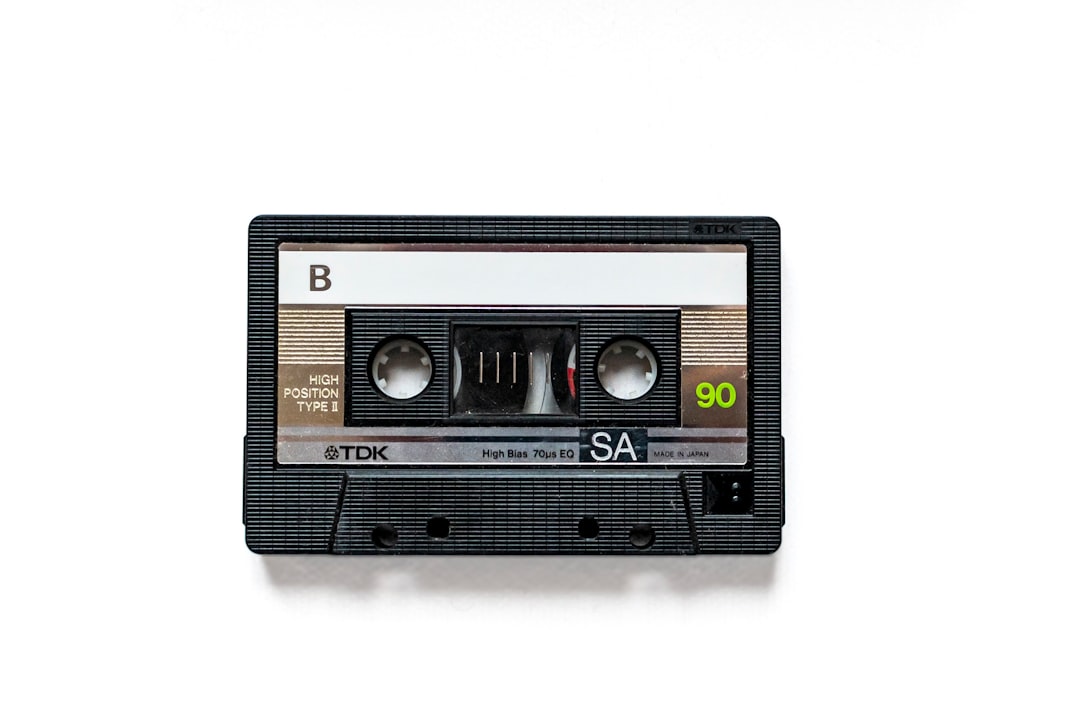
At the turn of the 21st century, cultural commentators and consumer electronics manufacturers universally declared the compact cassette tape dead. Dismissed as an inconvenient, fragile relic doomed to tangle in automobile tape decks, cassettes were rapidly discarded in favor of compact discs, early MP3 players, and eventually infinite cloud streaming libraries. Yet over the past decade, physical music sales data has defied all technological predictions: cassette sales have climbed steadily year after year, with independent record labels, underground bedroom producers, and mainstream global chart-toppers alike pressing new releases on magnetic tape. Far from a passing bout of kitsch nostalgia, the resurgence of cassette culture reflects a deliberate rebellion against the ephemeral, algorithmic frictionlessness of digital streaming. In this deep dive, we explore the tactile physics of magnetic audio, the revolutionary social history of the mixtape, and why younger generations are rediscovering the warmth, deliberate pacing, and physical intimacy of analog tape.
Table of Contents
- 1. The Philips Revolution: Engineering Audio Portability
- 2. The Sony Walkman and the Transformation of Urban Space
- 3. Tape Saturation: The Physics of Harmonic Warmth
- 4. Format Comparison: Cassettes vs. Vinyl vs. Reel vs. Digital
- 5. The Home Recording Revolution: Tascam and DIY Punk Culture
- 6. The Mixtape as an Emotional Artifact and Social Currency
- 7. Frequently Asked Questions
- 8. Caring for Vintage Decks and Analog Media
1. The Philips Revolution: Engineering Audio Portability
In 1963, a team of Dutch engineers at Royal Philips, spearheaded by Lou Ottens, unveiled the Compact Cassette at the Berlin Funkausstellung radio exhibition. Prior to Ottens’ invention, consumer audio was heavy, static, and expensive. Reel-to-reel tape decks required delicate threading, fragile vacuum tubes, and stationary parlor furniture.
Ottens set a radical design constraint for his engineering team: the wooden prototype shell had to fit comfortably inside the inside pocket of his sport coat. By encasing two miniature spools of 0.15-inch polyester tape within a sealed polystyrene housing, Philips created an indestructible, portable, and fool-proof medium. Crucially, Philips chose to license the cassette patent royalty-free to worldwide manufacturers, establishing an open international audio standard that sparked global mass production.
2. The Sony Walkman and the Transformation of Urban Space
While cassettes were initially conceived for corporate dictation and speech recording, rapid improvements in ferric oxide magnetic formulation enabled high-fidelity musical reproduction. The true cultural rupture arrived in July 1979 with the commercial introduction of the Sony Walkman TPS-L2. Co-developed by Sony founders Akio Morita and Masaru Ibuka, the Walkman unshackled music from physical architecture.
Sociologists noted that the Walkman effectively privatized public space. For the first time in human history, urban pedestrians could walk down bustling city avenues enclosed in their own personalized, cinematic soundtrack. It democratized listening during commutes, gym workouts, and solitary nature walks, transforming the cassette into the quintessential cultural symbol of the 1980s youth experience.
3. Tape Saturation: The Physics of Harmonic Warmth
Modern listeners turning back to cassette tapes are often motivated by psychoacoustics. Unlike sterile digital audio-which reproduces waveforms mathematically using discrete 16-bit or 24-bit binary samples-analog tape relies on continuous physical magnetic induction. A plastic ribbon is coated with microscopic particles of gamma ferric oxide (Type I), chromium dioxide (Type II), or pure metal powder (Type IV).
As sound voltages hit the recorder’s electromagnetic record head, these particles orient in proportion to the signal strength. When recording signals at hot volumes, magnetic tape reaches physical saturation rather than producing harsh digital clipping. This saturation naturally compresses dynamic peaks, rounds off abrasive high frequencies above 15 kHz, and generates musical second- and third-order harmonic overtones. The resulting sound possesses low-mid weight, warmth, and organic punch that digital emulations struggle to recreate.
4. Format Comparison: Cassettes vs. Vinyl vs. Reel vs. Digital
To understand the unique role of the cassette in modern audiophile collections, consider how it stacks up against historical and modern media.
| Audio Metric | Compact Cassette (Type II) | 12-Inch Vinyl LP | Compact Disc (CD) | Hi-Res Streaming (FLAC) |
|---|---|---|---|---|
| Physical Portability | High (pocket-sized, durable shell) | Very Low (delicate, large 12″ jacket) | Moderate (scratch-prone plastic case) | Infinite (cloud/smartphone) |
| Acoustic Warmth | High (analog compression & saturation) | Very High (mechanical microgroove depth) | Neutral / Clinical (16-bit linear PCM) | Neutral / Clinical (pristine digital) |
| Dynamic Range | ~55 – 70 dB (with Dolby B/C) | ~65 – 75 dB | 96 dB (full 16-bit range) | 120+ dB (24-bit studio masters) |
| Wear & Tear | Magnetic fade after decades, rewound | Dust grooves, surface scratches, pops | Optical disc rot, laser read errors | Zero physical wear (server licensing risk) |
| Indie Production Cost | Low (~ – per unit, fast turnaround) | Very High (~ – per unit, long wait) | Low (~ – per unit) | Zero physical manufacturing |
5. The Home Recording Revolution: Tascam and DIY Punk Culture
Beyond passive listening, the cassette tape was the ultimate catalyst for decentralized musical creation. In 1979, TEAC/Tascam introduced the Portastudio 144-the world’s first portable, four-track cassette home recorder. For the first time, independent musicians could overdub guitars, vocals, bass, and drums in a bedroom without paying thousands of dollars for commercial studio rental.
Bruce Springsteen recorded his legendary 1982 masterpiece Nebraska entirely on a Tascam Portastudio in his New Jersey bedroom. The DIY punk, indie rock, and early hip-hop movements exploded because artists could duplicate cassette demos, design photocopied J-card covers, and distribute their music hand-to-hand at underground concerts. Today, bedroom producers in the vaporwave and lo-fi hip-hop communities continue this exact tradition, utilizing vintage cassette four-tracks to impart analog grit to their digital beats.
6. The Mixtape as an Emotional Artifact and Social Currency
In modern digital music platforms, assembling a playlist takes seconds of algorithmic dragging and dropping. Consequently, digital playlists rarely carry enduring emotional weight. In contrast, crafting an analog mixtape during the 1980s and 1990s was a high-stakes labor of love.
Because cassettes recorded in real time, assembling a 90-minute mixtape required sitting by the stereo for 90 uninterrupted minutes. The curator had to gauge track lengths carefully to prevent songs from cutting off mid-chorus at the end of Side A. They hand-wrote song titles on the cardboard J-card with colored pens, carefully calibrating the emotional arc of every transition. Receiving a mixtape was a declaration of intimacy and friendship-a physical totem that recipients kept for decades in shoeboxes under their beds.
7. Frequently Asked Questions
What causes tape hiss and how can it be eliminated?
Tape hiss is the continuous high-frequency noise generated by random magnetic domains on the tape surface passing over the playback head. It can be minimized by utilizing high-bias Type II (Chrome) tapes, calibrating playback head azimuth, and activating vintage Dolby B or Dolby C noise reduction circuitry.
How do I safely rewind a cassette tape that has spooled out of its shell?
Place the cassette flat on a clean table. Insert the hexagonal barrel of a standard wooden pencil into one of the central drive hubs. Gently rotate the pencil clockwise or counter-clockwise, keeping gentle tension on the ribbon with your clean fingers to ensure it winds smoothly without creasing.
What is the difference between Type I, Type II, and Type IV cassettes?
Type I (Normal Bias / Ferric) offers warm bass response but higher tape hiss. Type II (High Bias / CrO2) utilizes chromium dioxide for extended high-frequency clarity and lower noise. Type IV (Metal) uses pure metallic micro-particles, offering the widest dynamic range and highest headroom of any analog tape format.
Why are independent bands releasing albums on cassette instead of vinyl?
Vinyl pressing plants face severe global backlogs, requiring 6 to 12 months of lead time and substantial minimum financial investments. Cassette duplication takes only 3 to 4 weeks, costs a fraction of vinyl production, and provides fans with an affordable (-) collectible physical art piece.
Do cassette tapes degrade over time?
High-quality magnetic tapes stored in cool, dry environments away from direct sunlight and electromagnetic fields can easily last 35 to 50 years without catastrophic signal loss. Storing tapes tails-out and rewinding them before playback prevents print-through and layer adhesion.
How should I clean and maintain a vintage cassette deck?
Dip a cotton swab in 99% pure isopropyl alcohol and gently wipe the metal playback/record heads, metal capstan shafts, and tape guides. Clean rubber pinch rollers exclusively with specialized rubber roller cleaner or distilled water, as alcohol can dry out vintage vulcanized rubber.
What is “wow and flutter”?
Wow and flutter refers to small, rapid pitch fluctuations caused by mechanical imperfections, motor belt slippage, or uneven friction in the deck’s transport mechanism. While audio engineers historically tried to eliminate it, modern lo-fi producers cherish it as a signature nostalgic texture.
8. Caring for Vintage Decks and Analog Media
The renaissance of analog tape is a reminder that culture is not an endless march toward sterile digital convenience. In a world where music has become an invisible, disembodied utility piped through smartphone speakers, the click of a cassette door closing, the mechanical hum of rubber belts engaging, and the tangible pleasure of flipping a tape from Side A to Side B anchor us back in the physical world. By honoring these vintage machines and preserving magnetic tapes, listeners reclaim a sensory, intentional relationship with the music they love.

